Posts Tagged ‘talking about stuttering’
When Funny Isn’t Funny
Posted on: March 14, 2014
- In: Posts
- 4 Comments
I went to the theater last night. We have a vibrant arts culture in my community and I often go to see live performances. There is nothing like live theater.
The show was “Figaro” and was billed as a comedy, which it was.
There was a character of a judge, who I’ve always visualized as serious and smart, someone we respect.
The play had the judge character stuttering – loudly, pronouncedly and spitting on others while stuttering. He particularly stuttered on “p” sounds and the other characters finished the words for the judge. Most of the time, the other character guessed the word right, one time it was wrong. The audience laughed at these moments.
This stuttering, spitting male judge character was ridiculous. He was portrayed as stupid, and disgusting for spitting on those close to him, who reacted in disgust.
My friend who was with me stutters too. Both of us were uncomfortable. We didn’t expect to see stuttering made fun of like this in this day and age, on a live stage.
After the show, as we were leaving, my friend and I talked about how uncomfortable it made us. Stuttering isn’t funny in this exaggerated context, yet audience members laughed and laughed at the stuttering, spitting, weird character.
We left, and talked about it again in the parking lot. We had met at the theater, and therefore had separate cars.
When I got home, I had a message on my voice mail from my friend.
He had went back in to the theater and told the owner how uncomfortable we felt. He spoke up and told him stuttering doesn’t get made fun of anymore and the portrayal of stupidity is offensive. J went on to tell the owner how accomplished we both are and how he might consider not making fun of stuttering publicly.
J said the theater owner said the director and the actor made the decision to portray the judging as bumbling and stuttering, for comedic effect.
I was proud of my friend for going back in and having the courage to have that conversation. I hope the director considers taking that portrayal out of the play.
I might write to the director and send her some info on stuttering for their future reference.
Thoughts? What would you have done?

Episode 113 features Sarah Onofri who hails from Boston, MA. Sarah is an elementary ESL teacher, a Girl Scout leader and is also on the Board of Directors of the National Stuttering Association.
Sarah talks about how she got into teaching and how she handles her stuttering when it comes up with her students. Sarah was introduced to a teacher who stutters when she was 16 at her first NSA conference, which really reinforced to Sarah that she could indeed be a teacher.
Listen in as we talk about advertising, acceptance and actually talking about stuttering, which Sarah never did when she was young.
We talk about her early speech therapy experiences and how she first learned about the NSA. Sarah also talks the bond she and her mom have formed after attending annual conferences together.
Feel free to leave comments or ask questions. Feedback is a gift.
The podcast safe music used in this episode is credited to ccMixter.
Being A Stutter Social Host
Posted on: February 7, 2014
- In: Posts
- 2 Comments
When I was asked to be a Stutter Social Hangout host last July, I figured it would be something I’d try and do for about three months. I wasn’t sure I would like it and I also wasn’t sure if I could make the commitment to host every other week.
I’ve been hosting since August and find that I really like it. In fact, I find myself looking forward to it when my turn to host rolls around.
For those of you unsure what a Hangout is, here’s a quick description.
The Hangouts run through Google + Hangout software, which is free and easy to download. Using a computer or mobile device equipped with a microphone and some type of camera device, up to 10 people can meet up in a video conference and have a conversation about anything and everything.
It’s like having a support group that you don’t have to drive to. You can “hangout” from the comfort of your own home, car, office or where ever you are, and dress casually too. You can even wear your pajamas!
I like the diversity of people that come into the hangout sessions. In some of my hangouts, I’ve had people from as many as 6 different countries hanging out and talking at one time. We talk about stuttering, and lots of other things. Sometimes we don’t talk about stuttering at all.
But everybody stutters and everybody feels comfortable stuttering. It’s a safe and supportive environment to talk with other people. And you can come in to the group when you can, and leave when you have to. It’s a wonderful sense of support and camaraderie, among people who “get it.”
If you’re interested, visit the Stutter Social website for a calendar of when hangouts are held during the week.
I host every other Sunday, from 7:30-9:00pm, EDT. I host this Sunday. I’d love to see you there. It’s a great experience.
Nobody’s Perfect
Posted on: December 18, 2013
- In: Posts
- 2 Comments
I have spent a lot of valuable time in my life trying to be perfect. About lots of things – I always tried to be perfect in school, never satisfied unless I had a perfect score on a test or essay.
I’ve tried to be perfect on work assignments – spending time doing things over and over to ensure perfection, often doing work tasks at home during my free time in order to achieve the perfection I thought I had to have.
And I spent a lot of time trying to be perfectly fluent with my speech. I would switch words, rehearse over and over and avoid speaking situations where I feared I would stutter and not be able to cover it up.
Finally, I’ve reached a point in my life where I’ve come to accept my imperfections and actually embrace them. My imperfections are what make me uniquely me. I know longer try so hard to be fluent – I am what I am and if people don’t like it, that’s their loss.
There’s been a lot of talk in some of the Facebook stuttering groups about covert vs. overt stuttering. For me, covert always had to do with me thinking I had to be perfect. I’ve let that go, and openly stutter at work and socially. Nothing horrible has happened and people just accept me for who I am.
I’m glad that I have accepted me for who I am, because nobody’s perfect in this world.
Interrupting
Posted on: December 3, 2013
From the Free Online Dictionary, the meaning of the word interrupt and it’s different forms.
in·ter·rupt
(n
t
-r
pt
)
v. in·ter·rupt·ed, in·ter·rupt·ing, in·ter·rupts
v.tr.
1. To break the continuity or uniformity of: Rain interrupted our baseball game.2. To hinder or stop the action or discourse of (someone) by breaking in on: The baby interrupted me while I was on the phone.
I think about the times I get interrupted. In the middle of a block, someone interrupts and fills in the word they think I was going to say. I sometimes feel disrespected when that happens.
I also think about how many times I actually interrupt another person who stutters, as it’s not always easy to tell when a person who stutters is done speaking or if they are in the middle of a block. It seems to happen a lot when I am chatting with someone over Skype for the podcast.
I usually wind up just apologizing and acknowledging that sometimes it just hard to gauge if the person is done speaking or indeed in a block.
Sometimes it’s hard to establish a rhythm between two people who stutter who are engaged in good conversation and good blocks.
Has it happened to you, that you accidentally interrupt someone who stutters while they’re in a block? How does it make you feel?
I Am So Lucky!
Posted on: November 24, 2013
- In: Posts
- Leave a Comment
I am so lucky! I had the opportunity to talk to middle school kids on Friday about stuttering. I was invited to Tamarac Middle School to talk to their 6th, 7th and 8th grades about stuttering, as it ties in to their character education theme of the month – compassion.
I spoke at this same school 5 years ago and the coordinator looked me up and asked if I’d be willing to come back. I was thrilled and said yes immediately.
I taught the kids about what stuttering is and isn’t, we discussed myths and I showed them some famous people who stutter. I also had several activities for the kids to try, so they could experience first hand what stuttering feels like.
I had grapefruits and asked several young volunteers to come up and try to hide a grapefruit somewhere on their person where it wouldn’t show. This was to simulate covert stuttering.
I had Chinese finger traps that the kids used to experience getting stuck. We also did a writing exercise where several volunteers were told to write their name over and over as perfectly as they could. Then a kid would poke and jiggle their writing arm, making them mess up. This simulated knowing what we want to say but having something interfere.
I also had some volunteers take a deep breath, hold it and try to say their name. Laughs erupted when the kids squeaked out their name. The volunteers told us how their chest and throat hurt and how they felt they were running out of breath.
The kids asked great questions and competed with each other to get chosen to volunteer. At the conclusion of each talk (I gave three separate presentations) we ended with a stuttering contest and then talked about how learning about stuttering builds empathy and compassion.
It was a great experience. I am so lucky.
- In: Posts
- 6 Comments
I saw an interesting link to a blog called The Stuttering Source on Facebook and decided to check it out. The link was to the recent post about when does stuttering therapy end for a person who stutters.
The blog is written by a SLP who works as a Fluency Clinic Supervisor at the National Speech Language Therapy Center in Maryland.
I’m always interested in stuttering blogs so I decided to look at older posts.
Imagine my surprise when I saw a video of myself in the next post, titled The 411 on Voluntary Stuttering. The blogger used my video (with credit and a link to my blog) as a springboard to talk about how she uses voluntary stuttering in therapy.
I had kind of forgotten I had done this video. Of course I watched it again and quite enjoyed it. Hope you do too!
Speaking Of Being Assertive
Posted on: October 10, 2013
- In: Posts
- Leave a Comment
I missed a good opportunity to practice being assertive last week and seize a chance to raise some stuttering awareness.
I am participating in my Toastmaster’s club’s Fall Contest this session, and at last week’s meeting, I had to give an evaluation of a target speech. My evaluation “speech” was to go for 2-3 minutes, with a 30 second grace period. I clocked in at 3:11.
To help the contestants get good feedback and prepare for the next round of competition, everyone at the meeting was asked to give us speakers some verbal feedback. It’s called “Round Robin Evaluation.”
It’s a bit intimidating to have 10-12 people go around and share what they thought on how you performed. But it’s also excellent practice on how to receive constructive feedback. No one really wants to hear that you did something wrong or should improve this or that, but that is the whole point of Toastmasters, to help us learn and grow. If no one is brave enough to give honest feedback, then we miss opportunities to learn.
Mot people said I did a fine job – they highlighted the strong parts and several people mentioned one particular good idea I had suggested to the target speaker.
One guy shared his opinion that I seemed nervous and lacked the usual. confidence that I have. He noted that I tripped and stumbled over several words and knew that I “could do better, because he’s heard me do better.”
He was talking about my stuttering, which had been more pronounced than usual. I am usually very fluent at Toastmasters, because I project my voice and that seems to help with my fluency. But not that night. I was stuttering and he pointed it out as part of his feedback.
I was embarrassed, but don’t think I showed it. Not everyone in my club knows that I stutter, because there has been a lot of new people and I haven’t talked about it in a while.
My mind whirled after the feedback session. I didn’t want to be “judged” on my stuttering – but if he didn’t know, he could have attributed it to nerves.
I wanted to say something to him after the meeting, like “hey, I stutter!” But it didn’t seem appropriate. It was a Toastmasters meeting, not a meeting about stuttering. But it bothered me, and I feel like I missed an opportunity.
What do you think?
Vulnerability Of Stuttering
Posted on: September 19, 2013
- In: Posts
- 3 Comments
Katherine Preston hits it out of the park again with a wonderful essay about how talking about her book brings her face to face with the very vulnerability most of us stutterers avoid.
Read her essay “An Unlikely Speaker: On Stuttering and the Memoir.” She talks about how audiences expect her to stutter because she’s talking about her life experience as a stutterer, and the stark vulnerability that brings.
It is a great reminder how very personal, how intimate it is to share our stuttering with someone else, known to us or a stranger. We expose ourselves and leave our self open to reactions that we cannot control. We hope that listener reactions will be patient and compassionate. They are not always.
Allowing ourselves to be vulnerable with others reminds us how messy life is, and that we all have struggles. Bravo to Katherine for putting it so eloquently.
Did You See That Movie?
Posted on: September 9, 2013
- In: Posts
- 2 Comments
This past Saturday I had an appointment at a tax office. That’s right, talking taxes on a Saturday in September. Not the ideal way to spend a Saturday. And I was there for more than three hours.
She was doing most of the work and I was trying to act like I knew what she was talking about. We got to some small talk eventually and talked about school starting up again. I mentioned that once or twice a year I went into schools and talked to kids about differences and bullying and tolerance.
She mentioned that her own daughter had had a hard time in school because of being different. She shared a story about a classmate approaching her daughter and asking her to join in an activity. This woman remembers to this day how grateful she was to that kid for making her daughter feel included. She apologized for tearing up a little as she told me this story.
The woman heard me stutter a couple of times, and looked like she wanted to say something about it. I shared that I’ve stuttered since I was a young kid and its easier for me now as an adult. She said my stuttering wasn’t too noticeable until we started talking about it.
Then she asked me if I had seen the movie “The King’s Speech.” She went on to say how she saw it and loved it, and what did I think.
Then she commented: “Do people ask you if you’ve seen that movie just because you stutter?” I replied, “Yep!”
We then drifted back into the awful reality of talking taxes on a Saturday.
Do people ask you if you have seen stuttering related movies when you’ve been found out as a stutterer?
We Got What We Needed
Posted on: July 19, 2013
- In: Posts
- 6 Comments
There were many great workshops and highlights at last weekend’s National Stuttering Association annual conference. Workshops were available on research, therapeutic approaches, social media and relationships.
There were two great keynote speakers, who both actually stutter. We heard from Trumain McBride of the NY Football Giants and Katherine Preston, who recently published a memoir about her journey with stuttering.
We also heard about Cameron Francek’s 100stutterproject and Morgan Lott shared his story about how thisisstuttering came to be.
We got what we needed from this conference. There were so many people who have brought positive attention to stuttering this year and many of them were at this conference all at the same time.
In years past, there has been disappointment that keynote speakers were often people who “used to stutter” and didn’t actually stutter when speaking to us. So this year was special, in that hundreds of stutterers got to hear inspiring speeches and stories from Trumain, Katherine, Cameron and Morgan, among others, who stuttered openly and with confidence.
We got what we needed. People who stutter – especially young people who stutter – need successful role models who actually stutter to help us normalize the experience.
We also heard stories from many others – at Open Mics and at The Stuttering Monologues.
The whole point of attending a stuttering conference is to learn and think and talk about stuttering.
We got what we needed.
Humans Need Human Contact
Posted on: June 15, 2013
- In: Posts
- Leave a Comment
With all the social media platforms and other choices for electronic communication, there is no shortage of ways to find and communicate with people over the internet.
There are so many stuttering support groups, frankly they are hard to keep up with. But there is one on Facebook where large numbers of people who stutter gravitate.
The group is diverse – all ages, both genders, culturally and geographically dispersed. Yet, so many questions are asked – some casual, some deeply personal.
It seems that people who stutter from all walks of life are looking for connection, and I contend that connection cannot always be found with clicks behind a computer screen.
I think this 21st century group of young people who stutter who flock to these groups do so because there is no physical group to turn to.
Humans are human, and we need social interaction with each other – preferably face-to-face, at least on the telephone (or these days Skype.) We need to see and hear each other, read facial expressions and body language and feel that connection that comes from true interaction between two people.
I don’t think the future of interaction lies solely with social media and internet texting. I think we have to challenge ourselves to go and talk with a fellow person who stutters, or pick up the phone. Relationships start and then grow into friendships when we see and talk with each other in real-time.
We mustn’t lose sight of that.
Katherine Preston’s Out With It
Posted on: April 15, 2013
- In: Posts
- 4 Comments
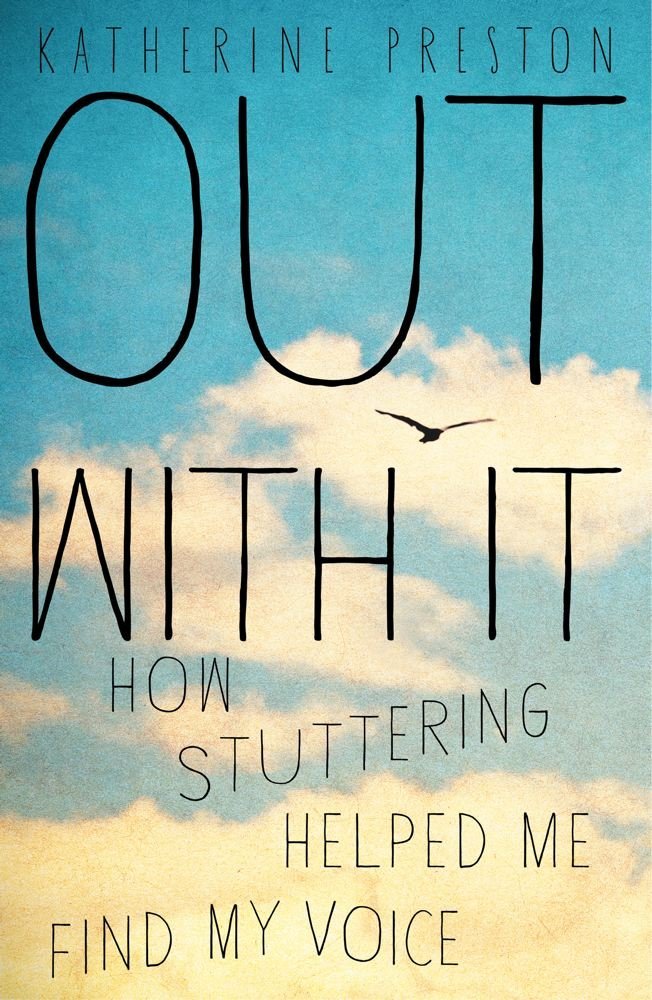 Be sure to check out Katherine Preston’s book, Out With It: How Stuttering Helped Me Find My Voice, which hits the shelves tomorrow April 16, 2013.
This memoir details the journey that took Katherine from her home in London to many different cities in the United States to find meaning in her stuttering.
I have met Katherine in person, and she was a guest on my podcast. In the episode “Think With Your Heart,” Katherine shares parts of her story with us and talks about her dream of having her book published.
It’s hard to believe that episode was in September 2010 and now we’ll actually be reading her book. A book written and published by a woman who stutters!
The book can be purchased by booksellers everywhere and is also available for digitial downloads. I’m looking foward to getting my copy from Amazon.
For more information on Katherine and her work, check out her blog Katherine Preston.
Stuttering As A Mental Disorder
Posted on: April 9, 2013
- In: Posts
- 9 Comments
There is quite a discussion roiling on one of the email groups about stuttering being renamed “childhood onset fluency disorder.” This classification will be found in the DSM-5, due to be released in May 2013.
The DSM is the Diagnostic and Statistical Manual of Mental Disorders. All mental disorders (and medical conditions for that matter) are coded for insurance coverage and reimbursement purposes. Changing the name from stuttering allows for all communication disorders to be covered, and gives parents with kids who stutter more options for quality speech therapy that insurance companies will pay for.
That is the layman’s (mine) explanation, from what I’ve gleaned from doing some reading and understanding what one of the writers and contributors to the section on communication disorders shared on the email group.
Many in the stuttering community are finding this classification of stuttering as a mental disorder to be disturbing. Many of us who stutter do not believe that we have a mental disorder.
And this label might just further the beliefs, and myths, that stuttering is a psychological problem. Many walked away from the 2010 movie “The Kings Speech” believing that stuttering was caused by bad parenting and psychological reactions to trauma and bullying.
People who stutter already have trouble with bullying in school and often being assigned to special education classes, even though there is no learning impairment. There is also workplace discrimination, with employers not fully understanding stuttering and making assumptions about ability and stability. If employers get wind of stuttering now being classified as a mental disorder, that could further diminish employment opportunities for stutterers.
Some could argue that everything we do is “mental.” We use our mental faculties everyday to communicate and interact with the world.
I don’t think I have a mental disorder because of my stuttering. Maybe for other things, but not for stuttering! 🙂
What do you think? Would you feel comfortable being diagnosed with a mental disorder due to your stuttering?
Work Problems And Speech
Posted on: March 12, 2013
- In: Posts
- 2 Comments
I have been experiencing a lot of stress and tension at work recently. My team is facing challenges and opportunities as we look to grow and expand our programs. It feels like we are experiencing growing pains.
I have reached out to one or two people for counsel and advice as I try to work my way through a tough time. The problem seems to be just basic communication.
Isn’t it funny that both people who stutter and those who don’t all grapple with communication stuff? It really is at the heart of everything that we do.
One of the friends I talked with wondered if I am perhaps feeling anxious because of my stuttering.
It’s not that at all. Yes, stress and tension exacerbates my stuttering but that is not causing the tough situation (I don’t think!)
Maybe it’s just plain not a good fit. I am definitely exploring that as well, with as much honesty as I can.
I think I am doing a pretty good job of staying focused (maybe too much) on the issues at hand at work and not on my stuttering. I have noticed more stuttering when I feel most stressed, but I don’t think it’s impacting my work in any way.
Has anybody had any similar situations? Rough patches at work? Do you think your stuttering has anything to do with it?
 Make Room For The Stuttering
What people are saying!