Author Archive
Confident Radiance – Episode 102
Posted on: April 26, 2013

Episode 102 features Samantha Agan, who hails from the San Francisco Bay Area of California. Sam is originally from Philadelphia.
Sam is a full-time college student studying psychology and also works full-time as a care giver for the elderly. Sam is planning to pursue her Master’s degree in psychology, with a long-term career goal of forensic psychology.
Sam and I “met” on one of the online stuttering forums. She has been an active and positive contributor to the Stuttering Arena group on Facebook.
Listen in as we discuss all things stuttering – early speech therapy experiences, stuttering as a disability, self-esteem and confidence. Listen to the part where we talk about confidence and you’ll see where the title of this episode came from!
This was a great conversation. It was fun getting to know Samantha and getting to know the person behind our social media postings.
Be sure to leave comments for Samantha when you listen, or just let her know what a great job she did.
The podcast safe music used in this episode is credited to ccMixter.
Katherine Preston’s Out With It
Posted on: April 15, 2013
- In: Posts
- 4 Comments
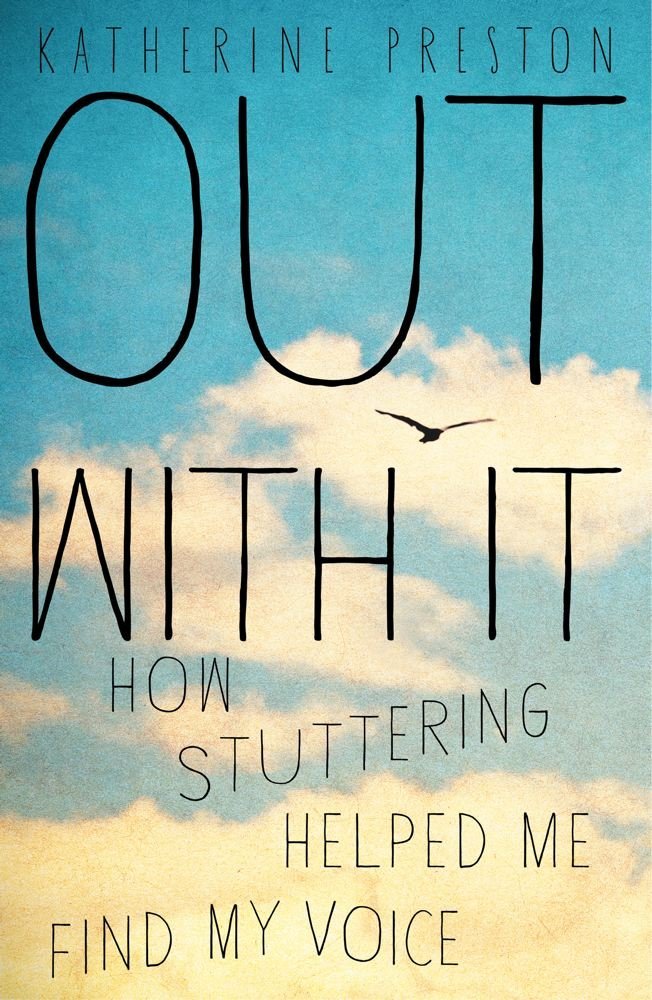 Be sure to check out Katherine Preston’s book, Out With It: How Stuttering Helped Me Find My Voice, which hits the shelves tomorrow April 16, 2013.
This memoir details the journey that took Katherine from her home in London to many different cities in the United States to find meaning in her stuttering.
I have met Katherine in person, and she was a guest on my podcast. In the episode “Think With Your Heart,” Katherine shares parts of her story with us and talks about her dream of having her book published.
It’s hard to believe that episode was in September 2010 and now we’ll actually be reading her book. A book written and published by a woman who stutters!
The book can be purchased by booksellers everywhere and is also available for digitial downloads. I’m looking foward to getting my copy from Amazon.
For more information on Katherine and her work, check out her blog Katherine Preston.
Stuttering As A Mental Disorder
Posted on: April 9, 2013
- In: Posts
- 9 Comments
There is quite a discussion roiling on one of the email groups about stuttering being renamed “childhood onset fluency disorder.” This classification will be found in the DSM-5, due to be released in May 2013.
The DSM is the Diagnostic and Statistical Manual of Mental Disorders. All mental disorders (and medical conditions for that matter) are coded for insurance coverage and reimbursement purposes. Changing the name from stuttering allows for all communication disorders to be covered, and gives parents with kids who stutter more options for quality speech therapy that insurance companies will pay for.
That is the layman’s (mine) explanation, from what I’ve gleaned from doing some reading and understanding what one of the writers and contributors to the section on communication disorders shared on the email group.
Many in the stuttering community are finding this classification of stuttering as a mental disorder to be disturbing. Many of us who stutter do not believe that we have a mental disorder.
And this label might just further the beliefs, and myths, that stuttering is a psychological problem. Many walked away from the 2010 movie “The Kings Speech” believing that stuttering was caused by bad parenting and psychological reactions to trauma and bullying.
People who stutter already have trouble with bullying in school and often being assigned to special education classes, even though there is no learning impairment. There is also workplace discrimination, with employers not fully understanding stuttering and making assumptions about ability and stability. If employers get wind of stuttering now being classified as a mental disorder, that could further diminish employment opportunities for stutterers.
Some could argue that everything we do is “mental.” We use our mental faculties everyday to communicate and interact with the world.
I don’t think I have a mental disorder because of my stuttering. Maybe for other things, but not for stuttering! 🙂
What do you think? Would you feel comfortable being diagnosed with a mental disorder due to your stuttering?
Voting For A Stutterer
Posted on: April 6, 2013
- In: Posts
- 4 Comments
Well, Lazaro Arabos made it through another round on American Idol this week. In fact, voters put him in the top three this week.
This came as a surprise, since Lazaro forgot some lyrics in his duet performance this week, just like he did in last week’s performance. And Jimmy Iovine, the show’s mentor, had predicted that Lazaro should be in the bottom two or voted off the show.
The judges thought Lazaro’s solo performance of “We Are The Champions” was a perfect song choice for him, as the song signals that Lazaro is a champion after defying the odds to sing so well despite his severe stutter.
But many critics are saying that Lazaro is getting through when he should not, and at the expense of much better singers.
Do you think Lazaro is getting the sympathy vote? Do you think people are voting for him just because he stutters? To make a statement that finally, someone with a disability, can get this far?
I have been following the show every week this year. As a person who stutters myself, I greatly admire what Lazaro is doing. He is a great singer, but clearly struggles with interviews. But he does them anyway. He’s a great role model in that regard.
But I don’t think he is the better singer over some that have been eliminated since the top 10 was established.
If you are a person who stutters, are you rooting for Lazaro just because he stutters? Do you think he deserves to have made it this far? If you don’t stutter, what do you think?
Medical Model For Stuttering
Posted on: March 31, 2013
- In: Posts
- Leave a Comment
Thanks to Google alerts, I received this update today, about the Kirkup Center for the Medical Treatment of Stuttering. The Kirkcup Center is associated with UC Irvine Health (in California.)
The center is (claims to be) the only program that treats stuttering as a medical condition, and combines medication and psychotherapy with speech therapy to reduce stuttering symptoms.
I find it interesting that this model uses the concept of symptoms to describe what we know as stuttering: frequent pauses, repetitions of words or phrases, prolongations and secondary behaviors. It’s of interest because symptoms are usually associated with a medical condition.
Most treatments for stuttering focus only on changing or modifying our speech, through traditional fluency shaping, stuttering modification, or avoidance reduction therapy.
This model suggests that stuttering can be treated as a medical condition, which for many people (in my opinion) might reduce the stigma of stuttering if it is seen as a medical problem.
A medical problem may seem more acceptable to many of us. It might not bring the same degrees of shame, guilt, fear and inadequacy that many of us now experience. With a medical model, self blame may be reduced, as we may think stuttering is not “our fault” much as cancer is not our fault.
What do you think? Is it more acceptable to you that stuttering be viewed and treated as a medical condition?
Taking On Courage
Posted on: March 19, 2013
- In: Posts
- 2 Comments
It’s amazing to see how many people who stutter are using social media to bolster their confidence and speaking skills.
The rise of Facebook groups for the stuttering community has really spurred people to take and create more opportunities to share a little about themselves in ways that were previously off-limits.
This evening, I strolled over to Stuttering Arena (on Facebook – a closed group with over 14oo members!) and watched several videos of people introducing themselves and stuttering openly on camera. This trend has been going on for months, but I usually don’t have time to watch and listen to more than one or two.
I think it’s amazing that people are taking these risks to open up and share.
It takes a lot of courage to record yourself stuttering and posting it publicly on a social media site.
Kudos to those of you doing so! If you haven’t, would you consider it?
Owning Our Stuff
Posted on: March 17, 2013
One of the hardest things about being human is owning when we are part of the problem, instead of the solution.
My guard has been up recently and I have been reacting quite defensively to things around me, and to people too. I’m taking things personally that maybe I shouldn’t.
Instead of communicating my feelings and my needs, I have been stubborn. I’ve helped shut down lines of communication, instead of keeping them open. I know that’s not going to help the situation, but I find myself doing it anyway. Can you relate?
I’m pissing myself off a lot these days, as I know that I should be proactive rather than reactive. But I can’t seem to help it.
Someone suggested I do some soul-searching. I am taking stock of what works and what doesn’t. I want to ditch the stuff that is not working. And own it.
It’s hard admitting when you’ve screwed up. Admitting it to both self and others.
But that’s what owning our stuff is all about. It’s hard and very much a part of the human condition.
Work Problems And Speech
Posted on: March 12, 2013
- In: Posts
- 2 Comments
I have been experiencing a lot of stress and tension at work recently. My team is facing challenges and opportunities as we look to grow and expand our programs. It feels like we are experiencing growing pains.
I have reached out to one or two people for counsel and advice as I try to work my way through a tough time. The problem seems to be just basic communication.
Isn’t it funny that both people who stutter and those who don’t all grapple with communication stuff? It really is at the heart of everything that we do.
One of the friends I talked with wondered if I am perhaps feeling anxious because of my stuttering.
It’s not that at all. Yes, stress and tension exacerbates my stuttering but that is not causing the tough situation (I don’t think!)
Maybe it’s just plain not a good fit. I am definitely exploring that as well, with as much honesty as I can.
I think I am doing a pretty good job of staying focused (maybe too much) on the issues at hand at work and not on my stuttering. I have noticed more stuttering when I feel most stressed, but I don’t think it’s impacting my work in any way.
Has anybody had any similar situations? Rough patches at work? Do you think your stuttering has anything to do with it?
Three Tough Cookies – Episode 101
Posted on: March 1, 2013
Episode 101 features three women who stutter who have all recently made their acting debuts. All three women live in New Jersey.
Katherine Filer is a long time computer consultant and recent life coach, Lucy Reed is a school based speech and language pathologist and Sue Camlin is a retired public school teacher who is involved in numerous community service activities.
All three ladies can also add “actress” to their resumes.
Listen in as the ladies discuss how this opportunity to be in a one-act play evolved, how it has impacted their lives and the importance of taking on brave things.
We talk about stuttering during rehearsals and the actual performance, the fear of forgetting lines and the joy of making a difference. The ladies plan to present their theatrical journey at a workshop for the 2013 National Stuttering Association conference, as well as take many next steps to further the journey.
What a great story! Feel free to leave comments or ask questions for any of the ladies in the comment section. Remember, feedback is a gift.
Below is a clip of the news coverage the ladies got on February 27, 2013.
The podcast safe music used in this episode is credited to ccMixter.
Episode 100 features Tamara Nunes, who hails from Maryland, via Brazil. She works in the disability field. Tamara was the very first guest on this podcast back in May 2010.
We discuss acceptance and confidence, communicating at work, and speech therapy experiences. Tamara discusses being close to the University of Maryland, where Vivian Sisskin works, who was featured in episode 81, talking about her avoidance reduction therapy.
We talk a little about the shared experience we had working with people with developmental disabilities who also stutter. And we talk about the value of hearing other people’s stories, the National Stuttering Association, and the empowering feeling that comes from “climbing over that wall.”
We also talk about the contestant currently on American Idol who stutters. Tamara remembers being told when she was younger to sing her words instead of talking.
I am proud to have reached this milestone 100th episode, and was so happy to have caught up with Tamara. Please feel free to leave comments for either of us. Remember, feedback is a gift.
The podcast safe music used in this episode is credited to ccMixter.
Keep On Keeping On – Episode 99
Posted on: January 29, 2013
Episode 99 features Pamela Woebkenberg, who hails from Cincinati, Ohio. Pam works as an office manager in a retail showroom, a communication heavy job.
Pam and I met at the National Stuttering Association (NSA) annual conference in Cleveland in 2010. Pam is actively involved with her local chapter of the NSA and is helping to launch a new, second chapter in her area.
Listen in as we discuss workplace stuttering, advertising and thoughts on having someone else advertise our stuttering. Pam also discusses her early speech therapy experiences, the impact of being involved in stuttering self-help and family.
The podcast safe music used in today’s episode is credited to DanoSongs. Feel free to leave comments or questions for either one of us. Remember, feedback is a gift.
I’m Gonna Fight -Episode 98
Posted on: January 14, 2013
Episode 98 features Danielle W, who hails from the Bay area of California. Danielle is 17 years old and a senior in high school.
Danielle is currently applying to colleges, and hopes to double major in musical theater and either business or psychology.
As you will hear in our chat, Danielle is passionate about musical theater. We discuss how stuttering impacts Danielle when she performs, and what it’s been like for her on auditions.
Listen in as we also discuss family support, speech therapy and the need for a good sense of humor. Danielle is a fighter and doesn’t let her stuttering hold her back. “Just because someone hasn’t done it, doesn’t mean you can’t.”
Danielle is an inspiring young woman with a great attitude and outlook on life. It was such a honor to get to know her more. Danielle and I met at the FRIENDS conference last summer in Colorado.
Feel free to leave comments for Danielle in the comment section. Remember, feedback is a gift. Music used in this episode is credited to ccMixter.
 Make Room For The Stuttering
What people are saying!