Posts Tagged ‘stuttering’
When I Stutter
Posted on: August 8, 2018
- In: Posts
- Leave a Comment
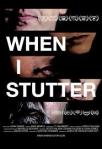 I recently had the privilege to see the documentary When I Stutter, a film by John Gomez. This is a film about people who stutter and portrays how people who stutter actually feel about stuttering, which is not always talked about. It is an honest examination of the sometimes dark side of stuttering, which often doesn’t get explored.
The film is currently making the rounds of private screenings and film festivals. It is being sponsored by colleges and universities that have communications disorders programs and being promoted by the National Stuttering Association.
It is a powerful learning experience for speech language pathologists and students studying to be future therapists. But it also demands and deserves to be seen by anyone who has an interest in the power of people who stutter daring to express themselves no matter how their voice might sound or how long it may take to speak.
That’s what hit home for me. The power of the voices. These are real people who stutter. Not actors portraying people who stutter, which is the sad norm when stuttering even gets a mention today. And we hear from both men and women and people of color, again an anomaly. So the film, by its intentional design, promotes diversity and inclusion.
Listening to the voices and seeing the facial expressions of people like me sharing their stories was visceral. Partly because I knew some of the people, especially the women, Rachel and Jenny, who have both been featured as guests on my podcast, Women Who Stutter: Our Stories.
So, knowing these people made it personal. Knowing the stories as my own made it real. Understanding the dynamics and complexity of stuttering made me nod my head in some parts. And tears welled up easily at other parts.
This is a must see film if you have any interest at all in the human condition. Even if you don’t stutter, you will identify with the shame, isolation and feelings of inadequacy that anyone with something that makes us stand out from everyone else can so easily relate to.
Kudos to John Gomez for bringing this film to light and to the stuttering community and the communities at large that we inhabit. We all have something that makes us different, stand out, unique. It is vital that we share our stories about whatever that is in as authentic a voice as possible. And “When I Stutter” accomplishes this, with grace and respect and actually honors the people who dared to be real with us.
Go see this film. It’s important.
More Than Just Words – Episode 184
Posted on: August 6, 2018
 Episode 184 features Madeline Wahl, who presently lives in New York City. She moved to NY from Florida five years ago to take a job with the Huff Post. She currently works as an opinion editor with the Huff, has always loved writing and writes a lot in her spare time. Madeline also greatly enjoys solo traveling and talks about how your “travel self” is your “true self.”
I first “discovered” Madeline when I read a few of her articles about stuttering that were published on the Huff Post. I remember being so thrilled to see pieces about stuttering in a popular site that I read and I really wanted to see if I could get Madeline to come on here as a guest. I emailed her, but didn’t hear back. So, I honestly forgot about it!
Then, shortly before this year’s NSA conference I heard from Madeline. She had archived my email and reached out, saying she’d love to be a guest if I’d still have her. Of course, I was thrilled to hear from her. We started corresponding through email, as Madeline was planning to attend that NSA conference for the first time. I offered her some tips and suggestions and we vowed to meet in person at the conference.
Well, we did, very briefly. Then we followed up about two weeks later, and here’s this conversation we had. Listen in as Madeline shares what that first NSA conference was like, some really deep thoughts about the value and importance of words, and the deep emotions that get stirred up when being surrounded by other people who stutter.
We also talk about intense listening, patience being mindful, and the true spectrum of stuttering that exists within the stuttering community.
I was grateful for this “deep dive” conversation and hope you find it as compelling as I did.
Here are links to several of the articles that Madeline mentions in this episode.
What It Actually Feels Like To Stutter
Why I’m Thankful That I Stutter
As always, the podcast safe music used in today’s episode is credited to ccMixter.
Episode 183 features Emily Anderson, who hails from Anchorage, Alaska. Emily is 27 years old and just recently started the first ever NSA Family Chapter in Alaska.
Emily works as an environmental technician doing water sampling and monitors contaminated water sites. She also does outreach with native Alaskan tribes. Emily also has a second job as a server at a steak house restaurant.
Emily shared an interesting phenomena about her stuttering. It actually works to her advantage when speaking one on one with tribal residents. In Alaska, it is custom and tradition to speak slowly and take long pauses, so it works perfectly with her stuttering!
Listen in as we discuss Emily’s impressions of her first NSA conference. She shares that she thought it wasn’t going to live up to the hype she had heard about. Well, she was proven wrong! She talks about the comfort she found being in a judgement free zone where other people had the same weird insecurities she has had.
We talk about workplace stuttering and how she manages in both jobs she has that require a lot of communication. Her favorite workshop was the one on stuttering in the workplace, where she heard the stories of people who have not let stuttering limit their career goals. We even talk about how cool it was that in that workshop she met a real rocket scientist who happens to stutter.
And we talk about the fact that Emily’s mom has been a SLP for 40 years and was the perfect role model for Emily growing up. Mom is so proud that Emily decided to go to her first conference and is actually thinking about going herself next year.
Emily has written a couple of articles about stuttering for The Mighty. Here is the links to two of them.
Finding My Confidence Working In Food Service With A Stutter
When Stuttering Makes Me An Extrovert Stuck In An Introvert’s Body
The music used in today’s episode is credited to ccMixter.
Presenting: Writers Who Stutter
Posted on: July 28, 2018
- In: Posts
- Leave a Comment
I promised two weeks ago that I would offer a short summary of a few of the powerful, especially meaningful workshops that I attended just for myself at the recent National Stuttering Association conference in Chicago. I say “just for myself” because as usual I did find myself busy at the conference helping lead a few workshops and helping with other things. It took me two weeks to write this because I’ve been busy and I needed time to process how wonderful some of these workshops were.
So it was important to me to attend a few sessions that I was just a participant and could enjoy the experience facilitated by others. One such workshop that I found profoundly important was “Writers Who Stutter” which was presented last year and again for the second time this year. I couldn’t attend last year because of a schedule conflict so I was excited and intrigued to see what they might offer.
“They” were people who stutter who all happen to be women and immensely enjoy writing. In fact, they started a “writers who stutter” Facebook group within the last year and encourage others to participate and share some of their pieces with each other. These women – Elizabeth, Jaymie and Chani – all express themselves exquisitely in writing and in voice too. They have all been guests on my podcast and are great storytellers.
Since I didn’t get to attend last year, I wasn’t sure what to expect. And it was a 9:00am workshop, which honestly I choose to skip most of them in favor of squeezing in some needed rest, which you don’t get much of at these conferences, so you take it when you can get it.
As preparation for this year’s version of the writer’s who stutter workshop, the facilitators offered a warm-up writing exercise through the Facebook group. They offered a “writing prompt” used from last year and asked participants to write a six word story about stuttering. I was thinking, “yeah, right, like that’s possible.”
But I thought about it and offered my thought to the group. “Stuttering is about me, not you.” The facilitators commented right away that they loved it and even asked permission to use it in some other way. So, I was hooked and knew I’d find time to go to that workshop in Chicago. Even if it was at 9:00am.
I’m so glad I did! Elizabeth, Jaymie and Chani talked about the important of our writing voice and how it becomes part of our identity. I could so completely relate with that. For years, because I stutter, I often found the only way I could express myself was through writing. I believed the voices in my head that said my voice wasn’t worthy of being heard.
But with writing, the words would flow, fluently and fluidly. I remember in the early days of this blog, I recall writing things but don’t recall the actual process of typing them. The words just sort of magically flew from my fingertips and often just appeared on the screen and I’d stare incredulously and wonder how did those words appear. And sometimes those pieces were my best writing and didn’t need any editing. It was amazing to me to see that unfold time and time again.
It still happens once in a while. Like right now, I am not thinking any thoughts as I type this, but somehow the words are coming together, so effortlessly and fluidly filling the page,.
And I think that was the point of the writers who stutter workshop, at least to me anyway. It may not have been the facilitator’s main premise at all. But my take-away was that we should respect the identity we create as writers and go ahead and let stuttering inform our stories and what we choose to write about. Stuttering experiences provide rich, compelling stories that belong to us, the community that stutters. And we need to have a space to do just that – write and create and share and get feedback and write some more.
This workshop gave attendees a chance to break into small groups and write a bit on a prompt that we were given to get us started. Then we could share within our group if we wanted. Or not. Maybe we just wanted to soak in the experience and keep our musings private. Then the last fifteen minutes or so of the workshop brought the smaller groups back together to share out and process as a whole and see the beauty of our creations, our identities and the power of our voices – both in writing and voiced out loud.
How lucky I was to attend that workshop. It reminded me how many of us who stutter have often gravitated to pen and paper to express ourselves. Because that often felt better, right and eloquent like we think we aren’t. But we’re wrong! We are eloquent both in writing and in voice. When the two collide and we’re given a space to explore that, great things happen.
Thank you Elizabeth, Jaymie and Chani for staying true to you and sustaining your group for a year and giving writers who stutter a place to realize our words are worthy, no matter which way we choose to express them.
I look forward to next year’s version of this workshop.
I Found My Tribe – Episode 182
Posted on: July 25, 2018
Episode 182 features Dana Koprowski, who hails from just outside of Chicago, Illinois. Dana has a background in early childhood education and presently works as a nanny for a family and their two children.
We talk about career choices, interacting with fluent people about stuttering and how for a long time, Dana didn’t really care for it – stuttering – too much.
Then things changed. In 2014, Dana Googled stuttering and came across Stutter Social. Suddenly, she was in a video chat room for the first time with other people who stutter and that changed her life.
She took a break from stuttering for a while and then rejoined the Stutter Social hangouts, where she heard people talking about the NSA annual conference. And learned it happened to be in Chicago, where she lived. Despite coming up with every excuse in the book why she couldn’t go, Dana did go to her first conference and this is her story. Told from a woman who told me she didn’t have a story.
Listen in. It’s amazing. Leave feedback. Decide for yourself if attending a stuttering conference is worth it.
The music used in today’s episode is credited to ccMixter.
Oh, and here’s Dana’s video she posted on YouTube that she mentions in the episode.
People Who Get Me – Episode 181
Posted on: July 19, 2018
Episode 181 features 21-year-old Mikaela, who hails from San Diego, California, after having moved there on a whim six months ago from Vermont. Mikaela works in a float position with the County of San Diego, which means every 3 months she gets reassigned and gets to manage being open with new people about stuttering.
Mikaela’s real passion is EMS and Firefighting. Once her Vermont certification transfers to California, Mikaela plans to work in this field, which of course is a highly demanding communication field. We talk about how she manages and how lucky she’s been to have had “stutter friendly workplaces.”
This episode is really about how Mikaela found support and what that means. She met up with people who stutter on Stutter Social and then when she decided to move to California, she was referred to the local NSA Chapter. It was the first time Mikaela had met someone in person who also stutters.
Mikaela actually immersed herself in stuttering support over 6 months and found herself at the recent annual NSA conference as a first timer. Her experiences and insights are incredible. It’s also wonderful to hear what it was like to meet people in person that she’d only met online.
If you’ve been unsure about how meeting other people who stutter can change your life, listen to this conversation. It’s truly a testament to how “finding your tribe” can be a game changer.
The music used in this episode is credited to ccMixter.
The Stuttering Monologues
Posted on: July 9, 2018
- In: Posts
- Leave a Comment
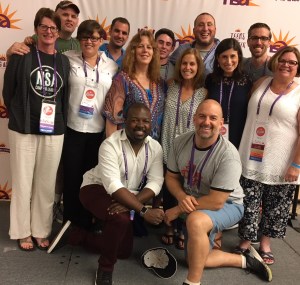
There is so much I want to say about the recent National Stuttering Association conference that just wrapped up in Chicago, Illinois this weekend. I am going to write later in the week about a couple of deeply important workshops that I attended that opened up dialogue that some people may not be used to.
But I feel compelled to write just a bit about The Stuttering Monologues, which was a performance I coordinated with 12 people and that we performed at the closing ceremony on Saturday July 7. I got the idea to create a version of stuttering monologues back in 2012 after watching a local performance of The Vagina Monologues, written by Eve Ensler. Ensler created her Vagina Monologues as an activism vehicle for women to be able to voice their concerns about consensual and non-consensual sexual experiences. Women of all different ages, races, sexual orientations and other differences let their voice be heard.
I envisioned that the same could be done with our stuttering stories. I presented the inaugural Stuttering Monologues as a workshop at the NSA conference in 2012 in Tampa. It was hugely successful – one of the most attended sessions, with standing room only. I brought it back again the following year, in Scottsdale in 2013. Again, the session was a stand-out, with a wall in the workshop room needing to be opened in order to accommodate people.
I wanted to bring it back to the conference again, but felt waiting a few years to keep the experience fresh was best. This seemed right, 5 years later and in Chicago. The NSA Executive Director asked me what I thought about presenting it to the whole conference as part of fully attended closing ceremony. We could make that work, right? What was done the previous two times in 75 minutes would now need to be done in less than 30 minutes.
I embraced the challenge. I had already lined up my presenters for the 2018 version of the Monologues when I learned we would do them at the closing and everyone would need to come in at under 2 minutes. That’s a big challenge for people who stutter. One person freely admitted that sometimes it has taken him fully two minutes to just say his name.
But we did it and to enormous success. We heard deeply moving, authentic stories about fear, shame, priorities, kindness and the human condition. It was funny, gut wrenching, inspiring and real all rolled up in one neat, 26 minute package. We heard monologues titled, “Dear Diary,” “You Don’t Know What You Don’t Know,” and “Heartbeat.” All rang true and we somehow managed to capture the diversity of our stuttering community through the unique voices we heard.
I had some people come up to me afterwards saying it was the best part of the conference. That the short stories were so powerful and riveting that everyone should hear something like this that so perfectly captures the complexity of stuttering. A long time member’s husband came up to me and said for him it was the best part of the conference. He said it was moving, emotional and powerful and that he could tell a lot of work went into it to make it look so seamless. That meant so much to me.
This was a labor of love. Not everything went perfectly. Some people didn’t come to practice sessions, some waited until the 11th hour to submit titles and bios and two people bowed out throughout the planning process. But it worked. Authentic voices were raised and eager ears listened to the stories that are all of us.
The Stories They Tell – Episode 180
Posted on: July 2, 2018
Episode 180 features Petra Ammerlaan who hails from Dreischor, The Netherlands. Petra has been a nurse caring for the elderly for 28 years. She is married to a very supportive husband who never cared that she stutters.
Petra got into nursing because she always liked taking care of people. She works mostly with people at the end of their lives and treasures the stories they tell. Patients have never cared about her stuttering, but it’s sometimes been a different story with bosses and coworkers!
Listen in Petra shares about being covert for a long time, still trying to hide it sometimes. “Being yourself is often hard with a stutter.” We also talk about speech therapy experiences, being around those who love and care about us, and the importance of taking baby steps on our journey with stuttering.
We also chat about the Facebook group Stuttering Community and Petra’s recent leap of courage to record and post a video to the group, for the first time.
The music clip used in today’s episode is credited to ccMixter.
It Will All Be OK – Episode 179
Posted on: June 26, 2018
Episode 179 features Taylor Owens who hails from Minneapolis, Minnesota. Taylor is a real estate agent and home stager, and she and her husband are expecting their first child in October. Taylor is also actively involved in the NSA, both locally and nationally.
Listen in as we talk about Taylor being covert and how restrictive that felt to her in every aspect of her life. She stepped out of the covert closet towards acceptance about 3 years ago and now, being open, has incredibly enhanced her life. In her real estate career, being open helps her to “stand out” among the huge competition in the field.
She talks about how intensive therapy at AIS really woke her up and she started living the life she always wished she could. And Taylor shares her involvement in the NSA, including her first conference and the college student chapter she leads.
I thank Taylor for being OK with talking about her pregnancy as I was curious if she worried that her daughter may stutter. Listen as Taylor shares so honestly about how she once felt and now feels as she and her husband prepare to welcome Violet into the world.
This was such a great conversation and I hope that all of you thinking about kids are inspired with what Taylor has shared.
The podcast safe music used in today’s show is credited to ccMixter.
Changing The Way We Speak
Posted on: June 15, 2018
 I came across something in the “Notes” section of my phone from three years ago. I obviously felt it was important enough to write down. I’m not sure what lead me to read it again this week, but it really spoke to me.
“For years, we have gone to speech therapy to change the way we speak to make it more comfortable for others. We shouldn’t have to do that anymore.”
This brought back memories of when I participated in speech therapy for the first time as an adult about ten years ago. It was traditional fluency shaping therapy with the goal of changing the way I spoke. I greatly resisted this, without even knowing I was resisting!
I found it hard to learn the “targets” and even harder to demonstrate them. It felt mechanical and clinical and I couldn’t figure out why this wasn’t working for me. I also began to feel like I was failing and I wasn’t used to failing at anything. The harder I tried to “shape my speech differently” the more I failed to do so.
Finally, I realized that the reason I wasn’t succeeding with using fluency targets was because I didn’t want to use them. I felt like creating a different way to speak really just made me covert again. And more importantly, it felt like creating a different way to speak was more for the benefit of others than for me. It seemed like I was working at changing my speech so that listeners wouldn’t be uncomfortable and so that I wouldn’t have to explain why my speech was different than the norm.
People had told me I should try to be fluent when going for job interviews and giving presentations at work. But inside, I felt like that was taking my voice away, and I had been taking my own voice and hiding it away for years. This was the beginning of my personal realization that I didn’t want or need to be fixed and that I didn’t need to conform to be like everybody else.
We don’t need to make people feel more comfortable when listening to stuttering. We all need to just be patient and present communication partners.
Have you ever considered why you participated in speech therapy? A friend recently mentioned that his employer “made him” attend speech therapy sessions because a client was having difficulty with his stuttering. Thoughts?
Those Magic Moments – Episode 178
Posted on: June 5, 2018
Episode 178 features return guest Annie Bradberry, who hails from Corona, California. Annie is the Executive Director of a non-profit, former Executive Director of the National Stuttering Association and current Chair of the International Stuttering Association.
She is married almost 30 years to husband Bob and is loving her newest role as grandma to three. And today is Annie’s birthday. What a great way to celebrate by hearing what she’s been up to recently. Happy Birthday Annie!
Listen in as we talk about the sense of purpose Annie has that fuels her sustained involvement in the stuttering community. We discuss a recent opportunity she had to meet with some elementary school kids that stutter. And we also discuss a local TV program that Annie filmed about stuttering, along with two other people who stutter. The program, called Lifestyle Magazine, will air in October.
Finally, we discuss two upcoming keynote opportunities for Annie – one for the NSA conference in Chicago and one for the Joint World Congress for People Who Stutter and Clutter, in Hiroshima, Japan, both in July. And we wrap up with talking about struggling with small talk and how that can be so challenging for people who stutter.
The music used in today’s episode is credited to ccMixter.
Woman On A Mission – Episode 177
Posted on: May 22, 2018
Episode 177 features Claire Norman who hails from London, UK. Claire is 26 years old and keeps very busy. She works as an intelligence analyst in fraud prevention and is studying for her Masters degree in counter fraud and corruption studies.
She also founded and directs S.T.U.C. which stands for Stammerers Through University Consultancy. Based on her own poor experience with the disability support office at her university, Claire has organized partnerships with 16 universities in the UK that are now equipped to help students and staff that stammer. Her initiative is four years old. It’s amazing what a difference one person can make. If you are interested in helping Claire with the S.T.U.C. initiative, reach out to her on her Facebook page, or on Twitter @STUC_UK or Instagram stuc_stammer.
Listen in as Claire discusses how she has organized these partnerships and the work she does to provide resources and support. We also discuss the extensive support networks for people who stammer in the UK and how Claire has spread awareness of S.T.U.C. through the stammering community.
The music clip used in today’s episode is credited to ccMixter.
This Short Film Speaks Volumes
Posted on: May 17, 2018
- In: Video
- Leave a Comment
This wonderful piece by film maker Luke Collins hit YouTube this week and is circulating through the stuttering community. It is receiving high marks. The film exquisitely captures the intimidation and panic that a person who stutters feels and imagines.
I commented on the piece on YouTube and the film maker responded back. He is pleased that people who stutter think this is authentic representation. I asked him why he didn’t portray the character himself. He said he didn’t feel he has the “acting chops.” He also shared that directing the actor was an interesting way to explore the process that he experiences. Kudos to Luke for sharing a piece that people who stutter can all relate to.
Talking And Talking And Talking
Posted on: May 14, 2018
Well, last week was a very busy one for me. Like I mentioned in my last post, I had several opportunities to talk about stuttering and hopefully raise awareness in my little corner of the world.
Last Monday, I was a guest on a local media production’s podcast where they interviewed me about stuttering. They sent me the link a few days later and I was really happy with how it turned out. The interviewers had done some prior research and asked me some great questions. Take a listen if you’d like. (Although that is an awful picture of me! Ugh!)
On Wednesday, I had the chance to “tell” my story at a 25th anniversary celebration of the Interfaith Story Circle, which is a local group here in Albany, New York that focuses on the power of storytelling. I was so delighted to have my story about women who stutter sharing their stories included in their celebration event.
And on Thursday last week, my podcast was featured on one of our local news channel’s segments highlighting women. That was such an exciting experience, as being on TV is a big deal, at least to me anyway. Fortunately, I was more photogenic in this clip here.
http://wnyt.com/news/pamela-mertz-podcast-for-women-who-stutter/4902733/?cat=11883
Stuttering Awareness Week 2018
Posted on: May 7, 2018
- In: Posts
- Leave a Comment
Hey everyone! It’s that time of year again! Here in the United States, it’s National Stuttering Awareness Week. In fact, it’s the 30th anniversary of this special week. In 1988, the second week in May was declared as National Stuttering Awareness Week.
Two individuals that were involved in what was then the National Stuttering Project (NSP) were the driving force behind making this happen. Paul Castellano and Barbara Hubbard Koval, with the support of their NSP chapter, pitched the idea to their local Congress members in 1986. Eighteen months later, in 1988, President Ronald Reagan signed the proclamation making the second week in May National Stuttering Awareness Week and it’s been commemorated every year since then.
While I believe that every day should be used to raise awareness for stuttering, this week is a great opportunity to talk about stuttering to people who don’t stutter and try to get some media attention to bring it into the spotlight. Many people involved in what is now the National Stuttering Association (NSA) contact the media to get people talking about stuttering. Here are some good ideas from the NSA on what you could do!
I am really psyched that I have two media opportunities this week. Tonight I am going to The Sanctuary For Independent Media which is local for me and will be a guest on their live podcast. I am excited that they were interested enough to bring someone on to talk about stuttering.
Tomorrow morning, I will be interviewed by a local TV reporter for a segment on her Today’s Women which airs weekly on the local evening news. The piece will run on Thursday evening. I was a guest on her show seven years ago, and she is doing a follow-up with me about stuttering in general and the growth of my podcast. I’m definitely excited.
What can you do to raise awareness about stuttering?
 Make Room For The Stuttering
What people are saying!