Posts Tagged ‘covert stuttering’
 Episode 15 features Lisette Wesseling, who hails all the way from Wellington, New Zealand. I met Lisette two years ago at the NSA conference that was held in Parsippany, NJ.
Since then, we have stayed in touch through various social media and the covert email group. I was delighted to spend some time again with Lisette when she returned to the US to attend the recent NSA conference in Cleveland, OH.
Lisette is a woman of many talents and of course has a wonderful story to share. Lisette is a Soprano singer, a singing teacher, and also works in a non-profit organization that disseminates information for Braille users.
We talk about a number of things related to the covert stuttering experience and how important it is, that when ready, you receive the right treatment approach. Lisette shares how for a while she received the wrong treatment and what impact that had on her. She shares her experiences with “Smooth Speech” which is the common therapy for stutterers in New Zealand and a bit about the therapy she is currently doing now.
We also discuss the differences in how stuttering may be perceived in the “artsy creative” world vs. corporate culture. And we visit voluntary stuttering, holding and looking at a stuttering moment and how the evolution of the internet has allowed for shared self-help, resources and therapy approaches.
Listen in, agree or disagree and feel free to leave feedback for Lisette, and me as well, if you wish. The comments left here often generate great discussion.
Musical credit for “Silver Shine” goes to Dano Songs.
The Power Of Being Quiet Episode 13
Posted on: July 12, 2010
Episode 13 (Lucky # 13) is a great conversation about stuttering with a woman who doesn’t stutter. This episode features Jill Douglass, who is from Lafayette, LA. I first met Jill at a NSA Conference, but really got to know her at the Friends Convention in New Orleans in 2008. We have been email, text and Face book friends since then.
Jill is in her fourth year of her PhD program at the University of Louisiana at Lafayette. She is pursuing advanced studies in the speech and language field, with a strong interest in academia and research. She is co-leader of the Lafayette NSA Chapter, along with Derek Johnson and Al Thomas.
Jill is a SLP who “gets it”. She understands that stuttering is about the whole person, and wants to be involved in teaching new clinicians how to best work with people who stutter. She is interested in the complexity of covert stuttering, which is the focus of her doctoral research. Specifically, she wants to understand the process of going from covert to overt.
Jill and I talk about what people who stutter have taught her and the value of quiet listening in a loud and rushed world. She also talks about going to Oslo, Norway for a linguistics conference, where she had an opportunity to present some of her research efforts on covert stuttering.
Listen in to a great conversation with a great friend of the stuttering community. Feel free to leave comments as well. The interactive feedback on this blog and podcast is really special.
Musical credit for “Silver Shine” goes to Dano Songs.
Why Is It Such A Big Deal?
Posted on: July 3, 2010
- In: Posts
- 2 Comments
Last week, I shared with a colleague that I would be attending the NSA conference this week, for the fifth year. I was talking excitedly about it and told her a little about the workshop I planned to do.
She wanted to know why it was so important to me, and why do I keep going. She said, “you know, it’s not a big deal to us (people at work). You stutter, yeah, we all know that, but it’s not a big deal. You just stutter. Why is it such a big deal to you?”
For a quick second, I felt myself get defensive, almost like it seemed she was “trying to take something away” from me in a weird way.
Then I quickly said, “Well, it hasn’t always been ‘that I just stutter’. It has been a source of shame and embarrassment for so long, and now it’s not”.
Then she said, “Oh, I guess its like how I felt about my self-esteem for a long time. That’s why I talk about that a lot.”
I didn’t feel it was quite the same thing, but it was indeed a good thing that we were even having a conversation about stuttering. For most of my adult life, I wouldn’t have been caught dead openly discussing stuttering with anyone, let alone a colleague at work.
Life needs purpose. I truly believe part of my purpose is to share what I have learned about living with stuttering with others who have not yet made room for it in their lives.
I went from feeling guilty, ashamed and depressed about stuttering to being able to talk about it openly in many different ways to many different audiences. It helps me to help others.
That is why it is such a big deal to me!
Getting A Handle on Stuttering
Posted on: June 29, 2010
Somebody asked me yesterday for advice to help somebody get a handle on his or her stuttering. I took that to mean whats the best way to work towards acceptance.
I was flattered to be asked. I am not a speech professional and I am only four years into my own journey with stuttering acceptance.
I found myself emailing off a response right away, with no hesitation. I suggested that a person who stutters should be encouraged to talk about stuttering when ever possible, to whoever will listen. Ask the stutterer questions about her stuttering, things like, “how do you stutter? What does it feel like? What kind of emotions come up with stuttering?”
The more a person talks about stuttering, the more comfortable he or she will feel. It is the basic premise of desensitization. The person should also be encouraged to advertise that they stutter, as much as possible.
It may feel awkward at first. If you are like me, someone who had been covert for a long time, it will indeed feel awkward. And weird. And scary. I hated it when I first tried doing it – I felt more self-conscious advertising I stutter than actually stuttering.
Encourage the person to advertise or disclose in baby steps – maybe to one person or in one situation a day. Each time it is done, it gets easier. The easier it gets talking about stuttering, the less anxious she will feel about stuttering. Less anxiety about stuttering may then translate into easier, more relaxed stuttering.
As I wrote this email out, offering my advice as a person who stutters to someone looking for a way to help someone else to accept stuttering, I realized why I was able to respond so fast. Because it is exactly how I have become more comfortable with my own stuttering in the last four years. I talk about it whenever I can, to both help myself and raise awareness for others.
Oh, and if you can’t tell, I also write about stuttering too. A lot. It helps. Thanks Ruth, for the inspiration to write about this today.
 Episode 9 features Beth Bienvenu, from Olney, Maryland, located outside of Washington, DC. Beth works for the US Department of Labor Office of Disability Employment Policy.
As a woman who stutters, Beth has used her personal journey as a stutterer to raise awareness at the federal government level. She offers advice about reasonable accommodations that one can ask for to make stuttering in the workplace a non-issue.
Beth has been involved with the National Stuttering Association for six years and attributes self-help and support to helping her move toward acceptance of her own stuttering.
In our chat, Beth shares valuable information and resources for career success. She has been very instrumental in facilitating a Career Track at the upcoming NSA conference in Cleveland in July. For more information on accommodations in the workplace, visit the Job Accommodation Network.
Musical credit for the intro and out-tro of the song “I’m Gonna Go” goes to Dano Songs.
As always, your feedback and support is appreciated. Feel free to leave comments or ask Beth some questions.
Living An Honest Life – Episode 8
Posted on: June 14, 2010
Episode 8 features Barbara Wimpee from Milwaukee, WI. Barb is the NSA Chapter leader in Milwaukee for the adult group, as well as leader for the NSA chapter for kids and teens.
I met Barb through social media. We are Face book friends, and she is a regular reader of this blog. We have shared some ideas for use in her kids/teens group in the past.
Barb is a biologist, and is very interested in women’s health issues. So we spend some time exploring women’s health issues as they relate to stuttering, of course.
We also chat about the complexities of being covert. Barb shares how she was “passable” in the fluent world, and also the fear, anxiety and stress that is all too often discovered by the covert trying to be fluent.
Barb further shares about living a life that is honest, career choices, and even mentions a character from Harry Potter.
Musical credit for the song “Silver Shine” goes to Dano Songs.
Please feel free to leave comments or questions, of just let Barb know what a great job she did!
Life Gets In The Way – Episode 7
Posted on: June 8, 2010
Episode 7 features Lesley Kodom-Baah, who hails from London. I first met Lesley on the covert list-serv,where she posted a lot of questions and shared her stuttering experience.
Soon enough, Lesley and I began following each other on Face book and Twitter. One social media account is never enough!
Lesley is a college student, majoring in Sociology. She shares what being young and in college with a stutter is like for her. Stuttering is like a taboo in England, so Lesley largely lived her life as a covert. We talk about that as well. She was eager to talk with someone about admitting and being a covert.
Lesley reveals some powerful insights in this episode. She discusses having felt locked in a prison,and the contrasting feelings she now has of being liberated. We discuss fears of not being liked or loved,and how stuttering makes you humble. Lesley also freely discusses her family life and her goals for the future.
Lesley attributes a major change in her life to having listened to other stutterers on the podcast Stuttertalk.
Musical credit for the song “Today Then Tomorrow” goes to Dano Songs.
Feel free to leave comments or feedback. The discussions are always great.
New Book – Hooray For Aiden
Posted on: May 27, 2010
- In: Posts
- 3 Comments
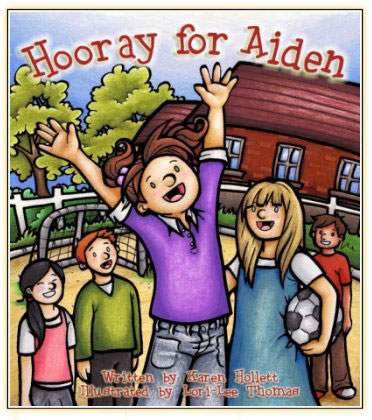 A new friend to the stuttering community has self-published her very first book. Karen Hollett has written Hooray For Aiden, a story book for children ages 4-9.
It is a touching story of self-discovery as young Aiden moves to a new town and worries about how her second-grade classmates will react to her stuttering.
At first, Aiden tries to hide her stutter from her classmates, which makes her sad. She has a caring teacher who helps her learn that it is OK to stutter and OK to be herself.
Karen is a person who stutters herself and knows first hand how challenging it can be for a young person in school dealing with any kind of difference. Karen sought advice and guidance from members of the stuttering community to make sure the book would help children, and parents and everyone else, get the message that stuttering doesn’t have to hold you back.
Hooray For Aiden has received positive reviews from professionals in the stuttering community and is sure to be a wonderful resource for kids who stutter. See some of the reviews here!
I am looking forward to hearing more about Karen’s journey with her stuttering. She will join me on an upcoming episode of the podcast “Women Who Stutter: Our Stories” . She will, of course, tell her story.
For more information about Karen and to buy the book, visit Hooray Publishing. Looks like Karen’s on to something.
Congratulations, Karen!
Pilot Episode – The Women’s Podcast
Posted on: May 6, 2010
I am really excited to add an audio section to this blog that I hope will be at least weekly. Good friend Daniele Rossi, creator of the site Stuttering is Cool, encouraged me to start a podcast that would just focus on women who stutter and our stories. There doesn’t appear to be any other podcast devoted specifically to women and our stuttering journeys.
Danny has helped guide me through the basic steps of launching a podcast and adding it to this site. He may not realize it, but he will probably become my podcast mentor. He helped me get some (free) recording software and was patient with me as I worked with my first audio file longer than 10 minutes. I met Danny on Twitter, along with lots of other really amazing people who just happen to stutter.
I pretty much know this will be a work in progress. I hope to get better each week with the logistics of posting audio files. The most important thing is the honest dialogue with women who stutter as we share our stories.
I am pleased to welcome my very first guest, Tamara Nunes Williams. She is a wife, mother, daughter, college student, and care giver to persons with disabilities. And she happens to stutter. She has an amazing story. Please listen to Episode 1.
A Sister Who Stutters
Posted on: April 20, 2010
My sister Trish and I talked about how she felt about having a sister who stutters. I have really only had candid conversations like this with one other sibling. I never knew how Trish felt about some things. She was pretty honest. Actually, she quite surprised me with some things she said. She agreed to let me record our conversation, which also really surprised me.
I am truly beginning to understand the value of talking about the difficult things. Talking a little about my stuttering opened the door for my sister to mention other, harder things that we have shared, but never really talked about.
I will remember for a long time one thing in particular my sister said. “You had to take your stuttering with you wherever you went”. I never would have thought she would have given that any thought. She realized that we could close the door on other things and temporarily act like they weren’t there. But not the stuttering. It came with me.
Here is an audio clip of our conversation, which as I said, opened the door and made talking about some other things a little easier.
Trish’s perspective on having a sister who stutters (10.33)
I was really happy that my sister was willing to be so open. The more we talk about stuttering, the less difficult it becomes to talk about stuttering.
 Make Room For The Stuttering
What people are saying!