Author Archive
I Feel Home – Episode 188
Posted on: August 28, 2018
 Episode 188 features Sarah Albannay, who hails from Kuwait, but is presently living in Pocatello, Idaho while attending college. Sarah has been in the USA for four years now, and is studying Political Science. She says she’ll know what to do with her degree when she’s done.
We had a really interesting conversation. Sarah finds it so much easier to stutter here in the USA. Americans are so much more open about personal issues than she finds people to be at home in Kuwait. She feels quite comfortable advertising that she stutters with classmates and professors here. Sarah says she was a totally different person in Kuwait. (You’ll have to listen to hear her explain that!)
Sarah feels there is so much support here in the USA. She’s found the NSA and good stuttering therapy which has included participation in “intensive stuttering programs.” Sarah wanted to be sure she gave a shout out to Dan Hudock, the professor at Idaho State University that has really helped her see stuttering differently.
See below for a one minute look at what Professor Hudock is doing at ISU. I also included a fantastic Tedx Talk that Dan did about stuttering. Couldn’t resist – had to include it.
The music used in todays episode is credited as always to ccMixter.
Workplace Stuttering Tips
Posted on: August 24, 2018
- In: Posts
- Leave a Comment
I was instrumental in getting these two videos made for the National Stuttering Association and figured, what the heck, let me share them here. They might help you. They might help employers. They might help a lot of people. So, go ahead and share.
And I’m actually in both of them. Which is kind of cool. So are my friends Katie and Derek. Even cooler. We were all willing to be completely vulnerable.
The first video is something really short you can use to educate your employer before you’re hired – during the job interview stage – and after you’re hired too, to help talk about stuttering at work. Because we know that can be a challenge.
The second video is also really short and to the point. We who stutter get really stressed about job interviews. Preparation can make all the difference. Do some research. You’d be surprised how many people go into a job interview and it’s obvious they know nothing about the company they hope will hire them. Do that research. Show you are interested.
And consider disclosing that you stutter. It will make it so much easier for you and the interviewer. You will feel more at ease and won’t be obsessively thinking what will happen when you stutter. By telling the interviewer upfront that you stutter, you remove that anxiety you have and let the listener know exactly what to expect. It just makes the speaking encounter so much easier and then you can be your cool, calm collected best self at the interview.
Being An Effective Communicator
Posted on: August 22, 2018
- In: Posts
- Leave a Comment
Two weeks ago, I had the amazing opportunity to help out with a “Mock Interview Day” for people who stutter at a globally recognized corporate office in New York City. For the second time, Goldman Sachs offered it’s employees an opportunity to spend a volunteer day helping people who stutter practice job interviews.
I helped an employee who stutters who works at Goldman coordinate participant registration, which was free and open to anyone who could come in person for two practice interview sessions. Goldman had 25 employee volunteers who would each interview two different individuals and provide that all important feedback.
Too often, when we interview for a job and don’t get an offer, we aren’t given any feedback. People who stutter then sometimes automatically conclude it must be because of stuttering. Of course, that might be true sometimes but other times it could be for any number of reasons: lack of experience or education or someone else is just genuinely a better fit.
One of the things we did to help the employee interviewers prepare for talking with people who stutter was we provided a “stuttering overview” session in the morning before the participants arrived. A SLP who stutters, the Goldman employee who stutters and myself presented for a little over an hour on what stuttering is and isn’t, tips for listening, when or if to intervene if the person who stutters really struggles and we all offered a personal perspective on our own stuttering in the workplace experiences. Everybody was extremely engaged and asked thoughtful, important questions. We got a lot of very positive feedback about how helpful that was.
At the end of the day, when we were networking and eating pizza, someone came up to me and asked about whether I’d be interested or able to help provide similar training to his staff. We spoke for about 15 minutes. Out of the corner of my eye, I noticed a Goldman employee waiting patiently to speak with me. I tried hard to acknowledge him, but the person engaging with me wasn’t slowing down anytime soon.
Finally, the Goldman employee got to me. What he waited all that time to share with me blew my mind. He said, “you probably hear this all the time, but you are the most compelling speaker I have ever heard.” I felt my face flush and immediately felt embarrassed. He went on to say that he felt he was a crappy speaker and he was so impressed that I stuttered and still managed to make people want to hear what I had to say. He wanted to know my secret. Truly, I was speechless.
I thanked him and we talked for about a half hour and I encouraged him to check out Toastmasters. We have since communicated by email a few times and he told me has checked out the numerous Toastmaster options available in his area.
So why am I sharing this? I am not bragging, honest. I was embarrassed, but it resonated so I feel I needed to share. We who stutter can be and are amazingly effective communicators. When we remember that it’s not all about fluency but connecting with our listener and saying what we want to say, there’s a lesson here. Even fluent speakers get freaked out about public speaking. Our words count and that’s what people want to hear. We just need to remember that again and again.
Episode 187 features return guest Christine Simpson, from the British Stammering Association. Christine lives in London in the UK and last year retired from a long career in library services. After retirement, she was looking for a project and found herself on the organizing committee of this year’s BSA conference, coming up in several weeks.
There’s a lot of work involved in organizing a conference, but Christine knows it’s going to be wonderful, because it’s always wonderful when people who stammer come together. We talk about what’s in store for conference participants and the wide range of diverse, yet inclusive opportunities available for everyone from first timers to veteran attendees across the age spectrum.
We also speak about what’s near and dear to both of us, continuing the tradition of offering a space just for women who stammer. Women who stammer face unique challenges and experience stammering through a different lens obviously than men. So I was pleased to hear that’s being honored and offered and at the same time I was sad that I won’t be there.
If you are at all unsure what to expect from a BSA conference, be sure to listen in. Our conversation paints a great picture of how much benefit you will gain from attending.
I made a pact with Christine that I will get to the next one, wherever in the UK it will be, in 2020.
As always, the music used in today’s episode is credited to ccMixter.
Calling For Peace – Episode 186
Posted on: August 16, 2018
Episode 186 features Maddy Bognar, who hails from Woodstock, New York. Maddy is an occupational therapy student and also a member of a band called the Turn-Ups. She has recently taken a leap to commit to booking two performance shows featuring Kirtan, which is a call and response chant style originating from the Bhakti Yoga tradition in India and is done traditionally in Sanskrit.
Kirtan first caught Maddy’s attention in 2016 when she attended an arts festival, called the O+ Festival, which is really cool to learn about itself. O+ artists and musicians receive health and wellness care in an Artists’ Clinic staffed by volunteer providers and in local dentist offices as a thank you for their creative gifts. O+ calls this exchange: the art of medicine for the medicine of art. I love that!
Kirtan allows Maddy to find peace and a sense of calm, which she then shares with audience members, who participate because Kirtan is also interactive. And Kirtan means “storytelling” which is so cool because that’s exactly what we do on this podcast, share our stories.
In our conversation, we share how we met a few months ago when we both attended a performance by a stand-up comedian who stutters and wound up sharing that we both stutter and went to dinner together.
Podcast note: I tried as hard as I could in this episode to remove the annoying echo, but just didn’t succeed. Sorry, after all these years, I’m still an amateur.
The music used in today’s episode is credited to ccMixter.
Episode 185 features Natalie Park who hails from Loughborough, East Midlands, England in the UK. Natalie is a certified vocational assessor and tutor, currently taking courses in counseling and psychotherapy so she can one day help people who stammer.
We start off the conversation talking about job hunting. Natalie actually loves job interviews, which is quite contrary to most people who stutter. We also discuss education and advocacy and how important this is for future generations. She mentions that openly talking about stuttering smashes assumptions, which we know can be very dangerous.
We talk about how we have the opportunity to use our stutter/stammer in very powerful ways – we can control conversations, slow them down, actually listen to the words being said, instead of just listening to respond. People who stutter are very powerful people, just not enough of us know that yet. YET being the key word here.
We wrap up this amazing conversation talking about the profound experience that Natalie had at the end of June with 40 other people around her age who stutter. The theme was performing arts and Natalie shares how hard it was to actually put into words the amazing transformation she saw in people after they embraced new ideas and pushed out of their comfort zones. She explains it beautifully here in this blog post called The Week That Changed My Life.
The music used in today’s episode is credited to ccMixter.
When I Stutter
Posted on: August 8, 2018
- In: Posts
- Leave a Comment
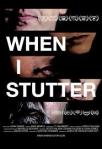 I recently had the privilege to see the documentary When I Stutter, a film by John Gomez. This is a film about people who stutter and portrays how people who stutter actually feel about stuttering, which is not always talked about. It is an honest examination of the sometimes dark side of stuttering, which often doesn’t get explored.
The film is currently making the rounds of private screenings and film festivals. It is being sponsored by colleges and universities that have communications disorders programs and being promoted by the National Stuttering Association.
It is a powerful learning experience for speech language pathologists and students studying to be future therapists. But it also demands and deserves to be seen by anyone who has an interest in the power of people who stutter daring to express themselves no matter how their voice might sound or how long it may take to speak.
That’s what hit home for me. The power of the voices. These are real people who stutter. Not actors portraying people who stutter, which is the sad norm when stuttering even gets a mention today. And we hear from both men and women and people of color, again an anomaly. So the film, by its intentional design, promotes diversity and inclusion.
Listening to the voices and seeing the facial expressions of people like me sharing their stories was visceral. Partly because I knew some of the people, especially the women, Rachel and Jenny, who have both been featured as guests on my podcast, Women Who Stutter: Our Stories.
So, knowing these people made it personal. Knowing the stories as my own made it real. Understanding the dynamics and complexity of stuttering made me nod my head in some parts. And tears welled up easily at other parts.
This is a must see film if you have any interest at all in the human condition. Even if you don’t stutter, you will identify with the shame, isolation and feelings of inadequacy that anyone with something that makes us stand out from everyone else can so easily relate to.
Kudos to John Gomez for bringing this film to light and to the stuttering community and the communities at large that we inhabit. We all have something that makes us different, stand out, unique. It is vital that we share our stories about whatever that is in as authentic a voice as possible. And “When I Stutter” accomplishes this, with grace and respect and actually honors the people who dared to be real with us.
Go see this film. It’s important.
More Than Just Words – Episode 184
Posted on: August 6, 2018
Episode 184 features Madeline Wahl, who presently lives in New York City. She moved to NY from Florida five years ago to take a job with the Huff Post. She currently works as an opinion editor with the Huff, has always loved writing and writes a lot in her spare time. Madeline also greatly enjoys solo traveling and talks about how your “travel self” is your “true self.”
I first “discovered” Madeline when I read a few of her articles about stuttering that were published on the Huff Post. I remember being so thrilled to see pieces about stuttering in a popular site that I read and I really wanted to see if I could get Madeline to come on here as a guest. I emailed her, but didn’t hear back. So, I honestly forgot about it!
Then, shortly before this year’s NSA conference I heard from Madeline. She had archived my email and reached out, saying she’d love to be a guest if I’d still have her. Of course, I was thrilled to hear from her. We started corresponding through email, as Madeline was planning to attend that NSA conference for the first time. I offered her some tips and suggestions and we vowed to meet in person at the conference.
Well, we did, very briefly. Then we followed up about two weeks later, and here’s this conversation we had. Listen in as Madeline shares what that first NSA conference was like, some really deep thoughts about the value and importance of words, and the deep emotions that get stirred up when being surrounded by other people who stutter.
We also talk about intense listening, patience being mindful, and the true spectrum of stuttering that exists within the stuttering community.
I was grateful for this “deep dive” conversation and hope you find it as compelling as I did.
Here are links to several of the articles that Madeline mentions in this episode.
What It Actually Feels Like To Stutter
Why I’m Thankful That I Stutter
As always, the podcast safe music used in today’s episode is credited to ccMixter.
Episode 183 features Emily Anderson, who hails from Anchorage, Alaska. Emily is 27 years old and just recently started the first ever NSA Family Chapter in Alaska.
Emily works as an environmental technician doing water sampling and monitors contaminated water sites. She also does outreach with native Alaskan tribes. Emily also has a second job as a server at a steak house restaurant.
Emily shared an interesting phenomena about her stuttering. It actually works to her advantage when speaking one on one with tribal residents. In Alaska, it is custom and tradition to speak slowly and take long pauses, so it works perfectly with her stuttering!
Listen in as we discuss Emily’s impressions of her first NSA conference. She shares that she thought it wasn’t going to live up to the hype she had heard about. Well, she was proven wrong! She talks about the comfort she found being in a judgement free zone where other people had the same weird insecurities she has had.
We talk about workplace stuttering and how she manages in both jobs she has that require a lot of communication. Her favorite workshop was the one on stuttering in the workplace, where she heard the stories of people who have not let stuttering limit their career goals. We even talk about how cool it was that in that workshop she met a real rocket scientist who happens to stutter.
And we talk about the fact that Emily’s mom has been a SLP for 40 years and was the perfect role model for Emily growing up. Mom is so proud that Emily decided to go to her first conference and is actually thinking about going herself next year.
Emily has written a couple of articles about stuttering for The Mighty. Here is the links to two of them.
Finding My Confidence Working In Food Service With A Stutter
When Stuttering Makes Me An Extrovert Stuck In An Introvert’s Body
The music used in today’s episode is credited to ccMixter.
Presenting: Writers Who Stutter
Posted on: July 28, 2018
- In: Posts
- Leave a Comment
I promised two weeks ago that I would offer a short summary of a few of the powerful, especially meaningful workshops that I attended just for myself at the recent National Stuttering Association conference in Chicago. I say “just for myself” because as usual I did find myself busy at the conference helping lead a few workshops and helping with other things. It took me two weeks to write this because I’ve been busy and I needed time to process how wonderful some of these workshops were.
So it was important to me to attend a few sessions that I was just a participant and could enjoy the experience facilitated by others. One such workshop that I found profoundly important was “Writers Who Stutter” which was presented last year and again for the second time this year. I couldn’t attend last year because of a schedule conflict so I was excited and intrigued to see what they might offer.
“They” were people who stutter who all happen to be women and immensely enjoy writing. In fact, they started a “writers who stutter” Facebook group within the last year and encourage others to participate and share some of their pieces with each other. These women – Elizabeth, Jaymie and Chani – all express themselves exquisitely in writing and in voice too. They have all been guests on my podcast and are great storytellers.
Since I didn’t get to attend last year, I wasn’t sure what to expect. And it was a 9:00am workshop, which honestly I choose to skip most of them in favor of squeezing in some needed rest, which you don’t get much of at these conferences, so you take it when you can get it.
As preparation for this year’s version of the writer’s who stutter workshop, the facilitators offered a warm-up writing exercise through the Facebook group. They offered a “writing prompt” used from last year and asked participants to write a six word story about stuttering. I was thinking, “yeah, right, like that’s possible.”
But I thought about it and offered my thought to the group. “Stuttering is about me, not you.” The facilitators commented right away that they loved it and even asked permission to use it in some other way. So, I was hooked and knew I’d find time to go to that workshop in Chicago. Even if it was at 9:00am.
I’m so glad I did! Elizabeth, Jaymie and Chani talked about the important of our writing voice and how it becomes part of our identity. I could so completely relate with that. For years, because I stutter, I often found the only way I could express myself was through writing. I believed the voices in my head that said my voice wasn’t worthy of being heard.
But with writing, the words would flow, fluently and fluidly. I remember in the early days of this blog, I recall writing things but don’t recall the actual process of typing them. The words just sort of magically flew from my fingertips and often just appeared on the screen and I’d stare incredulously and wonder how did those words appear. And sometimes those pieces were my best writing and didn’t need any editing. It was amazing to me to see that unfold time and time again.
It still happens once in a while. Like right now, I am not thinking any thoughts as I type this, but somehow the words are coming together, so effortlessly and fluidly filling the page,.
And I think that was the point of the writers who stutter workshop, at least to me anyway. It may not have been the facilitator’s main premise at all. But my take-away was that we should respect the identity we create as writers and go ahead and let stuttering inform our stories and what we choose to write about. Stuttering experiences provide rich, compelling stories that belong to us, the community that stutters. And we need to have a space to do just that – write and create and share and get feedback and write some more.
This workshop gave attendees a chance to break into small groups and write a bit on a prompt that we were given to get us started. Then we could share within our group if we wanted. Or not. Maybe we just wanted to soak in the experience and keep our musings private. Then the last fifteen minutes or so of the workshop brought the smaller groups back together to share out and process as a whole and see the beauty of our creations, our identities and the power of our voices – both in writing and voiced out loud.
How lucky I was to attend that workshop. It reminded me how many of us who stutter have often gravitated to pen and paper to express ourselves. Because that often felt better, right and eloquent like we think we aren’t. But we’re wrong! We are eloquent both in writing and in voice. When the two collide and we’re given a space to explore that, great things happen.
Thank you Elizabeth, Jaymie and Chani for staying true to you and sustaining your group for a year and giving writers who stutter a place to realize our words are worthy, no matter which way we choose to express them.
I look forward to next year’s version of this workshop.
I Found My Tribe – Episode 182
Posted on: July 25, 2018
Episode 182 features Dana Koprowski, who hails from just outside of Chicago, Illinois. Dana has a background in early childhood education and presently works as a nanny for a family and their two children.
We talk about career choices, interacting with fluent people about stuttering and how for a long time, Dana didn’t really care for it – stuttering – too much.
Then things changed. In 2014, Dana Googled stuttering and came across Stutter Social. Suddenly, she was in a video chat room for the first time with other people who stutter and that changed her life.
She took a break from stuttering for a while and then rejoined the Stutter Social hangouts, where she heard people talking about the NSA annual conference. And learned it happened to be in Chicago, where she lived. Despite coming up with every excuse in the book why she couldn’t go, Dana did go to her first conference and this is her story. Told from a woman who told me she didn’t have a story.
Listen in. It’s amazing. Leave feedback. Decide for yourself if attending a stuttering conference is worth it.
The music used in today’s episode is credited to ccMixter.
Oh, and here’s Dana’s video she posted on YouTube that she mentions in the episode.
People Who Get Me – Episode 181
Posted on: July 19, 2018
Episode 181 features 21-year-old Mikaela, who hails from San Diego, California, after having moved there on a whim six months ago from Vermont. Mikaela works in a float position with the County of San Diego, which means every 3 months she gets reassigned and gets to manage being open with new people about stuttering.
Mikaela’s real passion is EMS and Firefighting. Once her Vermont certification transfers to California, Mikaela plans to work in this field, which of course is a highly demanding communication field. We talk about how she manages and how lucky she’s been to have had “stutter friendly workplaces.”
This episode is really about how Mikaela found support and what that means. She met up with people who stutter on Stutter Social and then when she decided to move to California, she was referred to the local NSA Chapter. It was the first time Mikaela had met someone in person who also stutters.
Mikaela actually immersed herself in stuttering support over 6 months and found herself at the recent annual NSA conference as a first timer. Her experiences and insights are incredible. It’s also wonderful to hear what it was like to meet people in person that she’d only met online.
If you’ve been unsure about how meeting other people who stutter can change your life, listen to this conversation. It’s truly a testament to how “finding your tribe” can be a game changer.
The music used in this episode is credited to ccMixter.
The Stuttering Monologues
Posted on: July 9, 2018
- In: Posts
- Leave a Comment
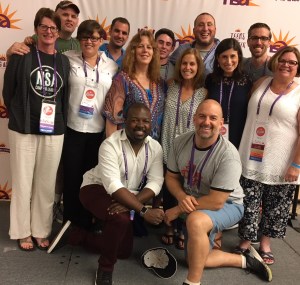
There is so much I want to say about the recent National Stuttering Association conference that just wrapped up in Chicago, Illinois this weekend. I am going to write later in the week about a couple of deeply important workshops that I attended that opened up dialogue that some people may not be used to.
But I feel compelled to write just a bit about The Stuttering Monologues, which was a performance I coordinated with 12 people and that we performed at the closing ceremony on Saturday July 7. I got the idea to create a version of stuttering monologues back in 2012 after watching a local performance of The Vagina Monologues, written by Eve Ensler. Ensler created her Vagina Monologues as an activism vehicle for women to be able to voice their concerns about consensual and non-consensual sexual experiences. Women of all different ages, races, sexual orientations and other differences let their voice be heard.
I envisioned that the same could be done with our stuttering stories. I presented the inaugural Stuttering Monologues as a workshop at the NSA conference in 2012 in Tampa. It was hugely successful – one of the most attended sessions, with standing room only. I brought it back again the following year, in Scottsdale in 2013. Again, the session was a stand-out, with a wall in the workshop room needing to be opened in order to accommodate people.
I wanted to bring it back to the conference again, but felt waiting a few years to keep the experience fresh was best. This seemed right, 5 years later and in Chicago. The NSA Executive Director asked me what I thought about presenting it to the whole conference as part of fully attended closing ceremony. We could make that work, right? What was done the previous two times in 75 minutes would now need to be done in less than 30 minutes.
I embraced the challenge. I had already lined up my presenters for the 2018 version of the Monologues when I learned we would do them at the closing and everyone would need to come in at under 2 minutes. That’s a big challenge for people who stutter. One person freely admitted that sometimes it has taken him fully two minutes to just say his name.
But we did it and to enormous success. We heard deeply moving, authentic stories about fear, shame, priorities, kindness and the human condition. It was funny, gut wrenching, inspiring and real all rolled up in one neat, 26 minute package. We heard monologues titled, “Dear Diary,” “You Don’t Know What You Don’t Know,” and “Heartbeat.” All rang true and we somehow managed to capture the diversity of our stuttering community through the unique voices we heard.
I had some people come up to me afterwards saying it was the best part of the conference. That the short stories were so powerful and riveting that everyone should hear something like this that so perfectly captures the complexity of stuttering. A long time member’s husband came up to me and said for him it was the best part of the conference. He said it was moving, emotional and powerful and that he could tell a lot of work went into it to make it look so seamless. That meant so much to me.
This was a labor of love. Not everything went perfectly. Some people didn’t come to practice sessions, some waited until the 11th hour to submit titles and bios and two people bowed out throughout the planning process. But it worked. Authentic voices were raised and eager ears listened to the stories that are all of us.
The Stories They Tell – Episode 180
Posted on: July 2, 2018
Episode 180 features Petra Ammerlaan who hails from Dreischor, The Netherlands. Petra has been a nurse caring for the elderly for 28 years. She is married to a very supportive husband who never cared that she stutters.
Petra got into nursing because she always liked taking care of people. She works mostly with people at the end of their lives and treasures the stories they tell. Patients have never cared about her stuttering, but it’s sometimes been a different story with bosses and coworkers!
Listen in Petra shares about being covert for a long time, still trying to hide it sometimes. “Being yourself is often hard with a stutter.” We also talk about speech therapy experiences, being around those who love and care about us, and the importance of taking baby steps on our journey with stuttering.
We also chat about the Facebook group Stuttering Community and Petra’s recent leap of courage to record and post a video to the group, for the first time.
The music clip used in today’s episode is credited to ccMixter.
 Make Room For The Stuttering
What people are saying!