Posts Tagged ‘stuttering’
The Stare Factor
Posted on: December 7, 2015
It’s that time of year. Restaurants and bars are very busy, with people getting together for the holiday season. People are often very close to you when you are ordering food or drink, just because the places are busier than at other times of the year.
Has this ever happened to you? You’re placing your order at the bar and stuttering extremely well. It’s loud at the bar, so you are speaking a bit more loudly than usual, so stuttering loudly. As you are trying to remain composed, you are aware that the person next to you is staring at you with great interest.
Your face turns red, as you are aware that the person is probably trying to figure out what the hell is happening next to him. You can read his facial expression. You can see a “WTF?” spread across his face. What do you do?
I usually don’t like to draw more attention to myself when stuttering publicly like this, but sometimes “the stare factor” demands some type of response.
Resist the urge to say something smart, like, “do you want to take a picture? It will last longer.” That’s childish. I used to say that when I was younger when I would get angry when someone was obviously staring at me or a friend when we were out. Not necessarily for stuttering, but for just about anything.
As an adult, when this has happened to me, I’ve reacted several ways. I’ve said or done nothing, just dealt with the embarrassment, got my order and moved away. That is not very satisfying, however, and sometimes leads to negative self-talk.
One way I’ve dealt with this is when I turned to the “starer” and very calmly said, “haven’t you ever heard anyone stutter before? It’s OK, I’m OK, thanks for the concern.” That caused the “starer” to get a little embarrassed, which was not my intention but allowed me to be assertive and not left feeling embarrassed myself.
What about you? Has this ever happened? How have you responded? It can be extremely annoying when this happens but we can have the upper hand and leave the situation with our dignity intact if we can figure out a good comeback. Let me know your thoughts.
Showing Up – Episode 148
Posted on: November 16, 2015
 Episode 148 features Karen Krajcer, who hails from San Antonio, Texas. Karen teaches creative writing to high school students and is also working on her own novel, titled “Whisper, Sing.”
The novel is about two siblings who stutter, who make dramatically different choices about how they deal with their stutter. Karen shares that the emotional truth of the novel is based on real life experience.
Listen in as we discuss what it is like to be a covert stutterer and how it can take over your whole life. We discussed missed opportunities, “coming out,” acceptance, speech therapy and so much more.
We also discuss Karen’s involvement in the National Stuttering Association – she reinstated the San Antonio NSA Chapter. Karen talks about how important it is for people to just show up at support meetings, as it can change their lives, like it did hers.
And we discuss Karen’s part in the book “Turning Points” which was discussed in the last podcast episode. Karen wrote an essay which became a chapter in the book called, “The Problem of Passing,” about her experiences as a covert stutterer.
The podcast safe music used in today’s episode is credited to ccMixter.
Kids Rock It Out For ISAD
Posted on: October 22, 2015
My friends in the French stuttering community are launching a campaign to celebrate International Stuttering Awareness Day (ISAD,) which is today, October 22. Their initiative is to portray children who stutter in a positive and casual manner.
The initiative was launched by the mother of a child who stutters and quickly gained momentum with other parents. The French Facebook group plans to feature the children s’ stories on French blogs today and over the next few days.
I think this is a great idea and am so pleased to help “spread the word,” which is the theme of this year’s ISAD. What could be more positive and inspiring than children talking so matter-of-fact about stuttering?
Here is Rose, age 9, and her story.
“My name is Rose. I love drawing. My preferred colour, it’s turquoise. My best friend, it’s Cecilia. My preferred dish, it’s fajitas. And I stutter. It isn’t because I lack self confidence. It is not caused by a trauma. It isn’t my parents’ fault. I just stutter – it’s neurological”.
You’re right, Rose. We just stutter. Rose is beautiful and has so many interests. Help us spread the word.
![12179871_10204791697743308_2012867484_n[1]](https://stutterrockstar.com/wp-content/uploads/2015/10/12179871_10204791697743308_2012867484_n1.jpg)
Stuttering For A Purpose
Posted on: October 19, 2015
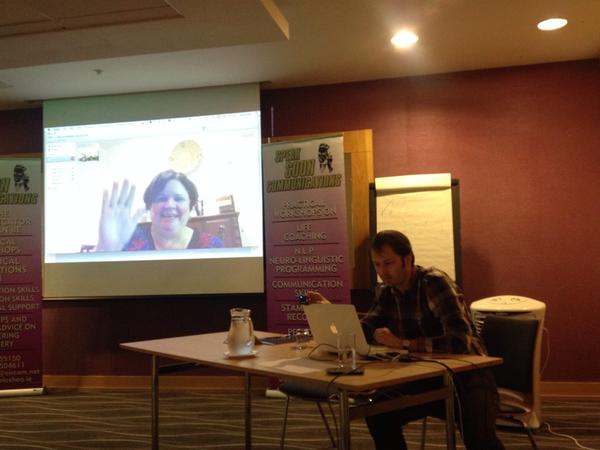
I had the opportunity to speak on Saturday via Skype at the Irish Stammering Association’s annual National Stammering Awareness Day event in Dublin, Ireland. I was asked to be a keynote speaker during their full day conference style event and speak on the theme of this year’s ISAD, “Spread The Word – Educate, Cooperate, Communicate.”
I wondered what I could speak about that would best convey how I have spread the word about stuttering awareness. Purpose came to mind.
I remember when I attended my first FRIENDS conference in 2008 and I realized that stuttering can actually have purpose. FRIENDS is the association for young people who stutter. It is a parent driven group that is all about support for young people who stutter and their parents.
I learned about purpose after hearing parents tell me how happy they were that I had come to the conference and shared myself and stories with them. For the first time in many years, I realized that my stuttering could be bigger than just me. That I could use it to spread the word and educate others about stuttering, if I dared.
After that FRIENDS conference, I became a real advocate for stuttering awareness. I had articles written in the local newspapers, organized several stuttering events in the community and began visiting middle schools to educate kids who don’t stutter on what stuttering is and tied it into teasing and bullying prevention. Doing these types of awareness activities became bigger for me than my stuttering.
So, that’s what I spoke about at the Irish Stammering Awareness event on Saturday – purpose. How a sense of purpose can be bigger than you and how my desire to help others has kind of transcended my own stuttering.
I shared with the group about the advocacy activities that I do and challenged them to consider doing similar. It was a great experience, even with some technology disruptions. I felt honored to have been asked to share my story and to talk about purpose. Here’s a picture of me as we were just getting started.
The Disability Question
Posted on: October 14, 2015
- In: Posts
- 2 Comments
The International Stuttering Awareness Day (ISAD) online conference is going on right now and can be found here.
I have a paper in the conference this year addressing the issue of whether stuttering is viewed as a disability. And who gets to make that call, the individual affected by stuttering or society?
I relate some of my experiences with talking with high school students who noted my stuttering as a disability even though I had never articulated it as a disability myself. I find it interesting that I’ve also had a boss who referred to me as having a disability when I don’t really consider myself disabled.
However, I have “ticked off” the disability box on applications and questionnaires because technically, stuttering is covered by the Americans With Disabilities (ADA) Act of 1998 and 2010.
I would love your thoughts on The Disability Question.
What do you think? Do you consider stuttering a disability? Who gets to make that determination?
It’s All About The Kids
Posted on: October 9, 2015
- In: Posts
- 3 Comments
I just recently returned from a trip to the west coast, that included a weekend in Tempe, Arizona for the 2nd Annual National Stuttering Association Regional Fall Conference.
The regional conferences are similar to the national conferences except that they are on a much smaller scale. 104 people attended this event in Arizona, making it a very intimate gathering where you actually got to know and talk with one another.
There was a mix of adults who stutter, parents, kids and teens and some SLPs. I had a great experience at the workshops, which focused on communicating with ease, managing anger and successful speech management. There was also a great Open Mic session where people told very personal, inspiring stories.
But the best part for me was seeing young people embrace the experience and totally blossom in the presence of other people who stutter. That almost always happens at stuttering conferences but it was magnified this time since it was such a small group.
Young people like Aiden, Diego and Regan felt comfortable to get up and speak to the whole group several times and they shared such pearls of wisdom. They talked about it being OK to stutter, that if you stutter, you’re not alone and that together, we are strong. These are mottoes of the NSA, but to hear them come out of the mouths of babes, so confidently and convincingly, was so inspiring.
Young people who stutter today are fortunate to interact with adults who stutter and vice versa. We adults got so much out of the kid’s confidence and were reminded that if they can speak up and advocate for themselves, then we certainly can too.
Young Regan, 11 years old, really impressed me. She has the self-assurance and sense of humor of a much older teen and clearly feels comfortable in her skin. Her mom was thrilled that they were able to attend their first conference. I fully expect Regan to one day be in a leadership position for the NSA. The kids are our future and it seems like we’ll be in great hands.
Delving Deeply – Episode 147
Posted on: September 29, 2015
Episode 147 features Mona Maali, who hails from Austin Texas. Mona was the chapter leader of the Austin National Stuttering Association (NSA) chapter for four years, and was named the NSA Adult Chapter Leader of the Year in 2010. Presently, Mona is a bookseller at an independent book store in Austin.
Mona also compiled, edited and published a book called Turning Points, which features the stories of many people from the Austin NSA chapter.
Listen in as we discuss parts of Mona’s story, where she honestly and courageously shares her journey both with stuttering and ADHD. She has lived with ADHD as long as she has with stuttering and both have had a profound impact on her life.
We discuss whether Mona thinks there is a connection between stuttering and ADHD. Mona shares that both disorders are highly stigmatized and often the individual is “blamed for” having the disorder. Mona didn’t receive help for either stuttering or ADHD while growing up.
The second half of our conversation focuses on how the book, Turning Points, came to be. It was a two year process of gathering other people’s stories and at the same time overcoming and delving deeply into Mona’s own personal journey.
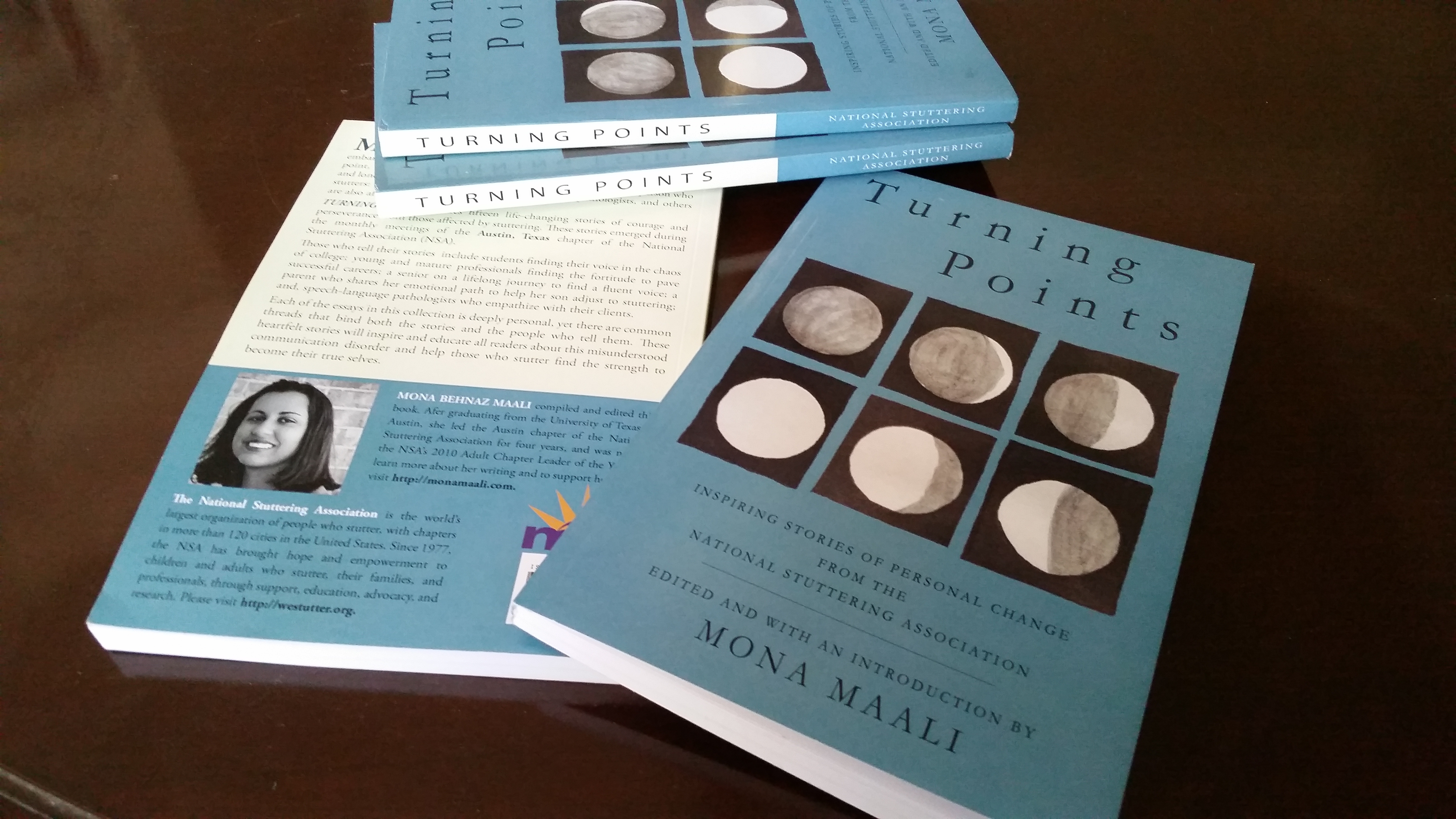 Mona shares quite eloquently why she didn’t include her own story, and how she feels very hopeful to have published a book. She is very pleased with how it turned out. You can purchase the book at Amazon or at the NSA online store.
Today’s music is credited to ccMixter.
ISAD 2015 Coming Soon
Posted on: September 24, 2015
- In: Posts
- Leave a Comment
 Every year, International Stuttering Awareness Day (ISAD) is marked on October 22. It is a day when people who stutter all over the world participate in events and activities that raise awareness about stuttering and educate the non-stuttering public.
The International Stuttering Association also sponsors an annual online conference. From October 1 through October 22, a variety of presentations are available for people to read, watch or listen to, all with the goal of learning more about stuttering.
Both people who stutter and speech professionals contribute papers, audio and video that conference attendees can participate in and engage with the author. There is a discussion option where people can leave comments with the authors and get feedback or questions answered.
There is also an “Ask The Expert” section of the conference where speech professionals volunteer their time to respond to specific questions asked by anyone in the stuttering community or general public.
It is always a great conference, with enlightening topics from people who stutter themselves and professionals.
Don’t miss it! There’s something for everyone. The conference starts next week, Thursday October 1, 2015. I will have a paper in the conference this year. I hope you visit, read and leave your feedback.
Episode 146 has been removed from the podcast line-up on September 26, 2017, at the request of the guest.
This has been the case with several other women over the past years. When people are job searching, they don’t want to be “Googled” by an employer and found to be associated with stuttering.
That is the case with the guest that was on this episode. She doesn’t want to be “outed” by the internet as a person who stutters.
That is certainly understandable in a world that still discriminates against stuttering and where workplace outcomes are not always favorable for people who stutter.
I’m hopeful that this will change, though the efforts of stuttering advocacy associations such as the National Stuttering Association and the International Stuttering Association.
Using Speech Techniques
Posted on: August 27, 2015
- In: Posts
- Leave a Comment
I am not a fan of using fluency shaping techniques. When I participated in speech therapy about 6 years ago, I was really resistant to the traditional techniques that would theoretically make my speech more fluent. I felt like the therapist was trying to “fix me” and I didn’t need fixing, then or now.
But lately, I have been feeling quite self-conscious when answering the phone at work and stuttering on the same word, every time. I’ve been helping to answer the phones more over these summer months because we are short staffed and we all pitch in to help.
When we answer the phone, we state the name of our school building so that the caller knows they have reached the right building. It’s a three word name, and I always stutter on the third word. Every single time. And it’s been bothering me that I stutter like that identifying our school name.
I can’t quite identify why it’s making me feel uncomfortable, because if I stutter later in the conversation, it doesn’t really bother me. It must just be something about those introductory words that I want to be able to say smoothly and confidently. Maybe it doesn’t feel confident to stutter on the same word every time.
So, I’ve been using a prolongation technique on the first letter of the third word, so I can slide into it without repeating the letter/sound. It’s working, as long as I concentrate and remember to do it. I am not feeling as self-conscious when answering the phone.
What I am feeling like is a little bit of a hypocrite. I have not wanted to use fluency techniques because I am comfortable with myself as a stutterer. But here I am, feeling uncomfortable and resorting to a technique.
Hopefully, I’ll get over this quick. Have you ever experienced conflicted emotions about using fluency techniques?
What We Want Everyone To Know
Posted on: August 21, 2015
- In: Posts
- Leave a Comment
The Mighty did a nice piece, in conjunction with the National Stuttering Association (NSA,) on truths people who stutter want people who don’t stutter to know.
The NSA asked the question on their Facebook page and asked people to respond. The Mighty used those quotes in the piece they wrote up. They even created graphics and attributed the quotes to the people, like me, who responded.
Check out the piece here – Eight Truths People Who Stutter Wish Everyone Understood. They did a great job!


What people are saying!