Posts Tagged ‘stuttering’
Sharing Our Stories
Posted on: April 16, 2018
- In: Posts
- Leave a Comment
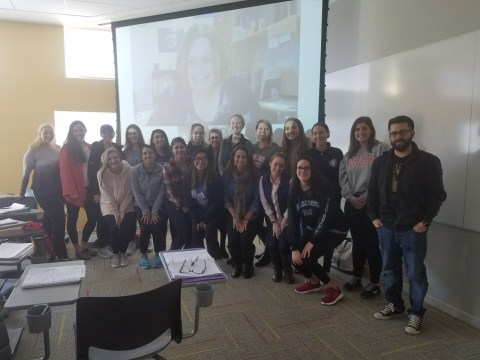
Recently, I had another opportunity to speak to a master’s level fluency class about my experiences with stuttering. Good friend Jill had asked me to guest lecture to the class and cover the piece on covert stuttering.
I always enjoy doing this. I know many other persons who stutter are invited and take the opportunity to share our stories with the people who will be working with us in the future. It’s critical that future therapists understand stuttering from the perspective of someone who has stuttered all their life. You can’t fully understand the stuttering experience just by reading about it.
I found myself talking to the students just briefly about my journey with stuttering, and how essentially I overcame the fears of stuttering to transition from covert to overt. I spent more time talking about lessons I had learned when I was in therapy as an adult and what I thought are the most important things for SLP students to focus on when working with people who stutter covertly.
I talked about being sure that the therapist is treating the right thing. When I was in therapy, I did not want to learn about techniques that would hide my stutter and make me sound more fluent. I needed to stutter, after hiding it for so many years. Understanding what the client needs and wants is crucial for successful therapy. Not everyone is looking for fluency. Many people who stutter want to work on acceptance and have someone affirm for them that stuttering is indeed OK.
I think tomorrow’s therapists really need to wrap their head around that today.
Lipstick Warriors – Episode 175
Posted on: April 3, 2018
 Episode 175 features return guest Rachel Hoge, who hails from Springfield, Tennessee. Rachel was a guest here in 2011, when she was 19 and in college for her undergraduate degree. She returns now, at 26, with her Masters of Fine Arts in creative writing. You can check out her first podcast, Untamed Tongue.
Rachel now has a full-time job as a Production Book Editor and she writes freelance on the side. Her eventual goal is to write a book on the intersection of stuttering and gender. In this episode, we discuss the perspectives of women who stutter in the context of several beautiful essays that Rachel published recently.
Listen in as we discuss how her articles on stuttering helped her transition into a new workplace, as her articles were shared with her team. She didn’t really need to “come out” at work as the team already knew her thoughts on her stuttering. We also discuss how Rachel gets her ideas for her pieces and how she pitches them to editors.
We talk about self-expression and embracing self as a woman who stutters through the lens of her piece, Lipstick Highlights My Stutter, But I’ll Never Stop Wearing It.
And we talk about how our perspective as women who stutter has value, even though society may not recognize that yet. Rachel shares that most women who stutter are warriors, initially misunderstood and overlooked, but now forces to be reckoned with. See her provocative piece on silencing women, What Do You Call a Woman With A Speech Disability? Invisible.
We also discuss the National Stuttering Association and the importance of community.
I absolutely loved this conversation with Rachel, as we delved into the very soul and purpose of this podcast. I am delighted to see how Rachel is gaining visibility through her writing and thus shines a light on women’s issues as we manage stuttering in a fluent world.
Music used in today’s show owes to ccMixter.
Things Can Change – Episode 174
Posted on: March 27, 2018
Episode 174 features Tiffani Kittilstved who hails from Seattle, Washington. Tiffani just completed her clinical fellowship year to become officially licensed as a SLP. She works in private practice and has a caseload that includes about 20 kids who stutter. Tiffani is also actively involved in the stuttering community.
Tiffani leads a family chapter of the National Stuttering Association in Seattle and is also involved with FRIENDS. She is organizing a one-day FRIENDS conference to be held in April, also in Seattle.
Listen in as we talk about the journey Tiffani has had to become a SLP. She had a rocky road in college, first starting out as pre-med and then realizing that she didn’t really like it. Tiffani realized she liked neuroscience and wanted to do something that involved stuttering. She switched majors to SLP and after her first class, the chair of the department told her she should quit, because parents would never want to work with her because of her stuttering.
She tells her story of deciding to pursue graduate school for SLP and doing a lot of research on “stuttering friendly universities.” They are out there!
And we talk about covert stuttering, offering hope and empowerment to parents of kids who stutter, and the importance of counseling in good therapy. Fun fact about Tiffani – she has a twin brother and they both stuttered, but he recovered.
This was such a fun conversation with a very inspiring young woman who stutters. I am looking forward to meeting Tiffani in person in July at the annual NSA conference.
The music used in today’s episode is credited to ccMixter.
What Would You Do?
Posted on: March 6, 2018
I came across a post in one of the stuttering forums written by a young man who shared that his assistant manager at work has been blatantly mocking his stuttering. This has occurred in front of other co-workers and sometimes in front of customers as well.
The young man wrote that he’s talked to the owner in an attempt to get some assistance. He feels the owner can only do so much as the assistant manager doesn’t do the mocking in front of the owner.
He is considering contacting someone at the corporate level to ask for help in getting the harassment to stop. He worries that may be “too much” and asks if there is anything else that could be done.
I feel for this person. It is utterly disrespectful to be mocked at work by a manager. I remember when this happened to me, many years ago, before I was fired from my job because of stuttering. My director would laugh, slap his face and roll his eyes when I stuttered during meetings. He had no problem doing this in front of others. I felt embarrassed and ashamed and helpless to stop him, as he, after all, was a director and an authority figure. He was also a big guy and I honestly always felt intimidated by him.
I didn’t do anything when he harassed me. I just sucked it up and wound up feeling like crap and let negative self-talk take up space in my head. When I left meetings after such ridicule and disrespect, I would go to a bathroom and cry and then compose myself.
Now, years later, after finding support and empowerment through support organizations such as the National Stuttering Association, I have learned to advocate and stand up for myself. I would feel OK to let an offender know that it is unacceptable workplace behavior and I would attempt to educate about stuttering. I would also not hesitate to involve Human Resource staff so that they too could take steps to eliminate a hostile work environment.
Not everyone is in that place to stand up and confront harassment. You really have to have reached a place of acceptance and self-actualization in your journey in order to advocate for yourself.
So, what would you do? How would you handle this if it was you? What advice might you offer someone facing this type of behavior at work?
I’d love your thoughts.
Episode 173 is a departure from the usual format of this podcast. I am excited to bring you a wonderful conversation with four individuals who are helping to organize the first ever Joint World Congress for stuttering and cluttering. This inaugural conference will be held this summer from July 13-16, 2018 in Hiroshima, Japan. It’s a “must attend” event.
Today’s episode features Annie Bradberry, who stutters and is the Chair of the International Stuttering Association (ISA.) Joining her is Kirsten Howells, representing the International Fluency Association (IFA.) Kirsten, a British trained SLP, also stutters and represents the covert stuttering community. We have Susie Cook, a SLP, who is the Chair elect of the International Cluttering Association (ICA.) And last but not least, we have “honorary” woman Charley Adams, who is a SLP and current chair of the ICA.
These heavy weights in the fluency disorder community come together to share some of the highlights of the upcoming Joint World Congress and they, along with Japanese associations, have all collaborated to ensure this event has something for everyone.
Listen in as we chat about the visions of the three different organizations, which strive to improve the quality of life of the people they serve. We talk about how the vision for this sprung from David Shapiro’s work to bring the organizations together, with the idea that together, they are strong. We talk about what each individual, as an attendee of the conference, is most looking forward to about going to Japan.
For good measure, we also discuss disk golfing, revolutionary war re-enactments, polar explorations and a stellar bungee jump opportunity.
This is a “don’t miss” episode if you are thinking about, or planning to attend this first of it’s kind opportunity in Japan this summer. You’ll find everything you need to know to plan an unforgettable adventure. Please feel free to leave feedback or questions. We’d love to hear from you.
A Plethora Of Misinformation
Posted on: February 23, 2018
- In: Posts
- Leave a Comment
I am one of the administrators of the Facebook group “Stuttering Community.” There are over 8000 members from all over the world. People use the group for various reasons. Most people come for support. Many are looking for information about stuttering and just as many are looking for quick fixes.
As an administrator, I occasionally see posts that are inappropriate and need to be removed. But largely, the group goes uncensored and people are free to post what they want. We do have basic ground rules that all people are expected to read and follow. They’re pretty common – no talk of politics, religion or sex. Those are pretty much the big three that we ask people to refrain from. It’s a virtual stuttering support group and we try to keep things relevant to stuttering.
We get people who share success stories and frustrations. People then post words of encouragement and share their own stories. We’ve had people post videos as well, which really is a testament to how supported people feel in the group.
One of the trends has always been that people ask all kinds of questions about stuttering causes, treatment, management, support and cures. It’s always interesting to see how many people are really misinformed about stuttering. People come into the group with very little prior factual knowledge and appear to not be doing any research from the many reputable online resources out there.
Utilize those resources. There’s the National Stuttering Association, the Stuttering Foundation, the International Stuttering Association and the British Stammering Association, to name a few. It’s really important to not trust all of the information that you get from people in a Facebook group. People are often perpetuating myths that have long been debunked. There’s a lot of research available to show that stuttering has a neurological and genetic base and that it’s not simply a bad habit that we can break like biting our fingernails.
Social media is here to stay and it’s wonderful that people are finding support in these virtual stuttering communities. But don’t trust everything you read on the internet. People have good intentions but often are misinformed.
Stutter Friendly Workplaces
Posted on: February 9, 2018
I recently got an email from someone wondering if a list exists of workplaces that are “stutter friendly.” Those are my choice of words. The person emailing me described such a workplace as “not scared” to hire someone who stutters and that wouldn’t look down negatively on the stuttering.
I am not aware of such a list but one might readily exist that we could generate just by asking people who stutter where they work. People who stutter who are employed are already in workplaces that have shown that they are not scared of stuttering and value the person’s skills and contributions more than they worry about stuttering.
The person who reached out indicated that she has been looking for work for over two years and can’t get past the interview phase. She believes it’s because of her stuttering. I pondered how to reply to her. She is an IT Engineer so definitely has skills and abilities that make her employable.
I have no list of “stutter friendly” workplaces that I can just forward her. I wanted to be encouraging and helpful so I asked her where she lives and what types of jobs she’s been applying to. I’m hoping she’ll reply back and maybe I will know someone in her field and in her geographic area that might be able to point her to a good job lead with an employer who values both skills and diversity.
It would be really cool if the National Stuttering Association (NSA) could develop a network of employers in the United States who are “stutter friendly” for just these kinds of situations. In my work as a member of the Board of the NSA, I am leading an initiative on employment advocacy which focuses on helping people who stutter manage communication either during job search or after getting the job.
We’re doing some exciting things like offering mock interviews, one-on-one consultations to discuss workplace stuttering and we’re sponsoring a series of webinars on stuttering more successfully at work.
A long-term vision of mine includes having an Employer Stuttering Network where employers would “sign on” with the NSA as “stutter friendly” workplaces. I have thought about this since before I officially took my current role on the NSA Board. I think it can happen, but people would need to be willing to acknowledge that they stutter and share where they work. People who stutter obviously make great employees.
I am going to follow-up with this person who emailed me and try to find a workplace or two in her area that won’t be “scared” to talk to someone who stutters.
Wish me luck!
Casual Chat About Stuttering
Posted on: January 23, 2018
Yesterday I had an appointment with a health care provider I’ve seen for over 3 years. I see him once every other month for a quick maintenance visit. At this visit, we exchanged small talk which included him asking me about my weekend.
I shared with him that I’d been in Chicago for a long weekend to attend a Board meeting of the National Stuttering Association. He asked if I had ever had a problem with stuttering and I told him that I stutter, and that I was sure I had at least once shared that with him. He said he’s never noticed.
He asked me a little about my experience on the Board and what ways I contribute to the organization. As I was talking, he acknowledged that he indeed heard me occasionally stutter and found it interesting that he never really heard it before. I thought to myself that probably that was because he usually does most of the talking and our visits are always really brief.
He went on to say that he has a large family and eight males in the family stutter. He wondered if there was a genetic link. I told him yes, that there is recent and current research that supports a definite genetic influence and that a NIH researcher has even identified three genes for stuttering.
He was fascinated and I took the opportunity to educate a bit more. I shared that the male to female ratio in stuttering is 4:1 male and that most children often stutter during language development but that about 80% recover naturally and that early intervention was key for children who stutter for more than six months.
He asked a few more questions and then we got to the business at hand! It was the longest conversation we’ve had outside the confines of the reason I was there. I was pleased that he shared his family history with stuttering and that we made a little connection about it. We concluded our visit with comments about how it was nice to have had that chat and interesting how stuttering just came up casually after making small talk for a moment.
I believe I educated this doctor while at the same time I shared something personally important to me. Educating and talking about stuttering with the medical community in a positive and non-shameful way is so important. I’m glad I took the opportunity that was presented to me. And I’m glad I was able to answer some questions for him as it was clear that he was lacking education about stuttering despite having so many family members that stutter.
Looking At Yourself Stuttering
Posted on: January 16, 2018
- In: Posts
- Leave a Comment
I am re-purposing this post that I wrote about 6 years ago, about watching yourself stutter in a mirror. I have always had a very hard time with this. I was reminded of this when I saw a friend post about looking at her stuttering as an mp3 file and seeing the breaks and “dead air” in the audio stream.
Several years ago, I facilitated a story-telling circle with a very supportive audience. These were people who understand the value of sharing our stories, as any one story has the potential to trigger an impact on someone else. So this group were wonderful listeners. I felt very honored sharing some of my stuttering stories with them.
It was very empowering for me to tell my stories, especially to an audience of people who do not stutter. And because it was story telling, which is very different from giving a speech, I did not use notes. So I wasn’t quite sure how it would unfold, as I planned to just tell from the heart.
I knew it would be special, so I had a friend record the three stories I told. I wanted to have a record of what I told. I spent a lot of time editing the video clips, as I planned to share my message with others.
It was very hard watching the videos of myself stuttering. It is one thing to hear myself stutter, like when I do the podcasts or even just hear myself talking to others. But to “see my stuttering”, it kind of brought tears to my eyes the first time. I saw how deliberate I was, I saw what my pauses looked like, I saw what multiple-repetitions looked like. A couple of times, I saw one eye squeeze closed when I blocked. And I saw some physical tension.
Watching myself tell my stories and stutter very openly with people I did not know well was very emotional and poignant for me. I wondered as I watched (the video) what the listeners thought as they watched me.
It was not easy watching the first time. But I did watch several more times and it was easier. I caught the point where I almost choked up, but didn’t. And I realized that sometimes I stutter a lot, and sometimes hardly at all.
I don’t think I could ever purposely practice stuttering in front of a mirror. It would be contrived, not real. It would not help me be anymore comfortable stuttering publicly.
It takes a lot of guts to be who you are in the many different areas of our lives. And to look back on those moments and realize just that. Watching myself be myself in front of others can’t be replicated in private with a mirror.
Real life needs us to be ready to be ourselves when it counts. When sharing our gift of self can make a big difference.
- In: Posts
- Leave a Comment
As I have shared over the years, a big part of my job is going around to different schools and giving presentations to high school school students. I work as a recruiter in a career and technical high school and it’s my job to inform 10th graders about training options they have for their last two years of high school. Students can choose to enroll in one of our programs and attend for a half day, while remaining at their own school for the other half of the day.
It’s a great opportunity for high school students. They can take one of our programs for two years and leave with licenses or industry certifications that will enable them to find jobs right out of high school or be more prepared for college.
I love my job. I am out and about a lot meeting with different kids all of the time and giving information that, to some, may be life changing. Many kids struggle with traditional high school so having an opportunity to participate in hands-on training very often is a game changer. Research shows that kids who graduate from career and technical programs also graduate from high school, often at a higher graduation rate than traditional schools.
So I feel very blessed to have this kind of job. But it can be daunting. I am making the same presentation about 60 times over the course of two months. I have it memorized. But knowing and being comfortable with my material does not make it any easier when I find I am stuttering a lot. Which occurs a lot. I am talking about programs with specific course names that I can’t change for something easier to say.
I almost always stutter on the word “Cosmetology.” It comes out “cos-cos-cos-ma-ma-ma-tology.” Sometimes I get weird looks, sometimes kids will snicker or full out laugh.
I also almost always stutter on the words “Construction” and “Culinary Arts.” Those hard “C” sounds get me every time. I’ve been asked why don’t I just advertise to the students that I stutter so I feel more comfortable and to lessen the uncomfortable reactions I get.
I think about long and hard before each school’s slate of presentations. I am not there to talk about stuttering. I am there to talk about the really cool technical training programs we offer. I don’t want to talk about something that I’m not supposed to talk about during these times, even though I could easily talk about stuttering for hours. No, I usually don’t mention stuttering and just “power through” the stuttering moments or blocks. I try not to let it show when I’m bothered by kid’s reactions to my stuttering. I do my best to remain emotionless and neutral.
Maybe this is not the best strategy to take when doing so many presentations. But this is the way I’ve dealt with it for years now, and suddenly advertising and then having to maybe explain myself feels uncomfortable to me.
So, I am sticking with the way I’ve done it. I have 7 more presentations scheduled for this week and then I’ll be done for this school year. I trust I’ll get through them like I have all the others. And if I don’t, and someone says something that makes me really uncomfortable, maybe, just maybe, I’ll find myself being upfront and sharing this part of myself with kids who will most likely be OK with it.
Making A Difference
Posted on: December 7, 2017
- In: Posts
- Leave a Comment
Last Friday I spoke to high school students about stuttering. These students are in an accelerated science class during their senior year. They are studying methods of scientific research and for their neuroscience unit, the teacher invited me in to talk about stuttering. I talked a little about the neurology and genetics of stuttering and a lot about the emotional complexities of a communication disorder.
It was such a pleasure to present to these students. They had so many questions and were truly interested and engaged with what I shared. I didn’t get through half of the formal presentation I had prepared as I just decided to go with the flow of the student’s questions.
Yesterday, the teacher emailed me thanking me again for coming in and included thank you notes from the students. I was touched and overwhelmed with what they had to say. Here’s a few of the messages from the students.
Ms. Pam Mertz, On behalf of the New Visions Scientific Research Program of 2018 I would like to thank you for taking the time out of your morning to come and teach our class about stuttering. It was very beneficial for us all to learn about this speech disorder, as it is one that is often not taught about. It was very interesting to learn about the association between dopamine and blood flow levels in the brain and stuttering.
Ms. Pam Mertz, thank you so much for meeting with us on Friday and introducing us to just a little snapshot of what stuttering is and how you deal with it in your life. I really appreciate that you were comfortable enough to embrace your stutter with us and that you let your powerful and comforting voice show through. I was very interested in how you explained how stuttering does not affect those when singing because a different side of the brain is used. I really do thank you for meeting with us and I hope that we can meet with you again later on this year.
For someone that stutters, it must be pretty terrifying to have a job that has you speak in front of crowds so often. To be able to overcome any fear and do your job is very inspiring, and for you to let down your guard and openly stutter in front of us is very kind. Thanks again for coming and telling the new Visions Class about your lifelong experience with stuttering. I thought the most interesting part was how you met another student that was the only stutterer in her school, and were able to connect to based on shared experiences.
Thank you Pam for taking the time out of your day to come and talk with us and teach us about stuttering. I really enjoyed hearing about how you have overcome your stutter and learned to deal with it. It is very inspiring!! I did not know much about stuttering and I didn’t know how much of a mental toll having a stutter had on a person. Thank you so much Pam!!
Thank you so much for coming in and talking to us about a topic that doesn’t get enough recognition in this world. I really enjoyed hearing your story and the view on the subject from someone who experiences stuttering everyday of their life. You are very brave for stuttering freely and being able to encourage others to follow in your footsteps. Keep moving forward and I hope the world begins to realize how important this is. I found it really interesting how much of a psychological impact it has on a person and maybe the reason is because they don’t know that they have a huge group of people like you that are ready to support them. Thank you again so much for coming in and teaching us, it was one of the most interesting rotations of the year so far.
Pam, thank you so much for taking the time out of your day to speak to us about something that’s very personal to you. I think that it’s great that you made a platform for yourself to speak on stuttering and make the impact that you do on others. When you explained the story about the little girl Kira when you spoke at the one middle school, it shows how much what you’re doing matters. Learning about how certain things can aggravate or increase one’s stuttering was quite interesting and important knowledge. Thank you again for talking to us I really appreciated it!
Ms. Mertz, Thank you for giving of your time to meet with us on Friday. It was very interesting to hear a first hand account of what it is like to live with stuttering. I realized how uneducated about stuttering I was after hearing your presentation. I think so often people are uneducated about it and do not see it as the real problem that it is. Stuttering in itself is a large problem but it causes many other issues like depression because of the stigma surrounding it. It is important that people are educated about it and thank you for educating our class on it.
An Interview About Stuttering
Posted on: December 1, 2017
- In: Posts
- Leave a Comment
I was fortunate to have the opportunity to be interviewed recently by a freelance journalist in the Albany, NY area. He was looking to do a piece on stuttering and wanted to both write an article and produce a podcast.
I got to give a shout out to the National Stuttering Association and shamelessly plug my own work here on this blog. I am very happy with how it turned out, even the picture. Please take a listen when you get a chance – it’s not too long and you can see how I responded “off the cuff” as the interviewer had not sent me the questions in advance!
Meeting Someone Who Stutters
Posted on: November 28, 2017
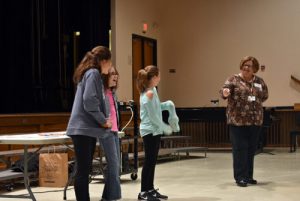 I had the opportunity earlier in the month to talk to middle school kids about stuttering. I gave three presentations, one each to the 6th, 7th and 8th grades. There was about 100 kids in each group. This is a piece the school did about the presentations and put on their website.
It went great. I talked about what stuttering is and isn’t, discussed myths about stuttering and how to interact with someone who stutters. I had several interactive activities for the kids to participate in, so they could “try on” stuttering and so that I could normalize it for them.
I had several large grapefruits and asked a few students to come up to the front of the room and try to hide them somewhere on their person where no one would be able to see them. They had fun trying to conceal a big grapefruit. I explained that it was like when I tried to hide my stuttering – as much as I tried, it still showed.
I also had Chinese Finger Traps for the kids to play with and experiment with getting stuck. I explained how it feels to get stuck when you stutter and get a block.
And I had the students experiment with a quick moment of voluntary stuttering. There were lots of reactions to this. Many felt uncomfortable, awkward, aggravated, found it hard to do. A teacher in the audience shared that she felt many students didn’t want to do it as it might seem disrespectful to someone who really stutters.
The best part of the morning was when a SLP came up to me and said that there was a 6th grader who stutters and she really wanted to come up and meet me and ask some questions. Keira came up after the presentation, introduced herself, stuttered openly and asked several very insightful questions.
She told me I was the first person she had ever met that also stuttered. I could tell it was a big deal for her to have come up to me. I was so glad she did. Hopefully, the experience reassured her that stuttering is not the end of the world and it’s just another way of talking like I had mentioned in the presentation.
Anytime we can, people who stutter should share our experiences, especially to young people. It teaches them about compassion, tolerance and diversity and that’s what makes the world go ’round.
What Was Left Unsaid
Posted on: November 20, 2017
- In: Posts
- 6 Comments
My father died two weeks ago. My father who I never reconciled with over serious childhood issues. My father that yelled and screamed at me when I was 5 years old and first started stuttering. My father whose lack of support drove me to try and hide my stuttering for years. My father who was ashamed that one of his kids stuttered. My father who never allowed me and my siblings to show emotions. My father who never showed me affection. My father who I had not talked to in years.
I happened to be away for the weekend when I got word that he had died. My siblings were text messaging each other and included me in on the thread. As I was driving, my phone blew up with tweets, the sound I use to notify me of text alerts. I glanced down at the phone and tried to see what was going on. I couldn’t figure out what they were talking about from just a quick glance.
I pulled over at the first nearest rest area to get gas and then pulled into a parking spot, curious to see what my siblings were furiously texting about. One sister had offered her condolences to others who were impacted by his death. I didn’t know who they were talking about. It didn’t occur to me to think it was my father. I texted a quick question and asked who died, thinking it was an extended family member. One sister directly responded that it was dad who died.
I was kind of shocked as I was not expecting to hear that and I was 100 miles from home. My brother then chimed in with a text that he was sorry I learned through a text message, but that the family thought it better not to have called me while I was away.
I started driving toward home and had the next 90 minutes or so to think. What I thought about was how weird my reaction was. I was not emotional or stricken – I was worried about how I would handle the upcoming funeral services and deal with family that I hadn’t seen in years. I was worried about possibly not going and how that would look.
I debated not going to any services as I had not had a relationship with the man in years. He never reached out to me and I kept my distance. While he was in a nursing home, several of my sisters tried to guilt me into letting go of the past and consider reconciling with him. They were going to visit him weekly and asked me repeatedly to join them. I chose not to. They stopped asking. I went about my life oblivious to what was happening with him.
I learned later that he had suffered several falls due to the pressure of a brain tumor he’d had for years, that I knew about. The pressure was causing dementia and made him prone to falls. The last fall he took was accompanied by heart failure and several attempts at resuscitation and then his heart just finally stopped.
I always felt a deep sadness that I did not have my father’s heart. I was his first born daughter and always yearned for that relationship with my dad that I knew other people had or that I saw on TV. I was envious of friends who were close with their parents and held a special place in their parents’ hearts. I never really told that to anyone and eventually those yearnings went away as I learned to manage with the hand I had been dealt. I vividly remembered the abusive, chaotic home I grew up in. I couldn’t not remember it.
I did go to my father’s wake and was supremely uncomfortable. I felt lost and like I didn’t belong there. Four of my siblings were also there, along with my father’s second family. A family I had always referred to as our replacement family. His wife, that my father had cheated on my mother with and who was younger than me. Whom I always blamed for hurting my mother.
I saw aunts and uncles, his siblings, that I hadn’t seen in over 25 years, It was awkward. It was more awkward seeing my father’s other daughters, openly grieving. I felt tense and anxious and couldn’t help but feel this whole thing was happening to someone else.
My sister read a “tribute” to my father toward the end of the service, one that talked about a loving father that instilled values and work ethic in all his (10) children and a love for God. I didn’t recognize who she was talking about. It was surreal to me, his firstborn daughter who wasn’t perfect and had never felt his love. My sister had reconciled with him and made peace with him as had two other sisters.
My youngest sister didn’t go to the wake. He was not part of her life and had never met her children, his grandchildren, yet the obituary read that he was their loving grandfather. I felt that people were trying to paint this man to be someone he was not.
I didn’t go to the funeral service or burial the next day. I couldn’t. I felt paralyzed by my very conflicting emotions. Part of me had hated this man for so long, for the emotional and physical abuse of long ago and for making me feel such shame over my stuttering. I carried this around for a long time. I also carried around his influence for a long time. I was in therapy for years, trying to process and perhaps reconcile my “daddy issues,” but never could. The pain was still there, after all these years.
When someone dies and it is unexpected, so much goes unsaid. Such is the case with my father. I never told him how I had yearned for his love, support and approval. I never told him that I have turned out pretty OK and feel like I am in a good place in my life, despite a tumultuous past. I didn’t really even say goodbye.
Part of me feels relief that he is gone, for he is not suffering and hopefully neither will I anymore. But I’m not sure that really is the case. I need to come to terms with what wasn’t said and find a way to process this so that I can move forward in peace.
 Make Room For The Stuttering
What people are saying!