- In: Posts
- 6 Comments
Women Who Stutter Have Different Brain Connections Than Men Who Stutter; Findings May Help Explain Why More Men Than Women Stutter – – ScienceDaily (Nov. 18, 2010)
 I could not resist re-posting this article. My risk-taking friend Lori San Martin posted this link on Facebook and made reference to me in her comment. Lori mentioned that she participated in the clinical research for this study, at NIH in Bethesda, MD. So did I, way back in 2006.
Neither of us knew each other then, so there was no way of knowing this shared connection. Interestingly, Lori chose to post this link on Face book, hoping I would see it and her comment, “Eat your heart out Pam.” When I read the article, I recognized the lead author was the researcher conducting the trial when I flew to Bethesda that summer.
I volunteered for the study because I could. I was available, healthy and willing to help unlock any clues to the mysteries of stuttering, and particularly why women are a “minority within a minority.” Plus, they compensated you, and I had just been fired from my job for stuttering. I felt I could contribute somehow by letting interested researchers study my brain. Lori must have felt the same way.
I even went to Columbia University in 2009 for a similar study of different brain activity. Again, making sacrifices for the good and welfare of the stuttering community. (And it was a sacrifice indeed. I stayed with a friend overnight in his Brooklyn apartment with his wife and two cats. Suffice it to say, I am not a cat person).
Here is the content of the article! As Lori says, “Eat your heart out.” We already know women are special and unique.
According to new research, women who stutter show brain patterns that are distinct from men who stutter. Finding diagnostic brain markers that are unique to people who stutter could help scientists develop treatments that target those areas in the future.
The research was presented at Neuroscience 2010, the annual meeting of the Society for Neuroscience, held in San Diego.
About five percent of young children stutter, but up to 80 percent of them recover. Of those who don’t, most are men; about five times more men than women stutter. These new findings show one difference in brain connections that may explain the striking sex difference in chronic stuttering.
“Girls who continue to stutter past childhood may have greater deficits that are not overcome during development,” said lead author Soo-Eun Chang, PhD, of Michigan State University. “Knowing the sex-based differences in brain development that underlie stuttering may help us find sex-specific neural markers for it.”
Chang and her colleagues mapped participants’ brains using two imaging tools: functional magnetic resonance imaging (fMRI), which showed brain areas active during speech, and diffusion tensor imaging, which provided structural information on connections between brain regions. They tested 18 volunteers who stutter and 14 who don’t.
The images showed that speakers who stutter had fewer connections between the motor planning and execution areas in the left hemisphere of their brains, as well as increased connections between hemispheres. In addition, the women who stutter had distinctly greater connectivity between the motor and sensory regions in both hemispheres than men who stutter. These findings may indicate that the link between motor control and sensory functions may be abnormal in women who stutter.
“These results need to be replicated in young children to examine whether this is the case at stuttering onset or whether it later appears only in adult females who continue to stutter,” Chang said.
Research was supported by the Intramural Research Programs in the National Institute of Neurological Disorders and Stroke and the National Institute on Deafness and other Communication Disorders.
So, what do you think? Comments, thoughts, questions. Come on guys! Can there be discourse about this? Hmm?
- In: Posts
- 9 Comments
A covert stutterer posted this question on one of the email groups. It generated lots of discussion and opinions. Another covert woman asked how do we actually show our stuttering at a Toastmasters meeting and “let the cat out of the bag”. This is what I shared as a response, not realizing that I had remembered this so clearly.
One of the best topics for a person who stutters to give a speech on is stuttering. That’s how I desensitized myself when I joined 4 years ago. My first speech the – “ice breaker” – I told my stuttering story, complete with how I tried to hide it, faking it, how I pulled it off, how it made me feel, etc.
The “ice-breaker” is supposed to be 4-6 minutes. Mine was 15 minutes, because I got emotional and choked up, and did not think I could finish. There was this huge long pause – a wait, actually – and all eyes were on me. This was the first time I had ever told people I had been hiding stuttering all my life. I was fired on May 4, 2006 and I gave this speech on May 23, 2006.
While the room waited for me to compose myself, a funny thing happened. I could feel the energy in the room shift. No one was annoyed, no one was rolling their eyes, no one was being dis-respectful. In fact, I could feel most of them “willing” me to finish. I don’t think they were going to let me out of the room unless I finished.
No one said a word. It was utter silence for 1-2 minutes, which seemed forever, and I willed myself to plod along and finish. I swear I felt that energy pushing me to finish.
When I was done, they all clapped like they do for everyone as I walked back to my seat. By then, my heart was pounding and tears were streaming down my face. There was more silence, as everybody wrote little comments about how I had done and put them in a basket and passed them to me. Next, the person who had been assigned to be my formal evaluator stood up and gave his opinion of how I delivered my first speech.
As he spoke, fresh tears erupted, as I realized what I had just done. I had just done the scariest thing I could ever have imagined doing to a bunch of strangers. My evaluator, Jim (who became my unofficial mentor) stood at the lectern for a sec, then began his evaluation by uttering one word: “Bravo”.
He said he and every person in the room learned as much as they ever would that night about me, about my courage, my resilience, my desire to communicate, my writing skills and my spirit. He talked of things like wearing my emotions on my sleeve, risking being vulnerable, daring to be so personal in a first effort. He also reminded me of time limits, which I can laugh about now, and how I had started a journey that he hoped I would be compelled to finish.
People came up and hugged me after as the meeting got over, and I did not read the little slips till I got home. All of them said something similar – that is was one of the most inspirational first speeches they had heard.
A year later, I gave my 10th speech, and Jim was my evaluator again. He referred back to that night, and many of the same people were there. I still go over time a lot, I still get emotional when I share personal stuff, but that’s what makes for compelling speeches.
People want to hear things that are interesting. Even people who don’t stutter can relate to identifying fears, working to overcome them, doing things anyway, feeling struggle and triumph at the same time.
Lots of people in my club affectionately refer to “Pam’s first speech” as an example of what Toastmasters can do for a person.
In my remaining 9 speeches of the first level, I talked about stuttering twice.. One objective was to speak on something I had researched. So I spoke about the origins of stuttering, best estimates at causes, resources – including support and therapy. I demonstrated the different ways a person might stutter. That was easy. I knew how to stutter.
The other speech was on Voluntary Stuttering, as related to helping people get over fears. I related fear of water to a person gradually stepping in, getting their face wet, holding their breath, dunking in water, etc, and what a person afraid of heights might do. Then I explained how voluntary stuttering helps to break the fear someone may have of stuttering publicly. I had everyone try it with a partner and had them do repetitions on their names.
Tackling the fears we have at Toastmasters is as easy as talking about what we know best. When we talk about what we know best, its easy. We already know the material.
Sounds easy coming from someone who has already done it, but I will never forget how it felt when I made that first speech. My heart thumped, my chest heaved, my cheeks were warm, my eyes were moist. How it felt walking up to the front, how it felt walking back to my seat, how it felt watching everyone write those little feedback slips – WHICH I STILL HAVE – and how it felt to hear a veteran Toastmaster say in his evaluation that I had inspired him and others.
We all have a first time doing everything. Members of my club tell me all the time they still have their first comments slips, they still remember the anxiety, the fear, the relief, the PRIDE. Everybody feels it – stutter or not. Most people rank public speaking as the greatest fear, even over death. At a funeral, most people would rather be in the coffin than delivering the eulogy.
We all have to communicate in life. Toastmasters gives ALL OF US a place to practice, get feedback, and realize, that everybody has their own sweaty palms, dry throat, pounding heart, nervousness, desire to flee . . . . not just us.
Toastmasters has the potential to change lives. Check it out. Find a meeting near you and visit.
Doors Of Opportunity-Episode 40
Posted on: January 10, 2011
 Episode 40 features Mary Rose Sevilla Labandelo, or Mary Lab,as she is known on Facebook, who hails from Vancouver, British Columbia, Canada.
Mary is the founder/coordinator of the Vancouver Support Group for Stutterers and has been a board member of the British Columbia Association for People who Stutter. She is presently a Pre-school teacher.
Mary has always enjoyed being around children, and finds she stutters much less when around children. She finds she has more control, when being in the “role” of teacher, and therefore, has more control over her speech. Mary discusses how she finds that “acting out characters” when reading to children really helps her!
Listen is as we discuss the impact of stuttering on Mary’s childhood and how its been different for her as an adult. We discuss disclosure, acceptance, and the value of using her own experiences to help others.
Mary shares how attending a conference of the Canadian Stuttering Association helped her finally embrace herself and drive her towards acceptance. Mary also discusses how she views her stuttering as different from the “stereotypical” image of stuttering.
The podcast safe music clip, “I’m Gonna Shine” used in this episode is credited to DanoSongs.
Please feel free to leave comments for Mary, or just let her know what a great job she did! Feedback is a gift, as I keep learning!
We Never Know Our Reach
Posted on: January 7, 2011
- In: Posts
- 14 Comments
I was so surprised and honored to receive a recent message from a woman in Brazil who had sent me a friend request on Facebook. Because I did not know her, I inquired who she was and why she was interested in connecting.
Ignes wrote: “I am the president of the Brazilian Institute of Fluency – IBF. I’m a speech pathologist specializing in the treatment of stuttering, however I’m not a person who stutters. This is my personal website: www.gagueiraonline.com.br. It is written only in Portuguese yet, but I plan to translate it into English and Spanish soon.”
“I really admire your work. Here in Brazil we use a video of you – in lectures and courses to educate teachers about what stuttering is and how to treat a person who stutters. I visited your blog and really enjoyed it. I forwarded the link to several people from the Institute and two colleagues in particular who are also founders of the IBF and women who stutter. They will probably write to you.”
“It is indeed a great pleasure to establish contact with you and be able to exchange knowledge.”
Now maybe I am just getting wimpy in my old age, but this really touched me. I did not even know that somewhere in Brazil, teachers are looking at a video of me talking to kids about stuttering so they would understand it and know how to best work with those children. The kids I talked to that day did not stutter. I was teaching them about it so they would not be afraid when they encounter someone who talks different and not laugh at someone who stutters.
What a powerful message this was for me when I read Ignes’ response. We never know who we might touch. We never know how what we do today may impact someone else tomorrow. I visited that middle school to talk to kids about respect for differences during National Stuttering Awareness Week two years ago and it is making a difference in Brazil today as well. Wow!
Moments like this remind me of why I keep doing this. Sometimes I don’t get any feedback and wonder if I should keep on writing and sharing my journey, my story. Thank you , Ignes, for reminding me that what we do does matter.
No Excuses! – Episode 39
Posted on: January 4, 2011
Episode 39 features Beata Akerman, who hails from Ljubljana, Slovenija (Central Europe). She is a researcher/assistant lecturer in the Faculty of Social Work at the University of Ljubljana. We first met on Facebook, and then enjoyed a video skype chat!
She completed her Masters thesis on changing public discourse on people who stammer in Slovenija. For her doctoral dissertation, she plans to research employment and educational opportunities for people who stammer.
Beata has stuttered since she was 4 years old, and suffered great humiliation as a child and young adult. She was often the brunt of cruel jokes and thought to be intellectually deficient because of her stuttering. She has worked hard on personal acceptance and raising awareness of stuttering in her country.
She has written articles, appeared on television and has even written her own children’s book about a fairy princess who stammers (see link below). Beata also started the first support group for people who stammer in Slovenija. She is the group leader and only female member who attends the group, so far.
Listen in as Beata shares her heartfelt, painful and ultimately triumphant journey of shameful stammering to acceptance. She is a woman of courage who is willing to share her story in order to inspire others who stammer in her country, especially women.
Music used in this episode is credited to ccMixter.
This is a pdf version of Izabela – A Fairy Princess Who Stammered translated into English, without the illustrations.
Also, thanks to Sachin of TISA, here is written text of an interview with Beata. She is truly a role model for women who stutter all over the world.
Your comments, questions or feedback are invited. I am sure Beata would love to hear your thoughts on her story.
Reflections On The King’s Speech
Posted on: January 1, 2011
- In: Posts
- 12 Comments
 I went alone to see the movie The Kings Speech, wanting to experience it by myself. I had read reviews about the movie, and knew the story, but felt I needed to feel my feelings without worrying about how someone sitting next to me might react if I got emotional.
I sat in the back, eager to see this movie everyone in the stuttering community has been talking about. I sipped hot tea and had extra napkins for when tears might fall.
I did not expect the strong emotional reaction I had. From the opening scene, my heart pounded and my eyes welled up. When Colin Firth (playing the prince who would be king) stepped up to the microphone to speak publicly, I recognized the look on his face. The actor captured it perfectly – the panic, fear, shame and embarrassment, all etched on his face before he even opened his mouth.
And when he did open his mouth, nothing came out at first. Then, a faltering, struggled syllable, which seemed to reverberate through the stadium, and then, silence. The silences were deafening and as the camera panned the faces in the crowd, I saw pained looks, averted eyes, and then the look of shame on the soon-to-be-king’s face intensified.
This movie brilliantly portrays what it “feels like” to stutter. It shows that stuttering is so much more than what does (or doesn’t) come out of our mouths. It is those feelings that we almost never talk about that the movie poignantly illustrates.
I was transfixed right away. I won’t mention specific lines and scenes, because if you are reading this and haven’t seen the movie yet, I don’t want to be a spoiler. But I will share what I felt, physically and emotionally, as I watched.
My heart was pounding and my eyes overflowed several times. I wiped tears away that streamed down my face, unabashedly. Why was I so moved? Because the portrayal of stuttering, and the reactions of those around this man who stuttered, stirred so many of my own memories and emotions. I was reminded of what I felt as a helpless child, a child who felt like I had disappointed my parents. I was reminded of how defective I felt and how I tried for so long to hide my stuttering.
I had a knot in my stomach, as I recognized how much people who stutter have in common, irregardless of whether we are royalty or common. The people close to the King reacted to his stuttering, making me appreciate that audience members were seeing that stuttering doesn’t just affect the person who stutters, but also includes siblings, parents and spouses.
I laughed at the parts that were funny. I cheered when he put his fears aside and spoke anyway. I empathized when he broke down privately with his wife and shared feelings of failure and inadequacy, which is hard to put into words. I have felt those feelings too.
Truthfully, I was deeply moved by the whole film. It was told with grace, dignity, and was funny at times, just like life. The stuttering was not demeaning or comic. It was done in such a way that you couldn’t help but “feel something” as you watched.
People in the audience applauded at the end. I so wanted to know WHY? What did they think? Why were they moved? They don’t stutter. What did it mean to them?
I hope to find out. My friend Steve (who is a SLP and stutters) and I are going to do a workshop next month at our community library. We are calling it “An Un-Royal Talk About Stuttering”. We will provide resources on self-help, support, and therapy. Hopefully, we will also dispel some myths and help people feel comfortable talking about stuttering.
It is up to us, people who stutter, to raise awareness and educate others. We can’t just stand by, assuming that someone else is speaking up. Because they might be too afraid or embarassed. This movie may remove some of the stigma and silence.
If you haven’t seen the movie yet, GO. You will be moved, I guarantee it.
This article I wrote was published in today’s print edition of the Albany, NY Times Union 1/1/2011 .
Watching Yourself Stutter
Posted on: December 28, 2010
- In: Posts
- 2 Comments
 I recently read on one of the stuttering forums that a good way to desensitize yourself to your own stuttering is to watch yourself stutter in a mirror. Thing is, I don’t stutter the same when I am alone with the guts to look in a mirror.
The week before Christmas I facilitated a story-telling circle with a very supportive audience. These were people who understand the value of sharing our stories, as any one story has the potential to trigger an impact on someone else. So this group were wonderful listeners. I felt very honored sharing some of my stuttering stories with them, one a very personal one that I had never shared the way I did that night.
It was very empowering for me to tell my stories, especially to an audience of people who do not stutter. And because it was story telling, which is very different from giving a speech, I did not use notes. So I wasn’t quite sure how it would unfold, as I planned to just tell from the heart.
I knew it would be special, so I had a friend record the three stories I told. I wanted to have a record of what I told. I spent a lot of time editing the video clips, as I planned to share the clips, my message, with others.
It was very hard watching the videos of myself telling and stuttering. It is one thing to hear myself stutter, like when I do the podcasts or even just hear myself talking to others. But to “see my stuttering”, it kind of brought tears to my eyes the first time. I saw how deliberate I was, I saw what my pauses looked like, I saw what mutiple-repititions looked like. A couple of times, I saw one eye squeeze closed when I blocked. And I saw some physical tension.
Watching myself tell my stories and stutter very openly with people I did not know well was very emotional, very poignant for me. I wondered as I watched (the video) what the listeners thought as they watched me.
It was not easy watching the first time. But I did watch several more times and it was easier. I caught the point where I almost choked up, but didn’t. And I realized that sometimes I stutter a lot, and sometimes hardly at all.
I don’t think I could ever purposely practice stuttering in front of a mirror. It would be contrived, not real. It would not help me be anymore comfortable stuttering publicly.
It takes a lot of guts to be who you are in the many different areas of our lives. And to look back on those moments and realize just that. Watching myself be myself in front of others can’t be replicated in private with a mirror.
Real life needs us to be ready to be ourselves when it counts. When sharing our gift of self can make a big difference.
The People In Our Lives
Posted on: December 22, 2010
- In: Posts
- 4 Comments
Short and sweet today. I have spent a lot of time reflecting on how rich my life is. And that is because of the many people I share my life with. It is so true what they say that it is not money that measures our riches – but indeed the relationships we build.
My life has been enriched by the people I come into contact with, and I truly feel I am a better person because I let my heart be open to new people and experiences.
Thank you for enriching my life!
Episode 38 features Maria McGrath, who hails from Santa Barbara, California. She was born in Ireland and lived in London for a long time before moving to America just over a year ago. She trained and worked as an accountant, and has recently begun the adventure of bringing the McGuire Programme to the US.
I “met” Maria after reading a wonderful article she wrote, called “My Turn: Stifled by a Stutter”, which was printed in The LA Times. I emailed her my thoughts about her article, and invited her to tell her story here. The health section of the LA Times published her piece in conjunction with the opening of the new movie, “The King’s Speech”. (which has huge potential to increase stuttering awareness all over the world).
Listen in as Maria and I chat about her younger days and some of the purposeful avoidance situations she found herself in. Maria is a great story-teller, as you’ll easily tell. We also talk about confidence, being in control, and moving through fearful situations.
Maria is taking great leaps outside of her comfort zone with her recent work in figuring out ways to advertise the McGuire programme here in the US. Information for the international McGuire programme can be found here.
Maria would be happy to chat with anyone interested in learning more about how the McGuire programme changed her life. She can be reached at (805)727-3734 and her Skype name is mariamcgrath.
Credit for the podcast safe music, Today Then Tomorrow, used in today’s episode goes to DanoSongs.
Feel free to comment or ask questions for Maria in the comment section, and Pam always loves to hear your feedback too!
On Being Heard
Posted on: December 15, 2010
- In: Posts
- 5 Comments
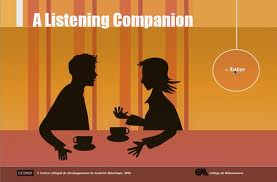 As a person who stutters, I once believed no one would want to listen to me talk for any length of time. I had gotten “the look” too many times. You know the one I mean. When the listener first realizes something is different, and the look of surprise appears.
Their eyebrows arch, eyes widen, and then they quickly glance away. Then, maybe thinking that to be rude, they look back for a second, and quickly break eye contact again. Then they look distracted, looking at their watch, or a clock, or suddenly seem fascinated with the cracks in the ceiling tiles. They look everywhere but at me, the person talking and stuttering. Amazing how this can be read in seconds.
This week, I am pushing outside of my comfort zone in a new way. I have been a member of the Inter-Faith Story Circle of the Tri-City Area for just less than a year. I will facilitate the December circle and talk about my stuttering journey, to people who don’t stutter. Some of them may have never heard a real stutterer stutter.
I have a theme, “Stories of Trust, Leaps of Faith and Courage”. I plan to open with a reflection and tell three stories. Then, circle members will be invited to share a story of their own, if they wish. It becomes a story swap. We do not process, offer feedback or applaud. We just listen and let the stories in. As a gesture of acknowledgment, members gently rub our hands together after a story is told.
In preparation for the circle, one of the seasoned tellers offered to “listen out my stories”. We met last week in a coffee shop, and over tea, I told my stories and she listened, really listened. She had a notepad with her and shared that she might jot some thoughts for feedback after. I was a little worried about that. But I didn’t need to be. She was a seasoned listener.
As I told, I “watched her listen”. She never took her eyes away from me. She was entirely present. Her facial expressions matched my tone. She took notes without ever looking down at her pad. Her eyes showed emotion, sometimes a smile, or look of surprise, or sadness, or wonder. Mostly presence though.
I stopped “watching her listen”, and just relaxed and told. I did not gaze directly at her, as suddenly I felt so free that someone was listening with intent, that I found more passion in my voice, used more imagery to describe a memory and used my hands to gesture. When I glanced at this woman, she was totally with me, listening, feeling the emotion of my story. As I neared the end, I felt overwhelmed with what I had shared to a near stranger. I choked up and my eyes brimmed over. I looked down for a second and back up. Her eyes were also watery and it was OK.
I had never had someone listen so intently, even as I openly stuttered. We paused and smiled at each other and then she said she wanted to share with me what she had heard. She offered me “appreciations” – told me all the things that had moved her and that helped create images in her mind as she listened.
I had expected to get “feedback” such as things I should change in my stories. Nope. This woman who I did not know very well just listened, appreciated, and told me that.
What an intimate experience to have had. I felt that what we had done had mattered a great deal that evening in the little coffee shop. I felt valued and alive. When we said good night and hugged, my eyes welled up again. We weren’t strangers anymore.
Guest Blogger: Bobby On Dating
Posted on: December 13, 2010
- In: Posts
- 4 Comments
 A young man wrote a very poignant letter to the on-line group Stutt-l, sharing his concerns about dating and his fears that women never seem to be able to look past his stuttering. The young man ponders will it ever be possible for him to find someone who will be happy with him as he is. He doesn’t think so!
Several people responded to 27-year-old Justin, and one man in particular shared his very personal story about his own fears and insecurities. I was so moved by his share that I asked Bobby Childers if he would be willing to share on this blog as today’s guest blogger and he kindly agreed. ( These are Bobby’s words. with minor editing).
Dear Justin,
I have stuttered since I was 5 years old (I’m now 53), so I’ve been doing it so long I’ve gotten rather good at it. I started speech therapy back in the 3rd grade in 1966 and I kept at it until 6th grade. I never had many friends at school or away from school, but I always attributed that to the fact that I didn’t like people. It wasn’t until much later in my adult life I discovered that I was only fooling myself.
In the 9th grade I met the girl who would become my wife many years later. I used to see her everyday at lunch, and would stop by and tell her a really bad joke (which of course took me 3 days to tell it) and then I would run off before she could respond. I guess you could say that I loved her from afar, for many years.
I was a hard-core Moto-X racer (dirt motorcycle) from about the age of 8, so I traveled all over the southwest US racing. It was my escape from the day-to-day frustrations of stuttering and not being able to talk to anyone, including my family. When I was on my motorcycle, I could talk to anyone, but once I got off, the stuttering came back full force.
I graduated high school and went to college for a couple of years, but I couldn’t handle the stress of so many “new” people I saw and/or met everyday. Trying to introduce myself was worse than “Nightmare on Elm Street”, so I quit college! I went back home and found a job where I didn’t have to talk to people much (computers as that is what I studied in college). I kept to myself, never attempted to date for fear of being ridiculed, laughed at, etc. I kept racing my motorcycle because that was my freedom from everything.
By the time I was 27 I had broken every bone in my body, some 3, 4, 5 even 6 times and was fast becoming a full-fledged alcoholic because of my insecurities with my speech. In 1985 I was invited to my 10th High School reunion by the girl I used to tell bad jokes to in the 9th grade. I had a Citizens Band radio in my truck (I was called “The Shadow” and she was called “Rainbow”) because there no one knew who I was or anything else but what they heard on the radio. For short periods of time I could talk fairly smooth on the radio and when my speech began to falter I would get off for a while.
I went to the reunion under protest as I didn’t associate much with anyone back then and re-met the “love of my life”. She and her two kids (girl-7, boy-4) were in an abusive relationship and she was trying to get out with the kids. About 18 months later she became my wife and I became an “instant parent”. At the end of January 2011, it will be 25 years we’ve been married.
In 1999 after the son graduated high school, we all went to New Mexico State University in Las Cruces, NM and started college. The next spring I got into speech therapy at the University due to one of my professors who recommended it. The student clinicians there (I had 4 over spring, summer and fall semesters of 2000) taught me more than they were supposed to do.
They did teach me fluency techniques to help ease my stuttering, but they also taught me (I was 42 at the time) that I was more than my stuttering. I was a real person who had good qualities that I could and should share with others. I had to leave speech therapy during the spring 2001 semester as I was in my final semester and between work/school, I just didn’t have the time. But I did try to keep up with the techniques I was taught.
I joined this support group because of my student clinicians, who made a huge difference in my life. I want to give back and help others on their journey. I finally had someone to talk to that actually knew the frustrations, anxiety and pain I felt my whole life. My wife and daughter helped me understand along with the student clinicians that I really was more than my speech. Now I have 3 granddaughters (5, 12 and 15) and none of them are bothered the least bit by my speech.
You need to see that you will find the right girl out there who will accept you for what and who you are, which is not your stuttering. Don’t go after a girl with the intention of a date; instead look for a friend who just happens to be a girl. As much as I hate saying this (I’m the one who has stated for many, many years that “I hate wives, kids, cats and dogs” and of course they all ignore me…..so not fair), but women and girls seem to have a unique ability to see inside a guy’s outward persona.
Women will be able to see through any facade you present to them and will know if you want to know them as a friend or a sexual conquest. Tell them you stutter, and you have gotten good at it, but it is not the ONLY you, it is just a small part of the real you. Tell them as time goes on and you become more familiar with her, your stuttering may reduce somewhat, but it is always there waiting on the outside wings.
You will know soon enough if they like “you” or are ashamed of “you”. The ones who are ashamed don’t deserve you. Look for someone else that sees beyond the speech.
I was 29 when I got married (actually 28 and 10 months), so there is still time for you to meet the “girl of your dreams”, and she is out there, somewhere where you will probably least expect it. Once you find her, she will be your best friend for life, and will probably become your wife for life in the process.
I have been in your shoes and walked more than a mile in them. Be yourself, if you stutter, so be it, and go on. Don’t make a big issue out of it or she will wonder who you really are. Women don’t want a phony; they want someone who is real, with real flaws and quirks as they have their own. Laugh with them, not at them, and remember to not take yourself too seriously.
Bobby
It’s Showtime – Episode 37
Posted on: December 9, 2010
Episode 37 features Veronica Lynch, who hails from Dublin, Ireland. Veronica and I share a history of being extremely covert, and then making the transition to overt stuttering. We are both contributing members of the Covert-S email group.
Veronica worked for 30 years with the Irish Airports Authority. She has recently retired, with her last position being Insights and Strategy Manager, of which she was very proud. Veronica worked her way up the ranks in her career, starting with a back room job that didn’t require much talking.
Listen in to a powerful conversation about covert stuttering, “the aha moment” and what it is like living a parallel life. Veronica and I have remarkably similar stories about how we arrived at acceptance, and Veronica shares hers in-depth in this episode. She shares about how being covert means often we have to “be on” and “act” like we are on performing on stage all of the time, which coverts know, can be just exhausting.
Veronica also shares about what the journey has been like having a child who stutters, and how helping her daughter is what ultimately helped her. Veronica also touches on the profound notion that “when the student is ready, the teacher will find you.”
Veronica has been very involved with self-help in Ireland, and is an Executive member of the Irish Stammering Association.
Podcast safe music used in this episode is ” Scott Waves to Salty Grace” by J. Lang and is credited to ccMixter.
Can you relate? Feel free to leave comments or questions for Veronica or just let her know what a great job she did!
Tug-Of-War
Posted on: December 6, 2010
- In: Posts
- 6 Comments
 Remember playing this game as a kid? I never liked it. I didn’t see the point, and it always seemed I got rope burn trying to pull so hard. And as the game goes, the harder you pull, the more effort the other side expends so they can win.
Speaking of rope burn, I also remember as a kid sliding down some huge slide sitting on a burlap sack. I can’t remember where , but the memory just came roaring back. That experience was like a tug-of-war too. I remember feeling gloriously free careening down the slide, caressed and stung by the wind and having no worries during that fast and furious moment.
And then the moment at the bottom when I realized the ride was over and my butt had slid off the burlap sack and I had rope burn all up and down my legs. The price I paid for that exhilarating run. I wish someone had told me to wear pants!
I have discovered that you can also play tug-of-war with feelings. Someone reminded me that if I expect those close to me to know what I want and need without telling them directly, I will be disappointed. This is akin to mind-reading, which most of us don’t do very well.
I know this intellectually, but emotionally it is still often hard for me to be direct about my feelings and even identify what it is that I am feeling. There must be a way to strike a balance between the desire to show my feelings and pressing my autopilot button to conceal my truest self, which I did for a long time. It was my survival tactic.
Simply put, as I was gently reminded, I am not used to anyone showing care and tenderness toward me. I don’t know how to react, or how to let it in. I want to, but the feelings that rush up overwhelm me. They are a bittersweet mix of joy and sadness. Mourning, if you will, for not having felt genuine tenderness enough to know how to deal with it.
Feeling for real, and expressing how I feel, is still so foreign that I don’t trust it. I grew up thinking that if I let people know my true self, somehow they would get the upper hand, which everyone already seemed to have anyway. I have been told that this is common for children of alcoholics. There were no emotions expressed – everything real was repressed and avoided. That’s how I got so good at covering up my stuttering.
So this tug-of-war with feelings is vexing me now. It is not as easy to hide anymore. As I heal and continue uncovering and exposing my true self, people are coming in. I have been so used to holding people and feelings at arm’s length, that usually I don’t even notice I am doing it.
Maybe I can have that glorious feeling of careening freedom again, right smack into life instead of down a slide on my butt on a burlap sack . Maybe I will figure out how to avoid the rope burns. Or maybe I’ll just figure out how to stop pulling so hard.
Episode 36 features Claudia Diamond, who hails from Guilderland, NY. She works as a medical assistant. A friend of mine from Toastmasters indicated that he knew someone who I should meet. I took a chance and emailed her, we met and have become friends. Both of us enjoy meeting up at our monthly Chat and Chew Too group, which is a social gathering for people who stutter.
Claudia shares her very personal story about her parents that were Holocaust survivors, and the parallels she found with her stuttering journey. Claudia is very candid talking about shame, grief and guilt.
Listen in to a powerful conversation about liberation on many levels. Claudia shares about her childhood, being second generation survivors and dealing with depression. She also shares how it feels to be invisible and how she only lets her “real self” out with people who she is really comfortable with. Claudia also mentions how for women it sometimes feels as if we never really leave junior high!
We also talk about self-help and the NSA, letting go of our past and moving forward, and the importance of humor. Claudia talks about a special collection she has and her “wall of fame” in her kitchen.
Credit for the podcast music used in this episode goes to ccMixter.
Please feel free to leave comments or feedback for Claudia or just tell her what a great job she did.
Bi-bi-bi-bi-bi-binary!
Posted on: December 1, 2010
- In: Posts
- 5 Comments
I had a big outreach presentation yesterday at one of my local high schools. I am beginning to know my material by heart and can give this talk almost effortlessly. I felt especially good because it was a morning presentation and I had more time alloted than usual. So I did not feel pressured or rushed, as I do sometimes. And I even had a remote for my multi- media presentation (a must with kids!) and found myself walking around the room with ease while talking.
I try to involve the kids in the presentations, by asking questions that I know someone will know the answer to. Trust me! This is vital self-preservation when public speaking. While waiting for someone to respond, it gives me a chance to take a sip of water. You should drink lots of water when talking for a while!
When I started talking about our Information Technology program towards the end, I could see some of the kids looked bored. I asked how many of them had studied a different language. Almost every hand shot up, and they yelled out, “Spanish, French and Japanese”. I asked if anyone knew what computer language was. No one knew. I would just tell them. Nope, not that simple today.
Computers are machines that only understand binary language – the numbers zero and one. Those numbers can be translated into something that us humans can see, read and understand.
I had the biggest block on the word binary. It just wasn’t coming. It came out “bi-bi-bi-bi-bi-bi-NARY”. When I finally got past the “bi”, I pushed “nary” out so hard I was almost out of breath. That almost never happens. In that split second, my mind raced for another word for binary. I couldn’t come up with one – I’m glad I didn’t, but my natural instinct was to try. I also remember my eye squeezing shut as I pushed “nary” out and then I kind of looked around, and the weirdest thing . . . no one seemed to even notice.
I had been in that “lost place” for those milliseconds, which seemed forever, as I pushed the word out . . . and no one even knew I had “gone anywhere” or what had even had happened.
I took a swig of water, paused and finished the presentation. What else could I do? Just let it happen and move forward, right? Right!


What people are saying!