Archive for the ‘Posts’ Category
Looking At Yourself Stuttering
Posted on: January 16, 2018
- In: Posts
- Leave a Comment
I am re-purposing this post that I wrote about 6 years ago, about watching yourself stutter in a mirror. I have always had a very hard time with this. I was reminded of this when I saw a friend post about looking at her stuttering as an mp3 file and seeing the breaks and “dead air” in the audio stream.
Several years ago, I facilitated a story-telling circle with a very supportive audience. These were people who understand the value of sharing our stories, as any one story has the potential to trigger an impact on someone else. So this group were wonderful listeners. I felt very honored sharing some of my stuttering stories with them.
It was very empowering for me to tell my stories, especially to an audience of people who do not stutter. And because it was story telling, which is very different from giving a speech, I did not use notes. So I wasn’t quite sure how it would unfold, as I planned to just tell from the heart.
I knew it would be special, so I had a friend record the three stories I told. I wanted to have a record of what I told. I spent a lot of time editing the video clips, as I planned to share my message with others.
It was very hard watching the videos of myself stuttering. It is one thing to hear myself stutter, like when I do the podcasts or even just hear myself talking to others. But to “see my stuttering”, it kind of brought tears to my eyes the first time. I saw how deliberate I was, I saw what my pauses looked like, I saw what multiple-repetitions looked like. A couple of times, I saw one eye squeeze closed when I blocked. And I saw some physical tension.
Watching myself tell my stories and stutter very openly with people I did not know well was very emotional and poignant for me. I wondered as I watched (the video) what the listeners thought as they watched me.
It was not easy watching the first time. But I did watch several more times and it was easier. I caught the point where I almost choked up, but didn’t. And I realized that sometimes I stutter a lot, and sometimes hardly at all.
I don’t think I could ever purposely practice stuttering in front of a mirror. It would be contrived, not real. It would not help me be anymore comfortable stuttering publicly.
It takes a lot of guts to be who you are in the many different areas of our lives. And to look back on those moments and realize just that. Watching myself be myself in front of others can’t be replicated in private with a mirror.
Real life needs us to be ready to be ourselves when it counts. When sharing our gift of self can make a big difference.
- In: Posts
- Leave a Comment
As I have shared over the years, a big part of my job is going around to different schools and giving presentations to high school school students. I work as a recruiter in a career and technical high school and it’s my job to inform 10th graders about training options they have for their last two years of high school. Students can choose to enroll in one of our programs and attend for a half day, while remaining at their own school for the other half of the day.
It’s a great opportunity for high school students. They can take one of our programs for two years and leave with licenses or industry certifications that will enable them to find jobs right out of high school or be more prepared for college.
I love my job. I am out and about a lot meeting with different kids all of the time and giving information that, to some, may be life changing. Many kids struggle with traditional high school so having an opportunity to participate in hands-on training very often is a game changer. Research shows that kids who graduate from career and technical programs also graduate from high school, often at a higher graduation rate than traditional schools.
So I feel very blessed to have this kind of job. But it can be daunting. I am making the same presentation about 60 times over the course of two months. I have it memorized. But knowing and being comfortable with my material does not make it any easier when I find I am stuttering a lot. Which occurs a lot. I am talking about programs with specific course names that I can’t change for something easier to say.
I almost always stutter on the word “Cosmetology.” It comes out “cos-cos-cos-ma-ma-ma-tology.” Sometimes I get weird looks, sometimes kids will snicker or full out laugh.
I also almost always stutter on the words “Construction” and “Culinary Arts.” Those hard “C” sounds get me every time. I’ve been asked why don’t I just advertise to the students that I stutter so I feel more comfortable and to lessen the uncomfortable reactions I get.
I think about long and hard before each school’s slate of presentations. I am not there to talk about stuttering. I am there to talk about the really cool technical training programs we offer. I don’t want to talk about something that I’m not supposed to talk about during these times, even though I could easily talk about stuttering for hours. No, I usually don’t mention stuttering and just “power through” the stuttering moments or blocks. I try not to let it show when I’m bothered by kid’s reactions to my stuttering. I do my best to remain emotionless and neutral.
Maybe this is not the best strategy to take when doing so many presentations. But this is the way I’ve dealt with it for years now, and suddenly advertising and then having to maybe explain myself feels uncomfortable to me.
So, I am sticking with the way I’ve done it. I have 7 more presentations scheduled for this week and then I’ll be done for this school year. I trust I’ll get through them like I have all the others. And if I don’t, and someone says something that makes me really uncomfortable, maybe, just maybe, I’ll find myself being upfront and sharing this part of myself with kids who will most likely be OK with it.
Making A Difference
Posted on: December 7, 2017
- In: Posts
- Leave a Comment
Last Friday I spoke to high school students about stuttering. These students are in an accelerated science class during their senior year. They are studying methods of scientific research and for their neuroscience unit, the teacher invited me in to talk about stuttering. I talked a little about the neurology and genetics of stuttering and a lot about the emotional complexities of a communication disorder.
It was such a pleasure to present to these students. They had so many questions and were truly interested and engaged with what I shared. I didn’t get through half of the formal presentation I had prepared as I just decided to go with the flow of the student’s questions.
Yesterday, the teacher emailed me thanking me again for coming in and included thank you notes from the students. I was touched and overwhelmed with what they had to say. Here’s a few of the messages from the students.
Ms. Pam Mertz, On behalf of the New Visions Scientific Research Program of 2018 I would like to thank you for taking the time out of your morning to come and teach our class about stuttering. It was very beneficial for us all to learn about this speech disorder, as it is one that is often not taught about. It was very interesting to learn about the association between dopamine and blood flow levels in the brain and stuttering.
Ms. Pam Mertz, thank you so much for meeting with us on Friday and introducing us to just a little snapshot of what stuttering is and how you deal with it in your life. I really appreciate that you were comfortable enough to embrace your stutter with us and that you let your powerful and comforting voice show through. I was very interested in how you explained how stuttering does not affect those when singing because a different side of the brain is used. I really do thank you for meeting with us and I hope that we can meet with you again later on this year.
For someone that stutters, it must be pretty terrifying to have a job that has you speak in front of crowds so often. To be able to overcome any fear and do your job is very inspiring, and for you to let down your guard and openly stutter in front of us is very kind. Thanks again for coming and telling the new Visions Class about your lifelong experience with stuttering. I thought the most interesting part was how you met another student that was the only stutterer in her school, and were able to connect to based on shared experiences.
Thank you Pam for taking the time out of your day to come and talk with us and teach us about stuttering. I really enjoyed hearing about how you have overcome your stutter and learned to deal with it. It is very inspiring!! I did not know much about stuttering and I didn’t know how much of a mental toll having a stutter had on a person. Thank you so much Pam!!
Thank you so much for coming in and talking to us about a topic that doesn’t get enough recognition in this world. I really enjoyed hearing your story and the view on the subject from someone who experiences stuttering everyday of their life. You are very brave for stuttering freely and being able to encourage others to follow in your footsteps. Keep moving forward and I hope the world begins to realize how important this is. I found it really interesting how much of a psychological impact it has on a person and maybe the reason is because they don’t know that they have a huge group of people like you that are ready to support them. Thank you again so much for coming in and teaching us, it was one of the most interesting rotations of the year so far.
Pam, thank you so much for taking the time out of your day to speak to us about something that’s very personal to you. I think that it’s great that you made a platform for yourself to speak on stuttering and make the impact that you do on others. When you explained the story about the little girl Kira when you spoke at the one middle school, it shows how much what you’re doing matters. Learning about how certain things can aggravate or increase one’s stuttering was quite interesting and important knowledge. Thank you again for talking to us I really appreciated it!
Ms. Mertz, Thank you for giving of your time to meet with us on Friday. It was very interesting to hear a first hand account of what it is like to live with stuttering. I realized how uneducated about stuttering I was after hearing your presentation. I think so often people are uneducated about it and do not see it as the real problem that it is. Stuttering in itself is a large problem but it causes many other issues like depression because of the stigma surrounding it. It is important that people are educated about it and thank you for educating our class on it.
An Interview About Stuttering
Posted on: December 1, 2017
- In: Posts
- Leave a Comment
I was fortunate to have the opportunity to be interviewed recently by a freelance journalist in the Albany, NY area. He was looking to do a piece on stuttering and wanted to both write an article and produce a podcast.
I got to give a shout out to the National Stuttering Association and shamelessly plug my own work here on this blog. I am very happy with how it turned out, even the picture. Please take a listen when you get a chance – it’s not too long and you can see how I responded “off the cuff” as the interviewer had not sent me the questions in advance!
Meeting Someone Who Stutters
Posted on: November 28, 2017
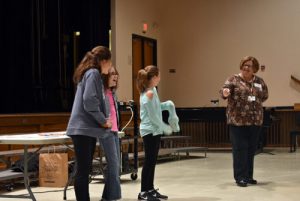 I had the opportunity earlier in the month to talk to middle school kids about stuttering. I gave three presentations, one each to the 6th, 7th and 8th grades. There was about 100 kids in each group. This is a piece the school did about the presentations and put on their website.
It went great. I talked about what stuttering is and isn’t, discussed myths about stuttering and how to interact with someone who stutters. I had several interactive activities for the kids to participate in, so they could “try on” stuttering and so that I could normalize it for them.
I had several large grapefruits and asked a few students to come up to the front of the room and try to hide them somewhere on their person where no one would be able to see them. They had fun trying to conceal a big grapefruit. I explained that it was like when I tried to hide my stuttering – as much as I tried, it still showed.
I also had Chinese Finger Traps for the kids to play with and experiment with getting stuck. I explained how it feels to get stuck when you stutter and get a block.
And I had the students experiment with a quick moment of voluntary stuttering. There were lots of reactions to this. Many felt uncomfortable, awkward, aggravated, found it hard to do. A teacher in the audience shared that she felt many students didn’t want to do it as it might seem disrespectful to someone who really stutters.
The best part of the morning was when a SLP came up to me and said that there was a 6th grader who stutters and she really wanted to come up and meet me and ask some questions. Keira came up after the presentation, introduced herself, stuttered openly and asked several very insightful questions.
She told me I was the first person she had ever met that also stuttered. I could tell it was a big deal for her to have come up to me. I was so glad she did. Hopefully, the experience reassured her that stuttering is not the end of the world and it’s just another way of talking like I had mentioned in the presentation.
Anytime we can, people who stutter should share our experiences, especially to young people. It teaches them about compassion, tolerance and diversity and that’s what makes the world go ’round.
What Was Left Unsaid
Posted on: November 20, 2017
- In: Posts
- 6 Comments
My father died two weeks ago. My father who I never reconciled with over serious childhood issues. My father that yelled and screamed at me when I was 5 years old and first started stuttering. My father whose lack of support drove me to try and hide my stuttering for years. My father who was ashamed that one of his kids stuttered. My father who never allowed me and my siblings to show emotions. My father who never showed me affection. My father who I had not talked to in years.
I happened to be away for the weekend when I got word that he had died. My siblings were text messaging each other and included me in on the thread. As I was driving, my phone blew up with tweets, the sound I use to notify me of text alerts. I glanced down at the phone and tried to see what was going on. I couldn’t figure out what they were talking about from just a quick glance.
I pulled over at the first nearest rest area to get gas and then pulled into a parking spot, curious to see what my siblings were furiously texting about. One sister had offered her condolences to others who were impacted by his death. I didn’t know who they were talking about. It didn’t occur to me to think it was my father. I texted a quick question and asked who died, thinking it was an extended family member. One sister directly responded that it was dad who died.
I was kind of shocked as I was not expecting to hear that and I was 100 miles from home. My brother then chimed in with a text that he was sorry I learned through a text message, but that the family thought it better not to have called me while I was away.
I started driving toward home and had the next 90 minutes or so to think. What I thought about was how weird my reaction was. I was not emotional or stricken – I was worried about how I would handle the upcoming funeral services and deal with family that I hadn’t seen in years. I was worried about possibly not going and how that would look.
I debated not going to any services as I had not had a relationship with the man in years. He never reached out to me and I kept my distance. While he was in a nursing home, several of my sisters tried to guilt me into letting go of the past and consider reconciling with him. They were going to visit him weekly and asked me repeatedly to join them. I chose not to. They stopped asking. I went about my life oblivious to what was happening with him.
I learned later that he had suffered several falls due to the pressure of a brain tumor he’d had for years, that I knew about. The pressure was causing dementia and made him prone to falls. The last fall he took was accompanied by heart failure and several attempts at resuscitation and then his heart just finally stopped.
I always felt a deep sadness that I did not have my father’s heart. I was his first born daughter and always yearned for that relationship with my dad that I knew other people had or that I saw on TV. I was envious of friends who were close with their parents and held a special place in their parents’ hearts. I never really told that to anyone and eventually those yearnings went away as I learned to manage with the hand I had been dealt. I vividly remembered the abusive, chaotic home I grew up in. I couldn’t not remember it.
I did go to my father’s wake and was supremely uncomfortable. I felt lost and like I didn’t belong there. Four of my siblings were also there, along with my father’s second family. A family I had always referred to as our replacement family. His wife, that my father had cheated on my mother with and who was younger than me. Whom I always blamed for hurting my mother.
I saw aunts and uncles, his siblings, that I hadn’t seen in over 25 years, It was awkward. It was more awkward seeing my father’s other daughters, openly grieving. I felt tense and anxious and couldn’t help but feel this whole thing was happening to someone else.
My sister read a “tribute” to my father toward the end of the service, one that talked about a loving father that instilled values and work ethic in all his (10) children and a love for God. I didn’t recognize who she was talking about. It was surreal to me, his firstborn daughter who wasn’t perfect and had never felt his love. My sister had reconciled with him and made peace with him as had two other sisters.
My youngest sister didn’t go to the wake. He was not part of her life and had never met her children, his grandchildren, yet the obituary read that he was their loving grandfather. I felt that people were trying to paint this man to be someone he was not.
I didn’t go to the funeral service or burial the next day. I couldn’t. I felt paralyzed by my very conflicting emotions. Part of me had hated this man for so long, for the emotional and physical abuse of long ago and for making me feel such shame over my stuttering. I carried this around for a long time. I also carried around his influence for a long time. I was in therapy for years, trying to process and perhaps reconcile my “daddy issues,” but never could. The pain was still there, after all these years.
When someone dies and it is unexpected, so much goes unsaid. Such is the case with my father. I never told him how I had yearned for his love, support and approval. I never told him that I have turned out pretty OK and feel like I am in a good place in my life, despite a tumultuous past. I didn’t really even say goodbye.
Part of me feels relief that he is gone, for he is not suffering and hopefully neither will I anymore. But I’m not sure that really is the case. I need to come to terms with what wasn’t said and find a way to process this so that I can move forward in peace.
The Voices In Your Head
Posted on: October 31, 2017
I am sure most people who stutter have experienced negative self talk. When we are faced with a challenging speaking situation, a little voice in our head tells us that we shouldn’t be speaking because we might stutter. Or when we do stutter, that voice reminds us that we’re stupid, inadequate or embarrassing ourselves.
I’ve definitely experienced this. Less so these days now that I’m more comfortable in my skin. I can remember hearing that voice tell me all kinds of things. Sometimes quite loudly too!
I have also heard the voice tell me positive things. I have heard my self-talk be encouraging, reminding me that my voice is worthy to be heard and congratulating me after getting through a challenging speaking situation unscathed.
What if you were hearing both negative and positive messages at the same time? Would that be confusing? Would the positive messages override the negative ones?
This weekend at the NSA’s 4th Annual Fall Gathering, we had a number of opportunities to explore our speech, play with different scenarios and see what happens when we listen to the voices in our head.
One particularly powerful exercise involved a fluent speaker who was asked to describe what she was planning to do for Halloween. She stood in the front of the room preparing to speak to the group. Two people who stutter were asked to stand on either side of her and whisper in her ear, one saying negative things and one saying positive things.
She was so flustered by hearing these different voices that she was unable to speak clearly. She gave up. It was a very good illustration of how listening to conflicting voices can impact our ability to think and speak clearly.
What do you think? Do the voices in your head affect how you speak? Do you ever find yourself giving up in a speaking situation?
Do We Suffer From Stuttering?
Posted on: October 16, 2017
- In: Posts
- Leave a Comment
I had an interesting comment on the paper I submitted for this year’s International Stuttering Awareness Day online conference, which is going on now through October 22. Please read my paper, 5 Ways The World Can Better Understand Stuttering.
In one section of my paper, I talk about how the media needs to do a better job in portraying people who stutter on TV and in films. I think we as people who stutter can influence more positive portrayals in the media by continuing to raise awareness and educate people at every opportunity about what stuttering is and isn’t.
Someone who commented on my paper wrote that people who suffer from stuttering can be helped by the celebrities who “used to stutter” because they are good role models for overcoming stuttering. If they can do it, so can we. I gently commented back that I disagreed with her thought that celebrity recovered stutterers can help those of us who suffer from stuttering.
This gave me pause. Do we “suffer” with stuttering? I looked up the definition of “suffer.” Miriam-Webster offers this: “to become worse because of being badly affected by something.” We certainly can agree that most of us who stutter are badly affected by it in some way. Teasing, bullying, exclusion, workplace discrimination all are examples of what people who stutter experience. But do we become worse because of stuttering?
I’m not sure. I’ve heard many stories where people who stutter think that stuttering has made them stronger, more resilient, compassionate and empathetic. Had we not been dealt the hand of stuttering, we might not have developed the strength that many, many people who stutter have. And that’s a good thing.
So weigh in. What do you think? Do we suffer from stuttering? Are we worse off as people because we stutter?
Stuttering Only Some Of The Time
Posted on: October 6, 2017
I know someone who stutters who refers to himself as someone who stutters “some of the time.” He mentions this in email and Facebook posts every time he comments about something stuttering related.
He’s right, you know! All of us who stutter only stutter some of the time. We generally don’t stutter when we’re alone and talking out loud. We usually don’t stutter when talking to children or animals. And most of us don’t stutter on every single word when we stutter.
This individual often brings up the notion of the “fragmented self” that pioneer speech therapist Charles Van Riper coined. Basically this means that those who stutter see themselves as two beings – one who sometimes stutters and one who is sometimes fluent. Interestingly, I wrote about this six years ago in a post titled Self, Divided. I talked about how I often felt that I lead two separate lives – one being a covert stutterer and the other passing as fluent.
I really don’t do that anymore. Since “coming out,” I largely stutter openly and do not attempt to “pass” as normally fluent. I’ve shared before how liberating it is to not worry about being found out or exposed as a stutterer.
I wonder how you feel about this. Can you relate to the notion that we can be people who stutter some of the time? What does this mean in terms of how you see yourself?
ISAD Conference October 2017
Posted on: September 20, 2017
- In: Posts
- Leave a Comment

The annual online conference for International Stuttering Awareness Day (ISAD) is coming soon. The conference starts on October 1 and runs through October 22, the day officially designated as International Stuttering Awareness Day.
The conference is a smorgasbord of papers, videos and other multi media presentations submitted by professionals in the field of stuttering and people who stutter themselves.
You have the opportunity to read a paper or watch a video and then comment and react to the piece via a moderated discussion thread. The author of the piece will then respond back to you, with either general feedback or answers to questions you may have asked.
There is also an “Ask An Expert” section, where you can pose questions to therapists or researchers in the field and get responses very quickly.
This is a great learning experience and we have a great theme this year, “A World That Better Understands Stuttering.” And this author has a submission this year too!
Check in here on October 1 and find all kinds of stuttering goodness.
No, I Didn’t Forget Where I Work
Posted on: August 17, 2017
Yesterday I answered the phone at work and stuttered on the name of the school I work at, as I often do. The caller immediately laughed and asked, “Did you forget where you work? Do you really wish you were at the pool?” For an instant, I felt that sinking feeling I get when I’ve been made fun of and I sensed my shoulders tighten and my face flush.
I sighed and then quickly said, “No, I stutter. Sometimes that happens.” The caller then gasped a little and apologized. She then paused and proceeded to tell me where she was from and what she wanted. She was from one of our district’s schools and needed some information which I was able to help her with.
She thanked me and apologized again. When we were done with the call, she wished me a good day and apologized a third time.
When I got off the phone, I was pissed. Not how I handled it, but that it happened. It still stuns me that grown adults react this way when someone stutters. I know she probably had no clue that I was a stutterer and thought she was making a joke. But still, not knowing who is answering the phone, a professional should not laugh like that and make matters worse by asking a dumb question.
I was happy I advocated for myself (and others!) by stating that I stutter and that stuttering happens sometimes. I feel she may have been embarrassed and I did not intend to embarrass her, but simply wanted to explain what she was hearing and that I hadn’t forgot where I worked.
I know this has happened to many of us who stutter. How do you react?
Teaching About Stuttering
Posted on: August 14, 2017
- In: Posts
- Leave a Comment
I had a wonderful opportunity to teach employees at a Fortune 500 company in NYC about stuttering last week. Three of us from the National Stuttering Association (NSA) spent about 90 minutes teaching basic stuttering 101 to employees who had volunteered to conduct mock interviews with people who stutter.
George, Chaya and myself (all three of us people who stutter) presented about what stuttering is, what it isn’t, whether there is a cause and cure, the variability of stuttering, common misconceptions, stuttering and effective communication and why people who stutter make good employees.
George had organized the “Mock Interview Day” at his workplace and had 15 people who stutter signed up to participate in interviews with company employees. The day included training the employees on interacting with people who stutter, 2 mock interviews for each candidate, feedback for the candidates, a panel discussion on differences and coming out in the workplace and networking.
The primary reason this day was so successful was that the employees were genuinely interested and receptive to learning about stuttering and for giving people who stutter the opportunity to sharpen their interview skills in a supportive environment.
Several employees that I spoke with mentioned how helpful it was to have learned some basic information about stuttering before doing the interviews. They found it very impactful to hear from people who stutter who were able to share facts and personal experience.
I was thrilled to have been part of the day. I love talking about stuttering to whoever will listen and we had a great audience on this day. The interview candidates felt it was a great day and they appreciated the time people took to make the event a success.
Over pizza at the end of the day, one woman who stutters approached me to talk . She was raving about how helpful the interviews were to her. She said she felt inspired to do something similar at her workplace to “give back.” We brainstormed a bit and left it that she was going to talk to someone in her HR department and I was going to follow up with her with an email early in the week. How inspiring is that? I would love to see future events held at companies all over. Such learning took place.
As I traveled home on the train, I reflected on how lucky I am that I “get to” talk to people who don’t stutter and teach them about the experience. Teaching people one person at a time creates a world that better understands stuttering. I am so happy to be a part of this.
Stuttering Is Variable
Posted on: August 8, 2017
- In: Posts
- Leave a Comment
I was talking to a friend of mine recently and she asked me about the different types of stuttering. I was intrigued by what she meant so asked her to elaborate. She said she has heard other people stutter and it’s very different than mine. She wanted to know why there were such differences.
I gave her the short answer – stuttering is variable. Severity of stuttering differs among individuals who stutter as does the impact of stuttering. A person can have a severe blocking type of stuttering and stutter or block on almost every speech attempt but it doesn’t bother them at all. Then you can have someone with a very mild stutter who is mortified every time they hear themselves stutter.
I told her there are also covert stutterers – those who clearly stutter but go to great lengths to hide it so they can appear as fluent. I told my friend that I did this for about 30 years and was absolutely miserable from the extra energy it took to hide and the feeling that I was being fraudulent by not letting my true self be seen. I also told her about the terror I always felt that my secret would be found out. She wondered how I managed for so long, and I told her about the various tricks that people who covertly stutter use to not stutter.
I told her about word substitution, little tricks like coughing, getting a running start, saying “ah” or “um” a lot or just plain choosing silence. I explained it was a lot like mental gymnastics to keep that up,
Stuttering is also variable for an individual. Fluency can vary significantly over the course of a day, hour, minute and depending what kind of speaking situation the person is facing. I can be very fluent for 30 minutes and then, seemingly like a drop of a hat, can’t get a word out. I’ll start blocking or repeating words or syllables and express frustration and even display some secondary behaviors, such as squeezing my eyes closed.
For some people who stutter, fatigue, stress and time pressure can increase their stuttering. And if a stutterer feels compelled to hide their stuttering, it can get generally more pronounced. The harder you try not to stutter, the more you’ll stutter.
My friend was amazed that I knew so much about stuttering and the different ways it can be seen and heard. She wanted to know where I learned all this.
I simply said, “I’ve lived it. Personal experience is the best teacher.”


What people are saying!