Posts Tagged ‘workplace stuttering’
Blogging On Another Blog!
Posted on: November 30, 2011
- In: Posts
- 3 Comments
I had the honor of writing a piece for another blog, Hiten Vyas’ wonderful The Stuttering Hub. This is the first time someone asked me to write a guest piece on their blog!
Hiten published it yesterday. Be sure to check out his site. In addition to offering regular gems of wisdom about managing stuttering, Hiten also offers mentoring for others who stutter/stammer.
I wrote about my experiences so far at my new job, which I started two weeks ago. I shared how I have gone about disclosing and advertising my stuttering to new colleagues and students.
Those same colleagues and students taught me how the human spirit is still alive and well. See my post here.
My job experiences so far, and being featured on another blog, reinforce to me how powerful human connection really is.
Don’t Quit – Episode 72
Posted on: November 7, 2011

Episode 72 features Janet Lennon, who hails from County Laois, Ireland (which is just about an hour from Dublin.) Janet is 25 years old and works with young children in a playschool.
We “met” through a mutual friend on an on-line stuttering support group.
Janet has stammered since she was about 4 years old. Her parents got her involved in speech therapy at a young age. In 2008, Janet found the McGuire program and also found renewed confidence.
Listen is as we cover a lot of ground in this great episode. We chat about the support and encouragement Janet found in the McGuire program, working with children and the importance of having non-judgmental support systems.
Janet joined Toastmasters in 2010, so we have that in common and chat quite a bit about that. It never ceases to amaze me how universal Toastmasters is. We can be in different parts of the world and know exactly what we are both referring to!
Janet also talks about an article she was featured in about finding her voice and shares the encouragement and inspiration she has felt from this poem called “Don’t Quit.”
Music in this episode is credited to ccMixter. Please be sure to leave comments if you wish for Janet (or me.) Remember, feedback is a gift.
Peacocks And Penguins
Posted on: October 28, 2011
- In: Posts
- Leave a Comment
 Several years ago I read a great book on diversity called A Peacock in a Land of Penguins. It’s one of those fables that teach life lessons about being different. The story refers to workplaces and organizations, but its lessons apply to everything in life.
This book made a great impact on me when I first read it. I bought it for work, and applied some of it to a staff workshop I did on diversity. I remember thinking I was a peacock in a land of “everyone looks and acts the same” penguins.
I hadn’t thought about peacocks and penguins in a long time. Until I found I had used that phrase in a cover letter I wrote for a job I applied to this week. I was talking about me, describing my willingness to take risks and put myself out there, even when my ideas and opinions are contrary to the majority.
In other words, being a Peacock!
Many organizations today are still run by penguins – people who all look, sound, dress and think alike. Penguins say they want creative thinkers, but actually many prefer the status quo.
Those who are different – talented peacocks with unusual flair and style – make penguins uneasy.
I went through my bookcase to see if I still had the book and sure enough, I do. I started to re-read parts of it.
I think people who stutter are peacocks in a land of penguins. We are unique. We sound different and we make people be better listeners.
Peacocks represent diversity. Think about it. In all of your groups, there are penguins. In schools, sports, media, business and government.
Penguins all look alike. They all wear the same uniform to represent their particular penguin group. You know what I mean, right?
And then one of us comes along – a PEACOCK! Loud, bold, different, unique, smart, funny and full of life. And hugely valuable. Peacocks keep the world from being boring!
I am happy to be a peacock! What about you?
 Producer note: This is the third episode in the very occasional series I do with men who stutter.
As you can see, my graphic designer and friend (Daniele Rossi)provided me with a new logo. I changed the name slightly to include the word “stutter” in the title so listeners can more easily find these special episodes.
So please look periodically here on the blog for these great conversations. They will also be downloadable on iTunes.
This 3rd episode features Vivek Singh, who hails from Pune, India. Vivek is 29 years old and very active in the self-help stuttering community in India. He is a computer engineer, and leads a weekly self-help group in his workplace that is supported by his corporation. I believe this is the first I have heard of this!
Vivek is a man of many interests. He enjoys reading books that help him explore the meaning of life with a scientific basis. He also enjoys inspirational reading, and all things physics.
Listen in as we discuss how Vivek became so immersed in the self-help movement and what continues to drive him. We also discuss his mastery of concealing his stuttering, acceptance, temporary fluency, first impressions, therapy and so much more.
To learn more about Vivek, please see his 2011 ISAD paper My Journey As A Stammerer.
Please feel free to leave comments for Vivek and me too. Feedback is so important. Music used in this episode is credited to ccMixter.
Impromptu Stuttering Q & A
Posted on: August 18, 2011
- In: Posts | Video
- Leave a Comment
This is another clip of Marc Vetri sharing with the audience at the FRIENDS 2011 convention in DC in late July 2011. After a wonderful keynote talk, (clips here) Marc took some unscripted questions from the audience.
We hear from several parents, an adult who stutters, and a teen who stutters who aspires to work in the Culinary Arts field one day.
This is great stuff – honest dialogue about stuttering from an inspiring role model. We definitely need more stuttering role models out there, visible and unafraid to stutter openly.
We’re getting there. We’ll get some women out there too!
Dishing About Stuttering
Posted on: August 5, 2011
- In: Posts | Video
- 5 Comments
I might be sucker punched here, but if I had to choose who I thought was the better speaker at this year’s stuttering conferences, NSA and FRIENDS, I would choose Marc Vetri over David Seidler.
Nothing at all against Mr. Seidler, of course. He was highlighted in my last post and was deservedly the marquee keynote speaker at both conferences. He did a GREAT job! He stayed and interacted with as many people as possible at both conferences and delivered an inspirational message.
However, Marc Vetri was the perfect choice to address young kids and teens who stutter and their parents. Why? Because he stutters openly!
I happen to think it’s a really good idea to have people who stutter speak at stuttering conferences. And Vetri was phenomenal!
He is a renowned chef in the Philadelphia area, with three popular and thriving restaurants . He also won a 2010 Iron Chef competition, and regularly appears on the The Food Network channel.
He is an everyday guy who loves to cook and is enjoying industry success. With success comes more public speaking, and he stutters openly, not letting his stutter hold him back.
I had the good fortune to chat with Marc and his wife over lunch after he spoke at the conference. He is one regular guy who is a great role model!
Here is just a snippet of his five-star keynote address. I have more of him taking questions from the audience that I may be persuaded to post!
400th Post! NSA Workshop Summaries
Posted on: July 16, 2011
- In: Posts
- 8 Comments
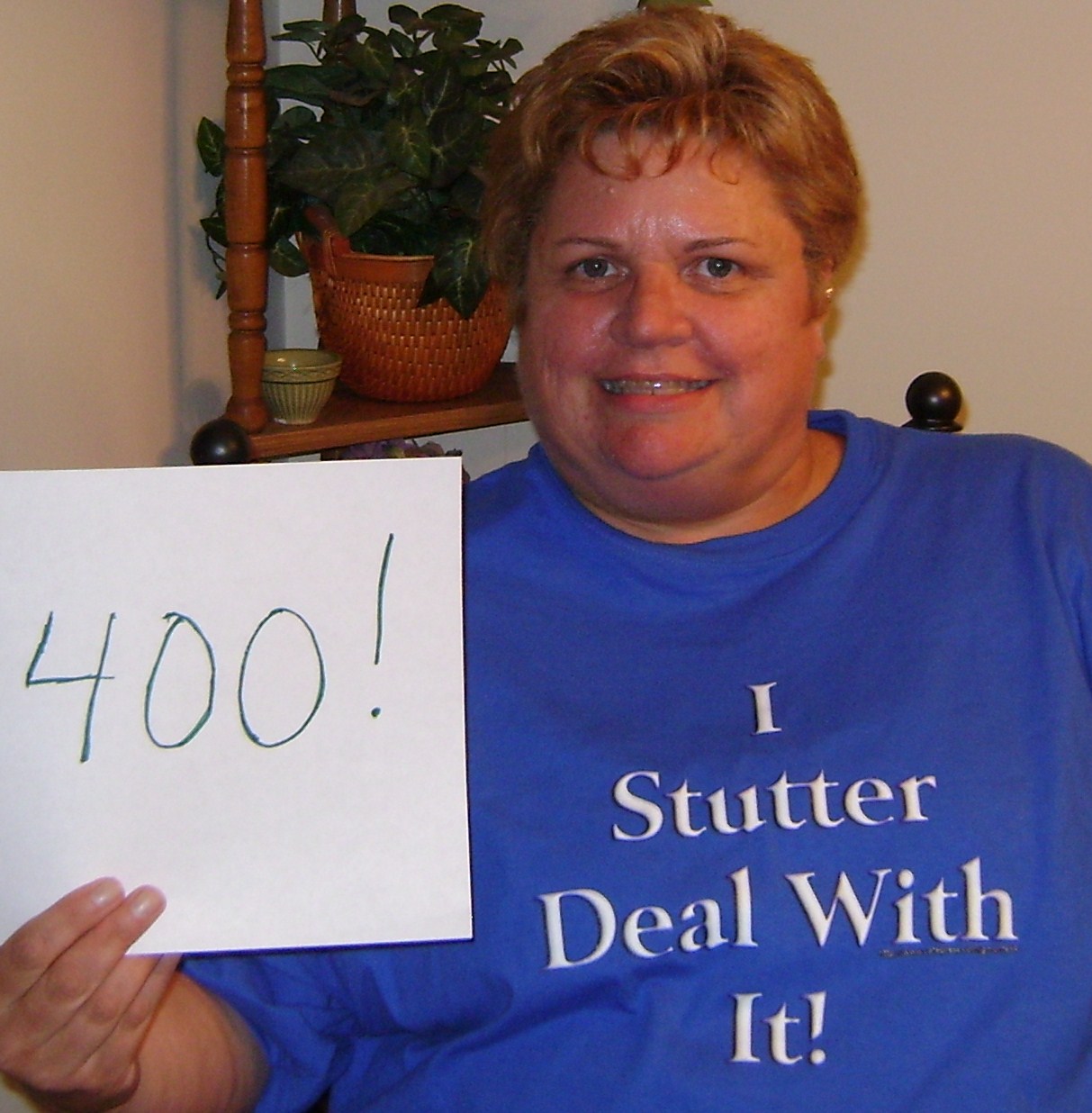 Here are summaries from some workshops presented at this year’s National Stuttering Association annual conference recently held in Texas!
I am also gratified to have reached a milestone. This is my 400th post since starting this blog in February 2009!
There were so many workshops to choose from at the same time. It’s almost unfair to have to choose. So I asked fellow attendees to summarize some of the best workshops they attended. Helps me, helps you, helps all.
You Are Changed By What You Do: “Shame-Busting” Through Avoidance Reduction Therapy. This was the most powerful workshop for me, led by Vivian Sisskin. She and several people that participate in her therapy groups led us through how to reduce shame by learning to face our fears and re-define success and progress. I listened to Vivian speak last year and became fascinated with her approach to avoidance reduction.
Shame was always my biggest issue, and learning even to identify that is hugely empowering. I have read several books on shame reduction and shame resilience over the last year as well, that has helped me move toward more acceptance of my feelings and emotions.
My friend Brandon shares his take away points from two workshops that resonated with him.
Release Fear, presented by Zaheen Nanji and NSA Career All-Stars, presented by Beth Bienvenu, Jim McClure, Tracey Wallace, Gregg Benedikt, and John Moore.
Brandon writes, “As I find myself looking for a new career opportunity I realized that the work place is my final frontier. From experience in working outside my comfort zone, I know what needs to be done but wanted to hear it from others that are doing it. The Release Fear workshop turned the abstract concept of “facing what you fear to create change” into a logical evaluation to expose the cost of making or not making the change. This workshop helped me to see that some discomfort now while facing challenging speaking situations will lead to a more open and balanced life in the future.”
He goes on to share, “Do you remember growing up thinking, “Damn, am I the only one that stutters?” Then you find an organization like the NSA and know you are not alone. Witnessing a person stuttering in the workplace is like a Bigfoot sighting for me. It is exciting and a bit scary depending on how far away I am from it.
I still feel I have one foot stuck in the mud with regard to the workplace, so I was excited to hear from the NSA Career Stars. Hearing first hand from these successful people that stutter in the work environment took away a lot of the mystery I had built up around it.
I loved the slogan “Participation is the Price of Admission”. A few years back I realized that in order to be more at ease with stuttering I would need to take it to the street. Originally I was misled to think I could practice in hiding then put the show on for all to see. I realized I was just going to have to be ME!
One of the biggest changes I had to make was to start using the world as my practice. Hearing it again from one of the speakers pinpointing the workplace really hit home for me. The phrase “Participation is the Price of Admission” has many meanings for me. Regarding stuttering, it reinforces that I need to work my speech agenda step by step, speaking up and sharing my ideas and concerns, and interacting, all for the admission to a better more fulfilling life.”
Brandon – thanks so much for sharing these thoughts and how helpful these presentations were for you!
My friend Anna shares her thoughts on some workshops she attended. Anna was a first time attendee to the conference and also presented at the Toastmasters workshop! I have so much material here that I will include her two other summaries in my next post.
Laughter Yoga – The Fun Part of Everyday presented by Judith Newman.
Anna writes: “When was last time you really laughed? Not smiled, chuckled or giggled, but laughed, openly, heartily, loudly, without inhibitions? If you can’t remember, you should check out laughter yoga classes. As Judith explained, laughter is very beneficial to our body and our brain – so we should do it often. You can do it alone and your body won’t know the difference between a “fake” laugh and the real thing.
But it is easier to burst into open laughter in a group, under the guidance of a laughter Yoga leader. For 45 minutes we did silly exercises and laughed so hard, my insides started to hurt. Regarding stuttering, it is not a therapy. But laughing with all your might, while looking a stranger in the eye, is definitely something that I don’t do in my everyday life. To me it was very liberating. To my non-PWS husband – a bit too weird.”
Thanks Anna for taking the time to share these thoughts.
In my next post, I will have two more summaries from Anna, on Dr. Baker’s Speech – Treatment Innovations and Journey of Hope presented by Robert Baker Ph.D. and Going Beyond Stammering with Confidence presented by Maria McGrath (who has been a guest on this podcast).
And I will have a summary from Alex on his powerful thoughts on the keynote by Neal Jeffrey.
I also have a few live videos from the conference that I will post, once I have secured permission from those recorded. Feel free to leave comments, so that the folks who took the time to write these up, and me, know that you found it helpful.
More On Stuttering As A Disability
Posted on: June 17, 2011
- In: Posts
- 4 Comments
A very timely and interesting article was written this week at Cincinatti.com about a police officer who stutters who is being reassigned. He believes his reassignment will endanger his life and others, as he will not be as effective in his road patrol role.
Because of his stuttering, Ken Parson would likely have trouble quickly yelling “Stop, police!” to a bad guy or calling “Officer needs assistance!”, in part, because Parson’s stuttering gets worse when he’s under stress.
Parson also would have a hard time gaining respect from suspects if he stutters. “The attitude might be: ‘No way, I’m not stopping for a stutterer.'”
In his role as a detective, Parson’s speech impediment worked in his favor. His stuttering has disarmed some suspects into confessing.
Under the American with Disabilities Act (ADA), Parson is entitled to a “reasonable accommodation” of his disability. But Parson is not seeking anything other than keeping his current role.
“What they’re doing is removing the accommodation by moving him from his detective job, which he functions very well in, and onto road patrol. That decision is inconsistent with safety.” Parson has retained a lawyer and is fighting the reassignment.
This will be interesting to follow and see how the law and the ADA respond to this case, where indeed stuttering is a disability in Parson’s job as a police officer. This article was a great follow-up to my recent post on “Who Gets To Make The Choice?”
In this case, I definitely believe this officer’s stuttering is a disability that requires reasonable accommodation in order for him to perform his job effectively and safely.
What do you think? Thoughts? Comments? Let’s continue the discussion.
Who Gets To Make The Choice?
Posted on: June 14, 2011
- In: Posts
- 20 Comments
I have never written about how I feel about stuttering being a disability. I have been asked about it and I have talked about it, both with those who stutter and those who don’t. I know disability can be a very contentious subject, because some feel strongly that stuttering is a disability and others feel if it doesn’t limit their life, then it’s not.
I believe that my stuttering is not a disability (there was a time it was). It does not substantially limit my ability to speak or communicate today, as defined by the American’s With Disability Act of 1990 (ADA), which was amended in 2008.
These days, I speak and communicate very effectively, even on the days when I stutter a lot. There was a time when I did not. I was so afraid of stuttering publicly and being judged, that I often opted out of speaking situations, or avoided. That fear was very disabling to me. I felt invisible.
The ADA definition of disability also means whether a person has a record of an impairment or is “regarded as having an impairment”, whether or not the impairment impedes a major life activity. Which in the case of stuttering, would be speaking and communication.
It’s this part that I want to speak to – being regarded as having a disability. I recently had a conversation with my supervisor about upcoming changes in my job assignment. My current position has been abolished effective June 30, and I have been laid off. I am hopeful that another position will be available for me to remain within the same organization.
My supervisor mentioned that the grant funding has changed direction. The major initiative of our grant will focus on ensuring access and equity of services and programs to special needs populations. This will include not only groups with disabilities, but also economically under-served groups.
My boss mentioned that I would be perfect for this position because of my disability. I was offended by how he said this. I don’t consider myself disabled, and am bothered that my boss obviously does. This is not the first reference he has made about stuttering as a disability.
Last year, when he did my annual evaluation and went over it with me, he said, “aren’t you proud of me that I didn’t use the term “disability” once in your evaluation?” And the year before that, after my first public speaking event at school, he commented, “you didn’t have to try to climb the mountain and ride your bicycle up it also all in the same night.”
When I had asked him what he had meant by that, he further explained, “if you knew you were going to butcher the kid’s names, why didn’t you ask someone else to read the names for you?” I remember writing about this before, and also remember how angry I felt by what he said.
There is a good chance I may get a position serving special populations (which I have been doing indirectly for a long time anyway). I will need to be an even louder advocate for those who can’t always advocate for themselves. I have been thinking a lot about where I stand on my stuttering being a disability.
Because I am known to stutter, therefore, I am obviously “regarded as” a stutterer, which fits the definition of disability under the ADA. But I don’t consider myself disabled. And my boss’s perception of me having a disability, while certainly not bad, somehow doesn’t sit right with me.
A friend of mine said that I should label my stuttering as a disability if I plan to move along with my small business. That it will net me more opportunities, being able to use the term “minority owned” business. Like getting two for the price of one. Being a woman and disabled would possibly steer more business my way.
I definitely don’t like the idea of “using the disability card.” But I know some people do, to move forward in life.
What do you think of this? Whose choice should it be to consider one’s stuttering a disability?
Reminder To Self
Posted on: June 6, 2011
- In: Video
- 2 Comments
Rather than write about how the annual awards ceremony went last week, I have a clip of it here to show you!
I always worry about what impression I create when I speak publicly, especially at school functions. I know I will stutter, but like anyone who stutters, I always hope it will be one of my better days.
These events serve as a reminder of what really counts. It’s not about me. This annual awards night is for the students. No one cares about the person up on stage reading off the names. What’s important is that these kids worked hard all year and deserve their special night.
The candle lighting ceremony went well, considering we had little practice time. And my little friend towards the end who reads the poem brought tears to my eyes. She was so nervous and came to me a few days before and told me. But she also said she was very honored I asked her. Again, note to self – it’s not about me. That was a big step for her. Who knows? She might be a famous talk-show host some day.
A lesson for us all!
Paying It Forward – Male Episode 1
Posted on: June 2, 2011

This inaugural episode of men who stutter sharing HIStories is a risk for me. I am committed to providing a unique space for women to share, since we are the minority. And I do not wish to diminish in any way that which has turned out to be so special and unique.
But I have learned that all of our stories need to be shared. So after much thought, and encouragement from others,this space for men’s stories will appear monthly.
Episode 1 features Alan Badmington, a former police officer from Wales, in the United Kingdom. I first met Alan at an NSA Conference in Long Beach, CA in 2006. We have bumped into each other virtually in many places since.
The shy and retiring Alan shares his inspirational story from troubled childhood and adolescence with a severe stutter to difficulties encountered in his police career.
During the past 11 years, Alan has turned his life around to become an extremely active and highly successful public speaker. Alan regularly addresses diverse community organizations in an attempt to increase public awareness about stuttering.
Alan has traveled extensively to fulfill speaking engagements (and facilitate workshops) on three different continents, including a keynote speech at the 7th World Congress for People Who Stutter, held in Australia in 2004 (where he also won the individual oratory competition in which every continent was represented).
Listen in to our engaging conversation laced with humor, insight, and the universal issues of acceptance and change. We even get to listen to Alan share a poem!
Learn more about Alan from two of his many papers: How Beliefs and Self-Image Can Influence Stuttering and Two Things I Wish I’d Had Known About Stuttering When I was Younger.
The podcast safe music used in this episode is credited to DanoSongs. Please leave feedback. I need to know if you enjoyed this conversation and would like to hear more stories with men who stutter.
Shiny Eyes On Stage
Posted on: June 1, 2011
- In: Posts
- 2 Comments
 Tonight is our awards night at school, an event that has brought conflicting emotions for me over the last four years. As some may recall, the first time I facilitated this ceremony, my boss criticized me the next morning for “butchering” the kids names. I had, in fact, stuttered. That comment stung, and obviously I have remembered it.
As advisor for the National Technical Honor Society, I facilitate the induction ceremony, which includes speaking from a script, introducing speakers and calling students names as they receive their certificates. I have long gotten over the nervousness and anxiety of this “performance”. Last year, I even advertised using humor about my stuttering, to put both me and the audience at ease.
But, it is still tough to be on stage speaking into a microphone. Reading from a script and calling out names is my most challenging stuttering situation. I stutter more, for whatever reason.
I worry if I don’t advertise in some way that parents will think I am mis-pronouncing their kids’ names. And I don’t want that perception. Names are important. For some of these students, this may be the first ever award they are receiving.
During rehearsals with the students last week, I told them all I stutter and that I may stutter more than usual up on the stage using a microphone. They were fine with my disclosure. I was glad I did it!
My biggest concern for tonight is that I will get choked up on stage. This may be the last Honor Society ceremony that I will lead for the school. I have been informed that my current job is being abolished. I will either be doing something else within the school or unemployed at month’s end.
So it will be bittersweet for me tonight. I know I will do fine and represent the school and students well. It will be a beautiful candle lighting ceremony, solemn and emotional. Even in ordinary times, it is easy to get caught up in the emotional moments and feel the joy and pride of the students.
I will surely feel joy for the students, and sadness that it may be my last time presiding over this. Things change, times change, people change. My emotions run pretty consistent though, and it is hard for me to hide them any more.
So there is a good chance my eyes will be shiny tonight, for more than one reason. A bittersweet moment that will become another memory for me.

Episode 57 features Julia Ammon, who hails from Essex, England, which is about an hour from London. Julia is originally from Ormond-By-The Sea, Florida. She moved to the UK because she married a Brit and it was easier for her to move. Classic girl meets boy and moves far away!
Julia currently works as the Fund Raiser for the British Stammering Association, which is a charity (or non-profit as we call it in the US). She is the sole fund-raiser, and manages all of the ways that the BSA is supported.
Julia explains how she came to take this job, as it is challenging work that she was ready for. She had previously been at a temp job, that did not require much talking and she felt she was limiting herself.
Listen is an as we chat about family support, early speech therapy experiences in school, and how she learned about the McGuire therapy programme.
Julia’s mother-in-law suggested that Julia try The McGuire Programme after hearing about the success that UK singer-songwriter Gareth Gates had with it. Gates has talked about his stuttering publicly and is now a speech coach with McGuire.
We also chat about how Julia met her husband, which is a great story. They met on-line, long before internet dating became so popular . They had a long-distance relationship for 6 years before marrying. We conclude our great conversation by chatting about “being content”, making choices, and acceptance.
The podcast safe music “Echoed” used in this episode is credited to ccMixter. Please be sure to leave comments for Julia if you wish, or me! Feedback is a gift!
Her Presence – Episode 54
Posted on: May 2, 2011
Episode 54 features Lisa Barone, who hails from Troy, New York via Los Angelos, CA and Long Island, New York. Lisa is the co-founder and Chief Branding Officer of Outspoken Media, an Internet marketing company based in Troy.
I met Lisa in a rather interesting way. Since I am a blogger, I read other blogs. About six months ago, I noticed Lisa commented on a blog that I had as well. Lisa had put her name and where she lives, and mentioned that she stutters. I realized we were only about 15 minutes away from each other. So, I took a chance and emailed her.
I started off with something to the effect, “I am not a stalker, I swear!” and went on to introduce myself and tell her a little about me. She responded back that she gets hundred of emails a day, and it was refreshing to get one that was “normal.” Little did she know!
I asked Lisa if she’d be interested in getting together somewhere to meet and talk. She said yes, we did, and we’ve been friends since. In that first meeting, Lisa shared with me that I was the first adult female stutterer she had ever met!
Since then, Lisa has met with more local stutterers by attending one of our local Chat & Chew Too meet-ups. She also had a newspaper article published about how she felt about the movie,” The King’s Speech”, called “The king and us, myths and all”. And she participated in a reading of her piece at The Arts Center of the Capital Region.
Listen in as Lisa and I discuss how stuttering has impacted every aspect of her life, but has never been her focal point. She discusses how she got into the business of providing a voice for others, and her feelings about “letting people down” when they meet her for the first time and realize that she is not the same “presence” that she is on-line. This is a very honest conversation that offers lots of food for thought and great insights.
The podcast safe music used in today’s episode is credited to ccMixter. Please consider leaving comments for Lisa or just letting her know what a terrific job she did. Remember, feedback is a gift.
 Make Room For The Stuttering
What people are saying!