Posts Tagged ‘talking about stuttering’
Now I Understand
Posted on: July 11, 2011
- In: Posts
- 2 Comments

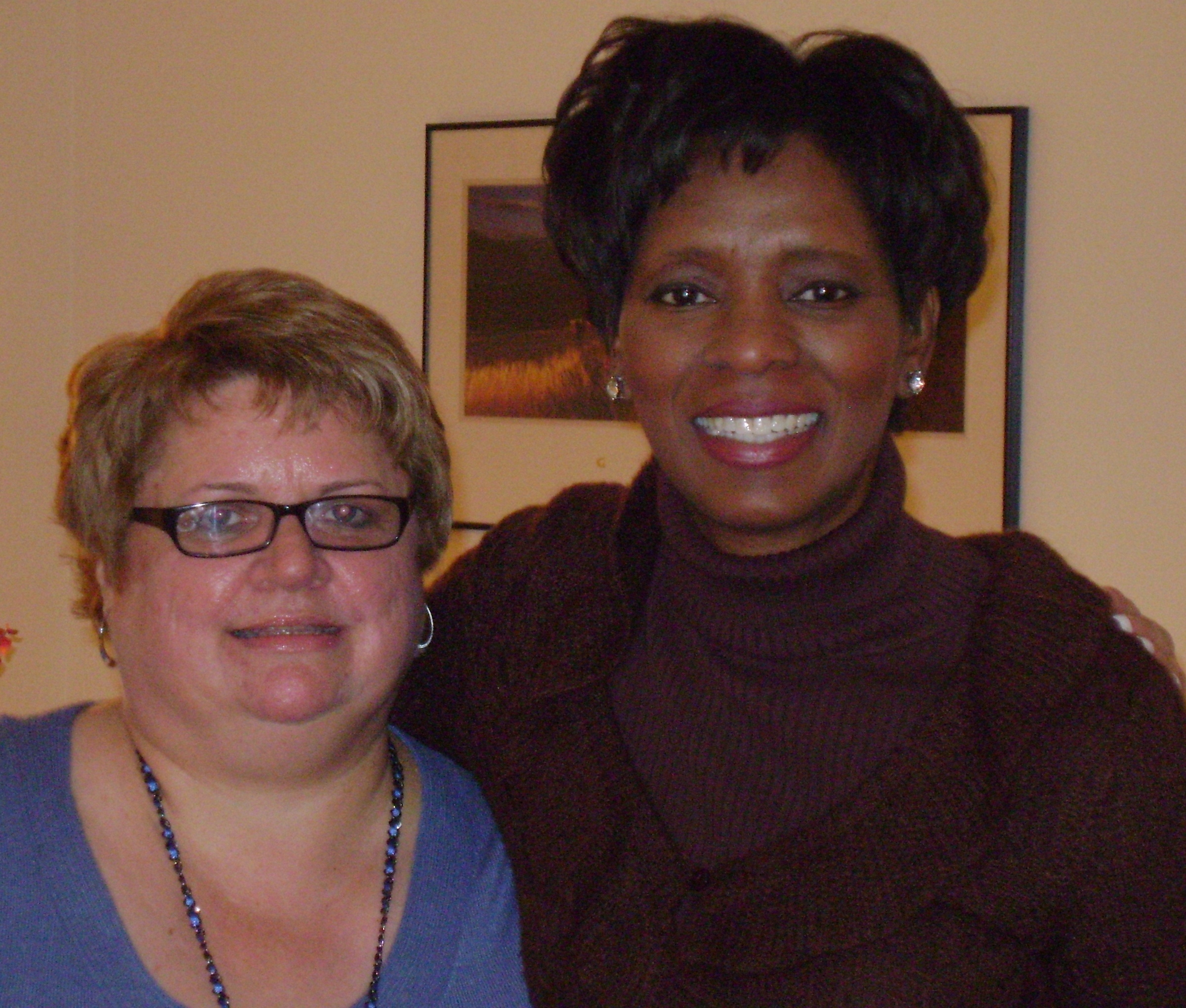
Me and David Seidler, Academy Award Screenplay writer of "The King's Speech"
Just got back from the annual National Stuttering Association conference in Ft Worth, Texas. It was a great weekend. Now that I have attended six consecutive conferences, I feel quite at home there and love recognizing old friends and meeting new ones so quickly.
Time after time, this weekend, I heard the phrase, “now I understand.” Even if you are meeting someone for the first time, you feel as if you already know each other because of the bond we share. That automatic feeling that the other person knows exactly what you are thinking and feeling, and that the shared experience of our unique difference is powerful.
I had a great conversation with a friend from my home town who was attending his first NSA conference. After meeting people and telling them where he was from, many asked if they knew me (which is hugely gratifying to feel known in this tight-knit community.) But my friend also mentioned that he finally understands how powerful being part of the stuttering community is, after only experiencing himself for 2 days.
He and I are in the same community here at home, yet I do not participate in any of the stuttering events at the local college that has an active program for people who stutter. I have deeply felt that void in my life, having a stuttering community right in my backyard that I do not feel a part of. My friend told me that now he really gets how powerful community is, after his own experience feeling embraced immediately by the NSA community.
I was glad to have shared that conversation with my friend, and many more deeply significant conversations and moments from this incredibly powerful four-day weekend with over 800 people who stutter or care about people who stutter.
Later in the week, I will provide an update of the three workshops I participated in as facilitator, and two other terrific sessions that I participated in. And I will share some of the best tidbits and moments from some of the unstructured activities that I participated in.
It was a deeply moving and emotional weekend for most attendees, especially me. I will have some pictures posted on Facebook, but couldn’t resist posting this one of myself posing with David Seidler, Academy Award winning screenplay writer for the stunning movie about stuttering, “The King’s Speech.”
Check back later in the week for some updates of the best moments.
Meeting New People
Posted on: July 7, 2011
- In: Posts
- 2 Comments
 As I write this, I decided to schedule it for Thursday. By then, I will be in Ft Worth, Texas at the 2011 National Stuttering Association annual conference. Thursday morning, I am co-presenting a workshop with good friend Joe called “Bring Up The Stuttering.”
We will talk about why it is so important to talk about our stuttering and not be afraid to bring it up.
Afterwards, I hope to meet a LOT of people who stutter. Thursday will be the first full day of workshops and most people will be attending workshops, interacting with each other and meeting new people.
I saw on one of the email groups a question from a conference “first-timer.” He asked, “how do you meet people at a big conference like this?” He also said he felt kind of silly asking it, but had the guts to anyway. He mentioned he is shy and finds it hard to introduce himself to new people.
Here’s the best way! Walk up to someone you don’t know, especially if they are sitting alone, stick out your hand, and say, “Hi, my name is . . . . . and its great to meet you.” It’s that easy.
I plan to do a lot of that during my time at the conference. Meeting new people, hearing new stories and making new friends. That’s why I go to these conferences. I will be advertising in some way too. I have a couple of shirts that proclaim I stutter, that are unique, like me.
I will post next week on some of the highlights of the conference.

Episode 2 features Henryk Sarat, who hails from Chicago, Illinois. Henryk is 24 years old and recently completed his Master’s degree in Computer Science at the University of Chicago.
He worked as a trading software developer at a high-frequency trading firm and learned he wanted to create more of an impact so he became a tech entrepreneur. Henryk strives to lift the bar higher and take risks, create and inspire change. He has an entrepreneurial spirit and wants to create the next big thing that will change the world.
Listen in as we talk about how stuttering has impacted his life, positive attitude shift, inspiring change, and pushing out of our comfort zones. He also shares his experiences with speech therapy approaches and gaining confidence.
We have a great time getting to know each other in this conversation and focus on humor and not taking self too seriously.
Henryk is involved in Toastmasters and is actively involved in the global stuttering community. He created the site StutteringCommunity about 3 years ago to allow people to connect with each other via Skype.
Henryk attended his first NSA conference last year, and is planning to attend again this year in Ft Worth, Texas. I am looking forward to meeting Henryk in person this week in Texas and collecting my 22 and 1/2 hugs.
The music used in this episode is credited to ccMixter. Please feel free to leave comments. Feedback is a gift. (Episode recorded on June 30, 2011.)
How Do You Bring It Up?
Posted on: June 22, 2011
There has been some great dialogue going on over at the Covert-S email group about telling people that you are going to a stuttering conference. As in, what do you say? How do you bring it up? Now, you would think, what’s the big deal? Just tell people, right?
Wrong, if you are a covert stutterer. People who stutter covertly work very hard at making sure no one in their world knows they stutter. And that takes a lot of energy, effort and deception. Or, if you stutter openly, you may just not want people to know that you are going to spend time and money to be around a bunch of other people who stutter.
That was me for a very long time. I was covert. I used tricks, word substitution and avoidance to expertly hide the fact that I stuttered to most people. Problem was, not only was I hiding the stuttering, I was also hiding myself. To the point that I couldn’t take it anymore and finally stopped trying so hard to hide stuttering. That’s when my life changed.
When I went to my first stuttering conference, there wasn’t many people I told. Not because I was embarrassed or fearful of how people would react. At the time, I was unemployed. I had just been fired from my job in May and was going to my first stuttering conference in June.
I didn’t have co-workers to tell where I was going and why. I didn’t have people asking me when I returned if I had a good time. Maybe that’s how I was supposed to attend my first conference. The NSA provided financial assistance that covered my registration and room, and my mother and her husband used their frequent flier miles to purchase my air fare.
Since that first conference in 2006, I have been to 4 subsequent NSA conferences and 3 FRIENDS conventions. When people at work ask where I am going, I tell them. If they ask for details, I go on and on about it. If they don’t, I don’t.
These days, people know I stutter, but don’t necessarily want to know all the details. And that’s fine. What is important is that I am OK with what I am doing and where I am going.
Now, back to the question. How do you bring up the fact that you are attending a stuttering conference to the people who you never have told that you stutter? Some folks have shared that they are afraid to tell even their families, and have told people they are going on a work-related trip. They tell work friends they are going on a family vacation.
One person even shared that she has to be sure to tell the same lie to person A and to person B, so that she does not get embarrassingly caught up in a web of lies.
One person suggested that someone might pick two people to tell before hand, so that when she returned from the conference, she would have people to tell all about it, who wouldn’t seem puzzled or confused, because they would already know. I chimed in that this “two person goal” could also be used AT the conference.
I suggest that a first-timer to a stuttering conference set a goal to meet at least 2 new people each day, so that by the end of the conference you have made at least 8-10 new connections. People that you can talk with throughout the year who understand. And who can offer you support.
I did that at my third conference. I made it a personal goal to meet and really get to know at least 10 new people. I succeeded! Now I know lots of people in the stuttering community and lots of people know me.
How did I do it? Simple – I went up and introduced myself to people who had “first-timer” on their name tag. It was really easy for me. All I had to do was remember how nervous, alone, and intimidated I felt at my first conference. Now I am paying it forward.
But it’s not that easy for everyone. Especially if YOU are the first-timer! It can be very intimidating when you are used to hiding to suddenly be assertive and confident and walk up to strangers and introduce yourself.
But what better place, right? A stuttering conference is safe – because you are meeting people just like you. The real challenge is how you deal with it the rest of the year. What you tell people before you go, and when you return home (sometimes on cloud 9, on that “high” you get from being in an environment where for once, you are not the minority.)
My good friend Joe Klein and I are co-facilitating a workshop on this very topic at the NSA conference next month. So this thread on the covert-S list has given me good insights and reminded me of how I felt at my first conference. It can be scary and overwhelming!
What do you think? How do you bring it up with others that you don’t ordinarily talk to about stuttering? What thoughts might you offer to those who are worrying about explaining an “un-talked about” absence?
Who Gets To Make The Choice?
Posted on: June 14, 2011
- In: Posts
- 20 Comments
I have never written about how I feel about stuttering being a disability. I have been asked about it and I have talked about it, both with those who stutter and those who don’t. I know disability can be a very contentious subject, because some feel strongly that stuttering is a disability and others feel if it doesn’t limit their life, then it’s not.
I believe that my stuttering is not a disability (there was a time it was). It does not substantially limit my ability to speak or communicate today, as defined by the American’s With Disability Act of 1990 (ADA), which was amended in 2008.
These days, I speak and communicate very effectively, even on the days when I stutter a lot. There was a time when I did not. I was so afraid of stuttering publicly and being judged, that I often opted out of speaking situations, or avoided. That fear was very disabling to me. I felt invisible.
The ADA definition of disability also means whether a person has a record of an impairment or is “regarded as having an impairment”, whether or not the impairment impedes a major life activity. Which in the case of stuttering, would be speaking and communication.
It’s this part that I want to speak to – being regarded as having a disability. I recently had a conversation with my supervisor about upcoming changes in my job assignment. My current position has been abolished effective June 30, and I have been laid off. I am hopeful that another position will be available for me to remain within the same organization.
My supervisor mentioned that the grant funding has changed direction. The major initiative of our grant will focus on ensuring access and equity of services and programs to special needs populations. This will include not only groups with disabilities, but also economically under-served groups.
My boss mentioned that I would be perfect for this position because of my disability. I was offended by how he said this. I don’t consider myself disabled, and am bothered that my boss obviously does. This is not the first reference he has made about stuttering as a disability.
Last year, when he did my annual evaluation and went over it with me, he said, “aren’t you proud of me that I didn’t use the term “disability” once in your evaluation?” And the year before that, after my first public speaking event at school, he commented, “you didn’t have to try to climb the mountain and ride your bicycle up it also all in the same night.”
When I had asked him what he had meant by that, he further explained, “if you knew you were going to butcher the kid’s names, why didn’t you ask someone else to read the names for you?” I remember writing about this before, and also remember how angry I felt by what he said.
There is a good chance I may get a position serving special populations (which I have been doing indirectly for a long time anyway). I will need to be an even louder advocate for those who can’t always advocate for themselves. I have been thinking a lot about where I stand on my stuttering being a disability.
Because I am known to stutter, therefore, I am obviously “regarded as” a stutterer, which fits the definition of disability under the ADA. But I don’t consider myself disabled. And my boss’s perception of me having a disability, while certainly not bad, somehow doesn’t sit right with me.
A friend of mine said that I should label my stuttering as a disability if I plan to move along with my small business. That it will net me more opportunities, being able to use the term “minority owned” business. Like getting two for the price of one. Being a woman and disabled would possibly steer more business my way.
I definitely don’t like the idea of “using the disability card.” But I know some people do, to move forward in life.
What do you think of this? Whose choice should it be to consider one’s stuttering a disability?
I Really Do Stutter – Episode 58
Posted on: June 10, 2011

Episode 58 features Sarah Bell from Garland, Texas, outside of Dallas. Sarah is a full-time mom to 20-month-old Ethan. She is studying a medical transcription class on-line, which she will complete in December. Sarah hopes to continue working from home, to be right there with Ethan!
Sarah and I first met at the NSA Conference in New Jersey in 2008. I recall being so impressed with Sarah sharing her story at the “Covert, Exposed” panel workshop. We were guests together in September 2008 on the Stuttertalk episode Pam and Sarah: Covert Stuttering (Episode 63).
Sarah shares her experience of being extremely covert, and wanting to be more open, but continually struggling with it. She talks about her childhood and why she tried to hide her stuttering.
She ponders the question of “fit” in the stuttering community. People who do not stutter or stutter overtly probably never consider this!
Sarah shares her self-help experiences, and recalls her first meeting of the Dallas NSA Chapter where she met Russ Hicks, who stutters differently than she does. We discuss the gamut of feelings one can have when meeting someone else who stutters for the first time. That “aha” moment of, “wow, I’m not the only one!”
Listen in as we discuss covert stuttering, denial, self-esteem and fear. We also discuss how important it is to not beat ourselves up when we go backwards and the need to be kind to ourselves. And worrying about whether Ethan might stutter as he begins talking.
The music clip “Gently” is credited to DanoSongs. Feel free to leave comments for Sarah and let her know what a great job she did! Feedback is a gift!
Local Blogging Event
Posted on: April 16, 2011
- In: Posts
- 3 Comments
Just a quick note! I am attending the first ever TechValley Blogger Tweetup event this evening, April 16, 2011, in Albany, NY. Why would anyone care?
Well, this will be my first effort to share my blog and podcast about stuttering to other local bloggers who don’t stutter. I am hoping to network with the local blogging community, put myself out there (a new concept for me, right?), and further increase awareness of a local stuttering resource.
I have been hoping my area would eventually create a local meet-up so that local bloggers could meet in person, share ideas and get our words and voices out there. One of my friends, Lisa, of Outspoken Media and Voice Interrupted will be on a panel. I am excited about attending and learning. And I have linked my blog to the TechValley blog site as well.
The more exposure, the better, right? And I seem to be landing in places lately that I should. I have a good feeling about this. I bet someone will learn something about stuttering that they didn’t know before! I hope so!
- In: Posts
- 4 Comments
 With all of the media attention and buzz surrounding the movie “The King’s Speech”, I wondered why there was no coverage in my area. We have a local college with a 40 year history of working with people who stutter. And the College of St Rose has an affiliated chapter of the National Stuttering Association as well.
So, I emailed one of the popular local anchor/reporters, told her a bit of my story and shared that I have a unique perspective on the experiences of women who stutter. I asked her if she would be interested in doing a story. She responded the next day, saying she would love to, and we set a date for a week later. Wow!
On Friday morning I welcomed Elaine Houston and her camera technician, Jesse, into my home. It was exciting and surreal at the same time. Elaine and I chatted while Jesse transformed my living room into a studio, complete with bright lights and lots of cameras. And then we got down to the business of talking and stuttering and talking about stuttering.
Turns out, Elaine had not even seen the movie. We were not going to talk about “The King’s Speech”. I wasn’t fully aware of this, but the reason that Elaine jumped at the opportunity to hear this story is that she is passionate about women’s issues. She was excited about the podcast highlighting women who stutter telling their stories. She does a weekly segment called “Today’s Women” which airs on News Channel 13 which is also included on the station’s website.
So, we discussed the “often not talked about” issues of stuttering, including the emotions and vulnerability, and how I have been affected personally and professionally. We talked about my journey,why I started this blog and how the women’s podcast morphed from there. Elaine was really interested in the women I have talked to, their hopes and dreams, and how stuttering does not limit anyone from living life fully.
Elaine had this huge, bright, enthusiastic smile the whole time we were chatting. Her passion is obvious, and she shared with me about her visit to Africa. She is working on a documentary about the lives of women around the world. I was telling the perfect person about my journey. And what I have learned from being brave enough to start talking to women all over the world.
We spent over 90 minutes together, taking lots of pictures and talking about everything. Especially about the powerful stories of women who stutter and how my life has been enriched simply by being part of this. I was grateful to have this opportunity to tell this story, and open up a conversation about stuttering from the women’s perspective.
Funny how things happen, huh? I have been so empowered by inviting women to share their stories. Elaine has had the same experience. Check out the book she wrote, The Friendships Between Women.
Things happen for a reason and usually at just the right time.
He Too Will Have A Voice
Posted on: January 20, 2011
- In: Posts
- 3 Comments
I got this letter from a gentleman who read the print newspaper article I had written about The Kings’s Speech movie. I was surprised to hear from someone in Pennsylvania, as I did not know my article had been printed outside of the Albany NY area.
I share this to show that we have no way of knowing that what we do can impact others. And also how touched I was to learn he has a three-year old grandson in therapy for stuttering.
Dear Pam:
The piece that you wrote for the Albany Times Union, “The King’s Speech” Puts Spotlight on Misunderstood Disability: Stuttering, appeared in our local paper, The Sunday News in Lancaster, PA. It caught my attention because I am a stutterer. It brought back some old feelings from the days of my struggle with my speech. I first became aware of my “handicap” when I was 12 and in sixth grade.
Jumping ahead to Penn State at 19, my sophomore year, I met a fellow stutterer in Speech 101, a required course. He introduced me to the Speech Clinic at PSU. I attended therapy sessions through my senior year. The “graduation” effort was to address a large class of students on a topic I had chosen. It was a big step toward liberation. Some people accuse me of not shutting up since.
I still stutter/stammer occasionally but I get past that pretty quickly. I graduated with a degree in forestry (I could live in the woods and hide from people), began a program in rural sociology, served two years in the army, completed additional credits in secondary education and earned a certificate in education and became a science/health teacher. I continued on and got my Masters Degree and became a counselor in secondary education, sometimes call a guidance counselor, a term I dislike.
My experiences and interests led me to become a high school career counselor. I was responsible for establishing career development centers in four schools districts for which I worked in Delaware, New Hampshire and Pennsylvania. I began my career in 1960 and retired after 40 years in 2000. I volunteered as an aid in the Career Development Center in PA after I retired.
This year at 77 I finally hung up my last life and career rainbow.
Three things prompted me to write to you: first, the title of your piece; second, your last name and its similarity to mine; and third, the fact that you are a career counselor. I am interested in hearing how you arrived at your destination.
Coincidently or otherwise, my three-year old grandson is in therapy for stuttering. He too will have a voice.
I wrote back to this gentleman and shared how I arrived at my destination of career counselor, and he shared a little more about himself.
It is always such a nice surprise to hear from someone unexpected that shares stuttering in common and feels comfortable enough to share it with a stranger. Proof that we never know who we may impact on a day-to-day basis. Our words and actions often have a farther reach than we know. It is nice to acknowledge that, and thus, be acknowledged.
We Never Know Our Reach
Posted on: January 7, 2011
- In: Posts
- 14 Comments
I was so surprised and honored to receive a recent message from a woman in Brazil who had sent me a friend request on Facebook. Because I did not know her, I inquired who she was and why she was interested in connecting.
Ignes wrote: “I am the president of the Brazilian Institute of Fluency – IBF. I’m a speech pathologist specializing in the treatment of stuttering, however I’m not a person who stutters. This is my personal website: www.gagueiraonline.com.br. It is written only in Portuguese yet, but I plan to translate it into English and Spanish soon.”
“I really admire your work. Here in Brazil we use a video of you – in lectures and courses to educate teachers about what stuttering is and how to treat a person who stutters. I visited your blog and really enjoyed it. I forwarded the link to several people from the Institute and two colleagues in particular who are also founders of the IBF and women who stutter. They will probably write to you.”
“It is indeed a great pleasure to establish contact with you and be able to exchange knowledge.”
Now maybe I am just getting wimpy in my old age, but this really touched me. I did not even know that somewhere in Brazil, teachers are looking at a video of me talking to kids about stuttering so they would understand it and know how to best work with those children. The kids I talked to that day did not stutter. I was teaching them about it so they would not be afraid when they encounter someone who talks different and not laugh at someone who stutters.
What a powerful message this was for me when I read Ignes’ response. We never know who we might touch. We never know how what we do today may impact someone else tomorrow. I visited that middle school to talk to kids about respect for differences during National Stuttering Awareness Week two years ago and it is making a difference in Brazil today as well. Wow!
Moments like this remind me of why I keep doing this. Sometimes I don’t get any feedback and wonder if I should keep on writing and sharing my journey, my story. Thank you , Ignes, for reminding me that what we do does matter.
“G” Is For Guilt
Posted on: October 4, 2010
- In: Posts
- 4 Comments
There is a thought-provoking article on this year’s ISAD conference about chronic sorrow. It is a personal story written by Scott Palasik. He shares how he found out that his parents, especially his mother, blamed themselves for his stuttering and carried around an enormous amount of guilt for many years.
I commented on Scott’s paper and we wound up sharing back and forth about how we had similar parent stories. I highly recommend you read Scott’s story – it resonated with me and I am sure it will with a lot of you.
I have written about guilt on here before, but not in the way that Scott’s poignant story reminded me. I know my mother has carried around a lot of guilt for many, many years. She has told me she feels tremendous guilt for what we dealt with as children. She is an alcoholic, and proudly in recovery now. She helps many, many people who have been touched by alcoholism.
She didn’t achieve sobriety until I was in my late teens. Childhood was chaotic, because mom drank all the time. We tried to act like everything was ok, but it wasn’t. My siblings and I covered for her all the time. Covertly, much like my stuttering became. My mother and I have had some conversations about the impact alcoholism had on all our lives, but those have been strained, quick, clipped.
But we have NEVER talked about stuttering. NEVER. The few times I have tried, she has always quickly changed the subject. I learned from a sister, or maybe even in a hurried conversation with my mother (I don’t remember), that she always felt guilty that she didn’t stand up to my father and insist that I be allowed to participate in speech therapy.
I have often wondered what a heart-felt conversation about stuttering would be like with one of my parents. Because I have never talked with my father about it either. I have always wanted to know what they thought. Were they confused? Did they know it was stuttering? Were they embarrassed? Were they ashamed? (Like I have thought!)
Was it easier for them to pretend there was nothing wrong? Did anyone ever talk to them about it? What did the relatives think? Why was it kept so hush-hush? Was it that bad?
Have any of you ever thought about any of this?
Be Inspired!
Posted on: September 18, 2010
- In: Posts
- Leave a Comment
 Please be sure to visit the International Awareness Stuttering Day On-line Conference held “live” from October 1 – October 22, 2010. The conference can be found on The Stuttering Homepage, under the guidance of Judy Kuster.
Judy has tended to the maintenance and upkeep of this page for years and also coordinates this on-line conference for people from all over the world to learn more about stuttering from the people who live it every day. This is no small feat, even though our friend Judy makes it seem so.
Professionals and consumers from all parts of the world contribute papers, presentations and participation in “ask the experts” sections. You will find information from therapists, professors, parents, and people who stutter from all walks of life.
It is a unique opportunity to learn how stuttering is indeed a global condition that affects millions of people’s’ lives every day. The more we learn from each other, the less mysterious stuttering becomes.
This years theme holds special meaning for me. I have been inspired by so many people who stutter this year. I had the opportunity to meet on-line friends face to face and exchange hugs. I had the chance to have kids who stutter tell their inspiring stories via video recordings, which can be seen on the Friends home page and will also be linked to the ISAD conference. Parents also recorded their stories as well, which was incredibly inspiring.
And I have been inspired by the women who stutter who have shared their stories on the podcast associated with this blog. I have been reminded over and over how powerful story is, and how we each have a story that needs to be told.
Check out this years ISAD on-line conference and be inspired again and again! It will be “live” starting October 1, 2010.
 Make Room For The Stuttering
What people are saying!