Archive for the ‘Posts’ Category
Their First NSA Conference
Posted on: July 27, 2011
- In: Posts | Video
- 2 Comments
My Flip digital recorder was a great tool to have with me at the 2011 NSA Conference. When I realized that first-timers had been asked to sum up their experiences at the closing ceremonies, I pressed the record button.
It is so empowering to hear people express how moving and significant it is to participate in the stuttering community for the first time. Both Katie and Dustin indeed did that – they both helped to facilitate workshops too! I could not have done that at my first conference!
Listen and watch as Katie and Dustin sum up their conference experiences, in their own words and their own voices. They have made room for the stuttering. Have you?
(I did receive permission from both Katie and Dustin to post this clip on the blog, in case you’re wondering!)
Please leave comments here for either or both, so everyone who tunes in to this blog can see them. Not everyone hangs out on Facebook!
Texan Stuttering At It’s Best
Posted on: July 19, 2011
- In: Audio Links | Posts
- 1 Comment
I am so glad I had my trusty Flip recorder with me when Vicki Schutter got up to speak at one of the general sessions at the National Stuttering Association conference. Vicki tells an incredible story of selflessness and support about her good friend Russ Hicks, a long time NSA member.
Watch and listen as Vicki’s story unfolds, and then how Russ reacts.
Being part of the stuttering community means more than just stuttering support. It also means behind-the-scenes acts of love and support for the relationships that are built among people. For that’s what we really celebrate in the stuttering community – the relationships!
This story moved me, for many reasons! I hope it moves you too!
A Few More Workshop Reflections
Posted on: July 18, 2011
- In: Posts
- 2 Comments
 Here are several more workshop summaries from the 100 workshops that were available to choose from and attend last weekend at the National Stuttering Association conference in Ft Worth, Texas. Having people share their take-away points is important.
As promised, Anna shares her reflections on two more workshops she attended. It’s a good thing my volunteer writers attended different workshops, so we could provide this feedback.
Dr. Baker’s Speech – Treatment Innovations and Journey of Hope presented by Robert Baker Ph.D.
Anna writes: “Dr. Baker, a child psychologist, was once a PWS, but recovered using a theory called “British Object Relations”. Now perfectly fluent and confident, he uses play therapy and this theory to help young kids who stutter. He calls himself “a messenger of hope”. Unfortunately, his explanations of the method and the theory itself were very vague.
I was able to make some sense of his workshop, because of my experience with NLP sessions, and because of my extensive reading on the subject of the subconscious mind and its problems. Judging from audience reactions however, this workshop left many people confused and puzzled, if not annoyed and angry. One PWS in the audience was particularly annoyed by Dr. Baker’s approach and loudly cautioned parents not to “trust just any wacky treatment” only because someone benefited from it. I wasn’t sure about it either.
I am sure glad my parents tried everything from traditional speech therapy to hypnosis and even incantations from a “village witch”. Yet, beside Dr. Baker, I never met a PWS who would say that it was “Object Relation therapy” that helped him or her.”
Going Beyond Stammering with Confidence presented by Maria McGrath.
Anna writes: “Paddy will pick me up after school”, little Maria said to the other kids. Except that she wanted to say Daddy and couldn’t say “D”. Since Paddy was her cow, the kids laughed mercilessly at this mistake. When she graduated from college, she had difficult time finding jobs. She was a good accountant, but had to decline or leave all jobs that required speaking. Now she is fluent… Well, not quite.
Maria told her story in a clear, strong voice with no signs of stuttering. She is a McGuire graduate, who puts a lot of time and effort into mastering the special technique that allowed her to gain fluency. “I still stutter, and I know I will never be able to speak like other people, but I am working on becoming a better speaker every day” says she in her controlled voice. To me it was interesting that the first time she went to McGuire program, she relapsed quickly and resumed her stuttering. Her second time she realized that she needs to change internally as well. This time the success was lasting.”
Thanks Anna (see Anna in action here delivering a speech) for sharing these terrific reflections. It gives others a taste of what they missed.
My friend Alex shares his surprising reflections on the keynote address by Neal Jeffrey.
Alex writes: “The workshop that moved me most was one that I didn’t expect. I was a little skeptical about the Neal Jeffrey workshop, although the NSA all-stars who spoke before him were incredibly inspiring. You can never hear enough stories of people who stutter prevailing and overcoming some of the negatives that we all seem to face.
My skepticism came from reading the bio of Neal in the NSA program, where it mentioned all of his accolades: college quarterback, NFL quarterback, minister, and motivational speaker. Nowhere in the bio did it mention he stutters, so naturally I was unsure how he would be able to relate to us. The first thing he said in his speech was that he is in fact a person who stutters, and right away, he captured my attention.
I do not have a very religious background and although I certainly do respect all those who choose to follow whatever religion they choose, I was blown away by how inspiring this man was. I came away from the session feeling more empowered to be a great person than I ever thought possible.
With the amount of volunteer work I do, the profession I am going into (Speech-language pathology), and my passion for fitness and helping others achieve their fitness goals, one might think that I am already empowered to do great things with my time here on earth. Well, to my surprise, I felt like jumping out of my chair and screaming “AMEN” at certain points throughout his speech. He instilled a greater sense of pride and passion for being a PWS which was amazing for me and I’m sure everyone else in the room.
I really felt as though he made a connection with everyone in the room. Maybe I’m so grateful for this experience because I was not expecting it in the least. He has certainly made a lasting impact in my life.”
Thanks so much Alex for sharing this honest and insightful reflection.
I want to add one more thought. I attended one of the Open Mic sessions, which are offered throughout the conference. I try to get to at least one every year. I was so inspired by how many first-time attendees were willing to stand-up and share something with the group, whether it be why they were there or just saying their name.
These personal testimonies always move me to tears, and this years was no exception! The session I attended was on the first afternoon, hosted by my friend Bernie Weiner!
Paradox Of Feelings
Posted on: July 17, 2011
- In: Audio Links | Posts
- 1 Comment
Philip Garber is such an inspirational young man. He wrote this poem, Paradox of Feelings, and shared it at the closing ceremony of the NSA 2011 Conference in Ft Worth, Texas. He concludes with stating simply, “I am so happy I stutter.”
Philip and his mom, Marin, were two of the first people I saw during my recent journey to The Lone Star state. Turns out, Philip, his mom, and another inspirational young man, Jared Gilman,and I were all on the same flight from Newark, NJ to Dallas-Ft Worth, Texas.
I recognized Philip right away in the airport, due to his hat. That’s why I offer my “hat’s off” to Philip in this video clip. I am so glad I captured this. (He gave me permission to post here!)
400th Post! NSA Workshop Summaries
Posted on: July 16, 2011
- In: Posts
- 8 Comments
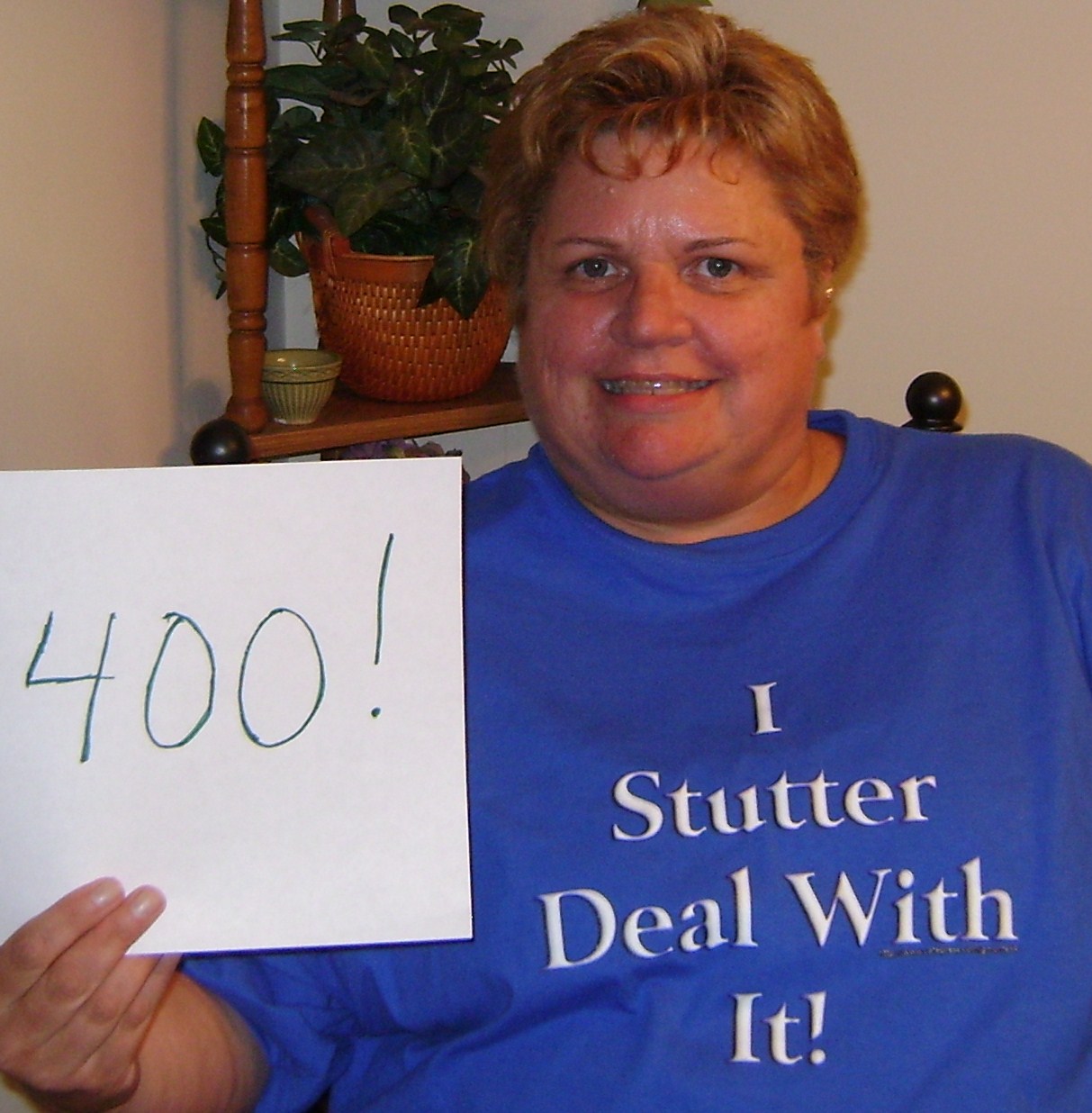 Here are summaries from some workshops presented at this year’s National Stuttering Association annual conference recently held in Texas!
I am also gratified to have reached a milestone. This is my 400th post since starting this blog in February 2009!
There were so many workshops to choose from at the same time. It’s almost unfair to have to choose. So I asked fellow attendees to summarize some of the best workshops they attended. Helps me, helps you, helps all.
You Are Changed By What You Do: “Shame-Busting” Through Avoidance Reduction Therapy. This was the most powerful workshop for me, led by Vivian Sisskin. She and several people that participate in her therapy groups led us through how to reduce shame by learning to face our fears and re-define success and progress. I listened to Vivian speak last year and became fascinated with her approach to avoidance reduction.
Shame was always my biggest issue, and learning even to identify that is hugely empowering. I have read several books on shame reduction and shame resilience over the last year as well, that has helped me move toward more acceptance of my feelings and emotions.
My friend Brandon shares his take away points from two workshops that resonated with him.
Release Fear, presented by Zaheen Nanji and NSA Career All-Stars, presented by Beth Bienvenu, Jim McClure, Tracey Wallace, Gregg Benedikt, and John Moore.
Brandon writes, “As I find myself looking for a new career opportunity I realized that the work place is my final frontier. From experience in working outside my comfort zone, I know what needs to be done but wanted to hear it from others that are doing it. The Release Fear workshop turned the abstract concept of “facing what you fear to create change” into a logical evaluation to expose the cost of making or not making the change. This workshop helped me to see that some discomfort now while facing challenging speaking situations will lead to a more open and balanced life in the future.”
He goes on to share, “Do you remember growing up thinking, “Damn, am I the only one that stutters?” Then you find an organization like the NSA and know you are not alone. Witnessing a person stuttering in the workplace is like a Bigfoot sighting for me. It is exciting and a bit scary depending on how far away I am from it.
I still feel I have one foot stuck in the mud with regard to the workplace, so I was excited to hear from the NSA Career Stars. Hearing first hand from these successful people that stutter in the work environment took away a lot of the mystery I had built up around it.
I loved the slogan “Participation is the Price of Admission”. A few years back I realized that in order to be more at ease with stuttering I would need to take it to the street. Originally I was misled to think I could practice in hiding then put the show on for all to see. I realized I was just going to have to be ME!
One of the biggest changes I had to make was to start using the world as my practice. Hearing it again from one of the speakers pinpointing the workplace really hit home for me. The phrase “Participation is the Price of Admission” has many meanings for me. Regarding stuttering, it reinforces that I need to work my speech agenda step by step, speaking up and sharing my ideas and concerns, and interacting, all for the admission to a better more fulfilling life.”
Brandon – thanks so much for sharing these thoughts and how helpful these presentations were for you!
My friend Anna shares her thoughts on some workshops she attended. Anna was a first time attendee to the conference and also presented at the Toastmasters workshop! I have so much material here that I will include her two other summaries in my next post.
Laughter Yoga – The Fun Part of Everyday presented by Judith Newman.
Anna writes: “When was last time you really laughed? Not smiled, chuckled or giggled, but laughed, openly, heartily, loudly, without inhibitions? If you can’t remember, you should check out laughter yoga classes. As Judith explained, laughter is very beneficial to our body and our brain – so we should do it often. You can do it alone and your body won’t know the difference between a “fake” laugh and the real thing.
But it is easier to burst into open laughter in a group, under the guidance of a laughter Yoga leader. For 45 minutes we did silly exercises and laughed so hard, my insides started to hurt. Regarding stuttering, it is not a therapy. But laughing with all your might, while looking a stranger in the eye, is definitely something that I don’t do in my everyday life. To me it was very liberating. To my non-PWS husband – a bit too weird.”
Thanks Anna for taking the time to share these thoughts.
In my next post, I will have two more summaries from Anna, on Dr. Baker’s Speech – Treatment Innovations and Journey of Hope presented by Robert Baker Ph.D. and Going Beyond Stammering with Confidence presented by Maria McGrath (who has been a guest on this podcast).
And I will have a summary from Alex on his powerful thoughts on the keynote by Neal Jeffrey.
I also have a few live videos from the conference that I will post, once I have secured permission from those recorded. Feel free to leave comments, so that the folks who took the time to write these up, and me, know that you found it helpful.
Good Stuttering Stories
Posted on: July 12, 2011
- In: Posts
- Leave a Comment
On the heels of the National Stuttering Association conference just completed in Ft Worth, Texas, there has been several good stories in the media. One was written by a first timer to the conference, and one features a long-time NSA member.
I had the pleasure of hearing Aman Kumar, a first-time attendee, speak at the Thursday afternoon Open Mic session. I always love open mic time, as it gives people the chance to speak freely – to take as long as they need, free of judgement and to sit down to wild applause by all listeners.
Turns out, Aman writes a blog for Psychology Today online, called Words Fail Me. His recent post, The Catharsis of Communicative Diversity, eloquently summarizes his first experience at a stuttering conference. You should definitely take the time to read this!
A good friend, Cynthia Scace, has been attending NSA conferences for years. I actually first met her at a College of St Rose Weekend Workshop for people who stutter. She missed last year’s conference, so it was so nice to see her this year and catch up, albeit for the short time we did. It is so hard to connect with all the people you really want to with over 800 people and only three full days!
Cynthia was featured in this great article in the Gazettenet, Approaches to therapy shifts with time, where she talks a bit about her stuttering experience and that of her son, who began stuttering at three years old.
Another great story appeared in the Gazettenet, featuring two young adults talking about their experiences navigating the world with a stutter. The writer, Suzanne Wilson, does a great job with both pieces. Check out this terrific story, Speaking Out: telling their stories helps people who stutter lessen their isolation.
Finally, here is a really good article from the Star-Telegram out of Ft Worth, Texas about David Seidler’s keynote speech at the NSA conference. Definitely take a look at this, Oscar-winning screenwriter who overcame stuttering delivers message of hope.
These are all good media pieces featuring real people who live life with stuttering everyday. Great to see so much coverage only days after the best attended conference yet. I still feel a bit on my high from such a great weekend, especially with meeting so many new people.
Stay tuned for summaries of some of the best workshops offered during the three-day conference. Since I can’t be in 10 workshops at once, I have enlisted the support of a few friends who graciously wrote up (or will) why these workshops so resonated with them.
Now I Understand
Posted on: July 11, 2011
- In: Posts
- 2 Comments

Me and David Seidler, Academy Award Screenplay writer of "The King's Speech"
Just got back from the annual National Stuttering Association conference in Ft Worth, Texas. It was a great weekend. Now that I have attended six consecutive conferences, I feel quite at home there and love recognizing old friends and meeting new ones so quickly.
Time after time, this weekend, I heard the phrase, “now I understand.” Even if you are meeting someone for the first time, you feel as if you already know each other because of the bond we share. That automatic feeling that the other person knows exactly what you are thinking and feeling, and that the shared experience of our unique difference is powerful.
I had a great conversation with a friend from my home town who was attending his first NSA conference. After meeting people and telling them where he was from, many asked if they knew me (which is hugely gratifying to feel known in this tight-knit community.) But my friend also mentioned that he finally understands how powerful being part of the stuttering community is, after only experiencing himself for 2 days.
He and I are in the same community here at home, yet I do not participate in any of the stuttering events at the local college that has an active program for people who stutter. I have deeply felt that void in my life, having a stuttering community right in my backyard that I do not feel a part of. My friend told me that now he really gets how powerful community is, after his own experience feeling embraced immediately by the NSA community.
I was glad to have shared that conversation with my friend, and many more deeply significant conversations and moments from this incredibly powerful four-day weekend with over 800 people who stutter or care about people who stutter.
Later in the week, I will provide an update of the three workshops I participated in as facilitator, and two other terrific sessions that I participated in. And I will share some of the best tidbits and moments from some of the unstructured activities that I participated in.
It was a deeply moving and emotional weekend for most attendees, especially me. I will have some pictures posted on Facebook, but couldn’t resist posting this one of myself posing with David Seidler, Academy Award winning screenplay writer for the stunning movie about stuttering, “The King’s Speech.”
Check back later in the week for some updates of the best moments.
Meeting New People
Posted on: July 7, 2011
- In: Posts
- 2 Comments
 As I write this, I decided to schedule it for Thursday. By then, I will be in Ft Worth, Texas at the 2011 National Stuttering Association annual conference. Thursday morning, I am co-presenting a workshop with good friend Joe called “Bring Up The Stuttering.”
We will talk about why it is so important to talk about our stuttering and not be afraid to bring it up.
Afterwards, I hope to meet a LOT of people who stutter. Thursday will be the first full day of workshops and most people will be attending workshops, interacting with each other and meeting new people.
I saw on one of the email groups a question from a conference “first-timer.” He asked, “how do you meet people at a big conference like this?” He also said he felt kind of silly asking it, but had the guts to anyway. He mentioned he is shy and finds it hard to introduce himself to new people.
Here’s the best way! Walk up to someone you don’t know, especially if they are sitting alone, stick out your hand, and say, “Hi, my name is . . . . . and its great to meet you.” It’s that easy.
I plan to do a lot of that during my time at the conference. Meeting new people, hearing new stories and making new friends. That’s why I go to these conferences. I will be advertising in some way too. I have a couple of shirts that proclaim I stutter, that are unique, like me.
I will post next week on some of the highlights of the conference.
Advertising My Stuttering
Posted on: July 1, 2011
- In: Posts
- 7 Comments
 I am actively involved in the two major stuttering self-help communities here in the US, the National Stuttering Association (NSA) and FRIENDS. I have tried to give back and help out both organizations over the last few years, as both have had a profound impact on my life.
Since I am basically a “starving artist” type, its hard for me to make financial contributions. But I can give my time and volunteer, which I have done for both organizations.
This year for the NSA, I reached out and advertised my stuttering to 10 local businesses. I asked them to purchase an ad in the program for the upcoming conference and sent them information. I only heard back from 3 of them. I don’t think any actually purchased an ad! But I advertised!
For FRIENDS, I decided to actively sell raffle tickets for a prize that will be drawn at the July conference by David Seidler, the Academy Award winning screenplay writer for the movie “The King’s Speech”. By last week, I had sold 522 tickets! The raffle coordinator sent me another 10 booklets I requested, and I took them with me on errands I ran over the weekend.
I had about 4 booklets of tickets left when I stopped in the local grocery store on a Saturday night. I decided to advertise my stuttering at the customer service desk and ask employees if they would be interested in supporting efforts to help kids who stutter.
A funny thing happened!
I used some voluntary stuttering, which quickly turned into real stuttering as I gave my pitch. Two managers and the clerk behind the counter all agreed to buy tickets. I was thrilled!
A woman standing next to me, who obviously heard this exchange, scrounged in her pocket and produced a dollar in change and asked to buy one ticket. She said she really couldn’t afford it, but wanted to help. I was touched. She also said that she knows people can be cruel and she hoped her tiny bit helped. I assured her it did!
Now here’s the funny, or strange, part. As I waited for the buyers to fill out their parts of the raffle tickets, I explained a little bit about FRIENDS. By now, I was just plain stuttering well.
After everybody finished, I collected the money, made sure everyone had their half of the tickets, and then thanked them. All three employees used the term “honey” with me. One said, “no problem, honey, good luck.” One manager who I see a lot also said, “sure honey, good luck” and the other manager also said, “have a good evening, honey, good job!”
Now, I achieved my goal of selling some tickets, raising money for FRIENDS and raising awareness of stuttering. And I definitely advertised my stuttering, even using a little bit of voluntary stuttering.
I felt discouraged when I left the store. I felt they had been condescending with me, almost like they felt sorry for me because I stutter and WAS stuttering. All three of these folks were younger than me, one in her twenties! I have never liked when a young person in retail or fast food has referred to me as “honey” or “sweetheart.”
But this seemed different. What do you think? Has this ever happened with you? Actually, have you ever advertised stuttering like this?
How Do You Bring It Up?
Posted on: June 22, 2011
There has been some great dialogue going on over at the Covert-S email group about telling people that you are going to a stuttering conference. As in, what do you say? How do you bring it up? Now, you would think, what’s the big deal? Just tell people, right?
Wrong, if you are a covert stutterer. People who stutter covertly work very hard at making sure no one in their world knows they stutter. And that takes a lot of energy, effort and deception. Or, if you stutter openly, you may just not want people to know that you are going to spend time and money to be around a bunch of other people who stutter.
That was me for a very long time. I was covert. I used tricks, word substitution and avoidance to expertly hide the fact that I stuttered to most people. Problem was, not only was I hiding the stuttering, I was also hiding myself. To the point that I couldn’t take it anymore and finally stopped trying so hard to hide stuttering. That’s when my life changed.
When I went to my first stuttering conference, there wasn’t many people I told. Not because I was embarrassed or fearful of how people would react. At the time, I was unemployed. I had just been fired from my job in May and was going to my first stuttering conference in June.
I didn’t have co-workers to tell where I was going and why. I didn’t have people asking me when I returned if I had a good time. Maybe that’s how I was supposed to attend my first conference. The NSA provided financial assistance that covered my registration and room, and my mother and her husband used their frequent flier miles to purchase my air fare.
Since that first conference in 2006, I have been to 4 subsequent NSA conferences and 3 FRIENDS conventions. When people at work ask where I am going, I tell them. If they ask for details, I go on and on about it. If they don’t, I don’t.
These days, people know I stutter, but don’t necessarily want to know all the details. And that’s fine. What is important is that I am OK with what I am doing and where I am going.
Now, back to the question. How do you bring up the fact that you are attending a stuttering conference to the people who you never have told that you stutter? Some folks have shared that they are afraid to tell even their families, and have told people they are going on a work-related trip. They tell work friends they are going on a family vacation.
One person even shared that she has to be sure to tell the same lie to person A and to person B, so that she does not get embarrassingly caught up in a web of lies.
One person suggested that someone might pick two people to tell before hand, so that when she returned from the conference, she would have people to tell all about it, who wouldn’t seem puzzled or confused, because they would already know. I chimed in that this “two person goal” could also be used AT the conference.
I suggest that a first-timer to a stuttering conference set a goal to meet at least 2 new people each day, so that by the end of the conference you have made at least 8-10 new connections. People that you can talk with throughout the year who understand. And who can offer you support.
I did that at my third conference. I made it a personal goal to meet and really get to know at least 10 new people. I succeeded! Now I know lots of people in the stuttering community and lots of people know me.
How did I do it? Simple – I went up and introduced myself to people who had “first-timer” on their name tag. It was really easy for me. All I had to do was remember how nervous, alone, and intimidated I felt at my first conference. Now I am paying it forward.
But it’s not that easy for everyone. Especially if YOU are the first-timer! It can be very intimidating when you are used to hiding to suddenly be assertive and confident and walk up to strangers and introduce yourself.
But what better place, right? A stuttering conference is safe – because you are meeting people just like you. The real challenge is how you deal with it the rest of the year. What you tell people before you go, and when you return home (sometimes on cloud 9, on that “high” you get from being in an environment where for once, you are not the minority.)
My good friend Joe Klein and I are co-facilitating a workshop on this very topic at the NSA conference next month. So this thread on the covert-S list has given me good insights and reminded me of how I felt at my first conference. It can be scary and overwhelming!
What do you think? How do you bring it up with others that you don’t ordinarily talk to about stuttering? What thoughts might you offer to those who are worrying about explaining an “un-talked about” absence?
More On Stuttering As A Disability
Posted on: June 17, 2011
- In: Posts
- 4 Comments
A very timely and interesting article was written this week at Cincinatti.com about a police officer who stutters who is being reassigned. He believes his reassignment will endanger his life and others, as he will not be as effective in his road patrol role.
Because of his stuttering, Ken Parson would likely have trouble quickly yelling “Stop, police!” to a bad guy or calling “Officer needs assistance!”, in part, because Parson’s stuttering gets worse when he’s under stress.
Parson also would have a hard time gaining respect from suspects if he stutters. “The attitude might be: ‘No way, I’m not stopping for a stutterer.'”
In his role as a detective, Parson’s speech impediment worked in his favor. His stuttering has disarmed some suspects into confessing.
Under the American with Disabilities Act (ADA), Parson is entitled to a “reasonable accommodation” of his disability. But Parson is not seeking anything other than keeping his current role.
“What they’re doing is removing the accommodation by moving him from his detective job, which he functions very well in, and onto road patrol. That decision is inconsistent with safety.” Parson has retained a lawyer and is fighting the reassignment.
This will be interesting to follow and see how the law and the ADA respond to this case, where indeed stuttering is a disability in Parson’s job as a police officer. This article was a great follow-up to my recent post on “Who Gets To Make The Choice?”
In this case, I definitely believe this officer’s stuttering is a disability that requires reasonable accommodation in order for him to perform his job effectively and safely.
What do you think? Thoughts? Comments? Let’s continue the discussion.
Who Gets To Make The Choice?
Posted on: June 14, 2011
- In: Posts
- 20 Comments
I have never written about how I feel about stuttering being a disability. I have been asked about it and I have talked about it, both with those who stutter and those who don’t. I know disability can be a very contentious subject, because some feel strongly that stuttering is a disability and others feel if it doesn’t limit their life, then it’s not.
I believe that my stuttering is not a disability (there was a time it was). It does not substantially limit my ability to speak or communicate today, as defined by the American’s With Disability Act of 1990 (ADA), which was amended in 2008.
These days, I speak and communicate very effectively, even on the days when I stutter a lot. There was a time when I did not. I was so afraid of stuttering publicly and being judged, that I often opted out of speaking situations, or avoided. That fear was very disabling to me. I felt invisible.
The ADA definition of disability also means whether a person has a record of an impairment or is “regarded as having an impairment”, whether or not the impairment impedes a major life activity. Which in the case of stuttering, would be speaking and communication.
It’s this part that I want to speak to – being regarded as having a disability. I recently had a conversation with my supervisor about upcoming changes in my job assignment. My current position has been abolished effective June 30, and I have been laid off. I am hopeful that another position will be available for me to remain within the same organization.
My supervisor mentioned that the grant funding has changed direction. The major initiative of our grant will focus on ensuring access and equity of services and programs to special needs populations. This will include not only groups with disabilities, but also economically under-served groups.
My boss mentioned that I would be perfect for this position because of my disability. I was offended by how he said this. I don’t consider myself disabled, and am bothered that my boss obviously does. This is not the first reference he has made about stuttering as a disability.
Last year, when he did my annual evaluation and went over it with me, he said, “aren’t you proud of me that I didn’t use the term “disability” once in your evaluation?” And the year before that, after my first public speaking event at school, he commented, “you didn’t have to try to climb the mountain and ride your bicycle up it also all in the same night.”
When I had asked him what he had meant by that, he further explained, “if you knew you were going to butcher the kid’s names, why didn’t you ask someone else to read the names for you?” I remember writing about this before, and also remember how angry I felt by what he said.
There is a good chance I may get a position serving special populations (which I have been doing indirectly for a long time anyway). I will need to be an even louder advocate for those who can’t always advocate for themselves. I have been thinking a lot about where I stand on my stuttering being a disability.
Because I am known to stutter, therefore, I am obviously “regarded as” a stutterer, which fits the definition of disability under the ADA. But I don’t consider myself disabled. And my boss’s perception of me having a disability, while certainly not bad, somehow doesn’t sit right with me.
A friend of mine said that I should label my stuttering as a disability if I plan to move along with my small business. That it will net me more opportunities, being able to use the term “minority owned” business. Like getting two for the price of one. Being a woman and disabled would possibly steer more business my way.
I definitely don’t like the idea of “using the disability card.” But I know some people do, to move forward in life.
What do you think of this? Whose choice should it be to consider one’s stuttering a disability?
Shiny Eyes On Stage
Posted on: June 1, 2011
- In: Posts
- 2 Comments
 Tonight is our awards night at school, an event that has brought conflicting emotions for me over the last four years. As some may recall, the first time I facilitated this ceremony, my boss criticized me the next morning for “butchering” the kids names. I had, in fact, stuttered. That comment stung, and obviously I have remembered it.
As advisor for the National Technical Honor Society, I facilitate the induction ceremony, which includes speaking from a script, introducing speakers and calling students names as they receive their certificates. I have long gotten over the nervousness and anxiety of this “performance”. Last year, I even advertised using humor about my stuttering, to put both me and the audience at ease.
But, it is still tough to be on stage speaking into a microphone. Reading from a script and calling out names is my most challenging stuttering situation. I stutter more, for whatever reason.
I worry if I don’t advertise in some way that parents will think I am mis-pronouncing their kids’ names. And I don’t want that perception. Names are important. For some of these students, this may be the first ever award they are receiving.
During rehearsals with the students last week, I told them all I stutter and that I may stutter more than usual up on the stage using a microphone. They were fine with my disclosure. I was glad I did it!
My biggest concern for tonight is that I will get choked up on stage. This may be the last Honor Society ceremony that I will lead for the school. I have been informed that my current job is being abolished. I will either be doing something else within the school or unemployed at month’s end.
So it will be bittersweet for me tonight. I know I will do fine and represent the school and students well. It will be a beautiful candle lighting ceremony, solemn and emotional. Even in ordinary times, it is easy to get caught up in the emotional moments and feel the joy and pride of the students.
I will surely feel joy for the students, and sadness that it may be my last time presiding over this. Things change, times change, people change. My emotions run pretty consistent though, and it is hard for me to hide them any more.
So there is a good chance my eyes will be shiny tonight, for more than one reason. A bittersweet moment that will become another memory for me.
Getting Wet
Posted on: May 26, 2011
- In: Posts
- 10 Comments
 I have been in Toastmasters for five years. To say it has been a great experience would be an understatement. Toastmasters values and supports individual growth and thereby fosters courage and confidence. I am proof of that!
Having a safe environment to practice different speaking situations and know that people actually want you to succeed is priceless. We don’t find this everywhere.
Workplaces can be intimidating. They may encourage you to “speak up” but sometimes an employee is fearful of the consequences of doing so. In our communities, it can be tough to be heard as well, especially if you are the “new kid on the block” or you are not a social butterfly!
And if you stutter, all of these situations can be even scarier. But Toastmasters welcomes and encourages every member to build on strengths we already have and work towards personal and professional goals. It is a non-threatening environment where members simply support each another. Sometimes, we “nudge” each other a bit as well!
I have not done any planned speeches since last summer. I have been focusing on other things and mentoring a new member. That’s also part of Toastmasters – paying it forward and passing along what has helped us to the next person. I take meeting roles and enthusiastically participate whenever I can.
At this week’s meeting, a person was to be Toastmaster of the meeting for the first time. She was a little nervous, had spent a week emailing members, getting bios together and planning. She really wanted to do well. (I suspect she is a bit of a perfectionist like me!) There were two planned speakers on the agenda. Both backed out at the last minute.
While we were waiting for the meeting to start, I mentioned that some Toastmasters talk about have “back-pocket” speeches that they can do anytime. I half-jokingly mentioned that maybe we might have to do that at our meeting. Well, our Toastmaster Annette called my bluff and asked if I would give an impromptu speech. How could I say no!
So, with only seconds to prepare, I rose to the challenge, walked up to the lectern and delivered a 7 minute speech called, “When It Rains, Get Wet”. I talked about living life to its fullest and shared the personal experience of having participated in my first team 5K walk last week. Something I never thought I could do. Something way out of my comfort zone!
Unbelievably, it seemed like one of my better speeches. I was comfortable, relaxed, animated. People commented on that in the written feedback slips we give to each other after anyone speaks. And when I finished, another member volunteered to give his second ever speech, off the cuff. Talk about risk-taking.
I share this for a reason. I was always afraid to take risks, especially speaking risks. I always feared that I would be judged as incompetent, just because I stutter. But I have learned that sometimes the best lessons are taught when we just let go and do it.
I have to share some of the feedback I got after my impromptu speech. It was so gratifying and affirming. I allowed these comments in and gave myself permission to feel good!
“Smooth, fun story, nice build-up, happy ending, a lot of fun.”
“Amazing speech! I felt your joy when you crossed the finish line. You inspired me to take a risk!”
“Great! Wonderful personal story! Engaging topic, excellent delivery.”
“Pam, you are the ultimate risk-taker! Are you sure this wasn’t planned? I wish I could be as confident as you. You did an awesome job. Great body movement and non-verbal cues. You totally rock!”
Normally, I would be adverse to share compliments like this. I often feel embarrassed. I know why – I used to feel I didn’t deserve to be told I do/did a good job!
But taking this huge risk felt great and proved that good things happen when we go way outside our comfort zone. People keep telling me to share these really good things, so I just did!
 Make Room For The Stuttering
What people are saying!