Author Archive
I Still Stutter – Episode 150
Posted on: February 17, 2016
 Episode 150 features Jia Bin, who hails from China. She is currently living in Michigan in the U.S. while studying for her Master’s degree in secondary education. Jia taught English in China for 9 years, and is currently teaching Chinese here in the U.S. to high school students.
Listen in as Jia describes why she wanted to come to the U.S. She was looking for a way out and thought she’d find the answers to stuttering in the U.S.
We have a fascinating conversation about the cultural differences between China and the U.S. Jia describes China as a “culture of shame” where it comes to being different. In China, it’s all about being the same. Differences are shameful and shame is hidden in China.
We also have a rich discussion about covert stuttering, finding support through the National Stuttering Association and stuttering with confidence. We also talk about Jia’s speech therapy experiences and the huge emotional attachment that stuttering really is. She talks of carrying her country on her back when she talks.
This was a great conversation that could have gone on for hours. Feel free to leave comments or questions.
The music used in this episode is credited to ccMixter.
- In: Posts
- Leave a Comment
Spoiler alert!!!!
I recently went to see the short film “Stutterer,” which was shown as part of five short films nominated for Oscars in the live action category. It is exciting to see another film about stuttering up for an Academy Award. Hopefully it will ignite stuttering awareness.
The short film is only 12 minutes long, but packs a punch. On opening, you see the main character, Greenwood, struggle to speak on the phone. Later in the film, we see Greenwood’s father make the phone call for him.
The film conveys how much of a struggle it is for Greenwood to speak, yet in his head, the words flow eloquently and effortlessly.
He is lonely, because he is terrified of communicating with anyone. He is studying sign language and pretends to be deaf so he can communicate without having to speak verbally.
The crux of the film centers around a relationship he has with a beautiful girl he has met online. He can communicate with ease as he types out witty responses to this girl.
But soon she wants to meet in person. She writes him suggesting a meet up, as she is planning a visit. This brings him to a panic, and he doesn’t respond to her right away.
She assumes his non-response means that he doesn’t want to meet. Finally, after much delay, he gets up the courage and writes to her saying he’d like to meet if she was still interested.
When they meet, he discovers she is deaf and communicates through sign language.
The short film was deeply satisfying and left me wanting more. I wanted to see what became of their meet up and if they started dating. I wanted to see if he got up the courage to seek out speaking situations despite his severe stutter.
I felt the character’s stuttering was very realistic, as was his fear of negative social reactions and judgement.
My concern is the portrayal of sign language as a viable alternative to speaking. I worry that stutterers will see this film and get the idea that using sign language to avoid speaking is OK. That’s not the message we should send to the stuttering community, especially young people who have not yet found their voices.
The film is a romance and really doesn’t aim to raise stuttering awareness. But maybe the title will do the trick and get people talking about stuttering which always provides a good opportunity to educate and raise awareness.
I Just Stutter – Episode 149
Posted on: February 2, 2016
Episode 149 features Audrey Bigras, who hails from Montreal, Quebec, Canada. Audrey works as an advisor in research and development in public colleges in Quebec.
She is also involved in the world of stuttering as a bi-lingual blogger and she is on the board of directors of the French speaking stuttering association.
Listen in as we discuss how she found the stuttering community, the importance of meeting others who stutter and making friends, and the life changing experience she had at her first National Stuttering Association conference in the United States.
We also discuss how important it is for her to help to demystify stuttering. When Audrey first began researching stuttering on the internet, she discovered a lot of negative information. She wanted to ensure there was positive, factual information about stuttering available.
She was also concerned that there was not much French content available on stuttering and she wanted to provide a resource that was bi-lingual and easily accessible in both English and French. So, she founded her blog, Advertising Stories, which she writes in French and then translates into English. Check it out here.
The podcast safe music used in today’s episode is credited to ccMixter.
Giving Blood And Stuttering
Posted on: January 26, 2016
- In: Posts
- 2 Comments
Interesting title, huh? What would giving blood have to do with stuttering?
Yesterday, I donated blood at a local blood drive. If you’ve never donated before, you might not be aware of how meticulous blood drive staff are about making absolutely sure they are identifying donated blood correctly. They ask you to state your full name at least 5 different times during the process. Usually, stating my name is not a problem, but yesterday my stuttering showed up big time by the fourth time I had to repeat my name.
When I was asked to state my name, it came out “P-P-P-Pamela.” The staff person snickered and asked if I was OK. To her credit, she did not ask if I had forgotten my name, as clearly I had not, since I had repeated it several times already. But her snicker annoyed me nonetheless. But I didn’t say anything. I gave her the benefit of the doubt that she wasn’t sure what she had just heard.
When I was asked the fifth time to repeat my name, out came “P-P-P-Pamela” again. This time she didn’t snicker but asked me if I was feeling woozy or lightheaded. I told her no, I just stutter. They hadn’t started drawing my blood yet, so I couldn’t have felt woozy or lightheaded yet.
When I told her I just stutter, she just nodded her head and looked slightly embarrassed but didn’t respond.
I was glad I said something to let her know I stutter. Hopefully I educated her a tiny bit and she’ll remember not to snicker or assume something the next time she encounters someone who stutters.
How have you handled similar situations when you’ve had to repeat your name several times? Would you have done something differently?
The Power Of Disclosure
Posted on: January 13, 2016
- In: Posts
- Leave a Comment
In one of the stuttering groups, a woman recently shared her experience with disclosing her stutter to a guy she liked. She was surprised that he was actually OK with it.
She thought he was going to reject her because she stutters. She further shared that she felt so much more comfortable knowing that he knows. They have gone on a couple of dates and are enjoying their new relationship.
Disclosing that we stutter has so many benefits. Like this woman shared, it made her feel relieved that her partner knew. She didn’t have to work to keep it hidden, like she said she had done in the past.
Trying to hide stuttering is a lot of work. I know, as I did it for years. I was always tense and afraid that I’d be exposed as a stutterer and people would think less of me as a person. Or would reject me. That was always my biggest fear – rejection.
So I switched words, avoided speaking and pretended to be a shy introvert, something that I am not. I felt such relief when I stopped trying to hide my stuttering and just stuttered openly and actually talked about it.
People’s reactions were surprising to me at first, just like the woman in above’s anecdote. Most people didn’t care – it was like disclosing that I am left-handed. So? There’s nothing wrong with being left-handed, just like there’s nothing wrong with stuttering.
And many people already knew that I stutter, which was a big surprise. I always thought that since I didn’t talk about it and worked so hard to hide it, that I of course no one knew I stuttered. Wrong!
Disclosing that we stutter also lessens anxiety, as we are not so fearful that we are going to be found out. And disclosure also often leads to a real connection with another person. By being brave enough to disclose, often another person will share something personal about themselves and before you know it, a connection is formed.
Finally, disclosure that we stutter opens the door to questions. Often, we’ll find that people are very interested in learning more about stuttering and will ask questions. They were just waiting for us to signal that it was OK.
Disclosure can be powerful. It can open doors for us that we thought maybe were closed. And that brings good things to life.
Just Take A Deep Breath
Posted on: December 31, 2015
It’s funny the advice people who don’t stutter give to those of us who do stutter. Like they know the answer and can solve our stuttering problem for us. If it was as simple as just taking a deep breath, all of us who stutter would already be doing that.
I had this advice given to me the other day when I was talking to a medical receptionist over the phone. The woman was impatient and I was having a really stutter-y day. When she asked me a question, I blocked on something and then had a couple of repetitions. She asked me if everything was OK.
I decided to tell her I stutter. I said something like, “everything’s fine. I just stutter. Please bear with me.” It was then that she said, “that’s OK. Just take a deep breath.”
I certainly know she meant no harm. In fact, she had lost her impatient tone and actually sounded like she was trying to be helpful. I didn’t tell her that advising someone who stutters to take a deep breath isn’t really helpful. I felt that would have been rude. I just continued on with the brief conversation and left it at that.
I know for many people who stutter that practicing breathing techniques actually does help with their control of stuttering. It is a technique taught in some fluency shaping programs and seems to be the mainstay of the popular UK McGuire program. Slowing rate and speaking on exhaled breaths does help for some.
But the random advice to take a deep breath usually does not help in the stuttering moment. It definitely does not help me. It just reminds me of how much stuttering is misunderstood by those who don’t stutter.
I’m glad I advertised in my encounter with the receptionist over the phone. That empowers me. Maybe next time I’ll go with the flow and take a deep breath and see if it helps at all. 🙂
The Stare Factor
Posted on: December 7, 2015
It’s that time of year. Restaurants and bars are very busy, with people getting together for the holiday season. People are often very close to you when you are ordering food or drink, just because the places are busier than at other times of the year.
Has this ever happened to you? You’re placing your order at the bar and stuttering extremely well. It’s loud at the bar, so you are speaking a bit more loudly than usual, so stuttering loudly. As you are trying to remain composed, you are aware that the person next to you is staring at you with great interest.
Your face turns red, as you are aware that the person is probably trying to figure out what the hell is happening next to him. You can read his facial expression. You can see a “WTF?” spread across his face. What do you do?
I usually don’t like to draw more attention to myself when stuttering publicly like this, but sometimes “the stare factor” demands some type of response.
Resist the urge to say something smart, like, “do you want to take a picture? It will last longer.” That’s childish. I used to say that when I was younger when I would get angry when someone was obviously staring at me or a friend when we were out. Not necessarily for stuttering, but for just about anything.
As an adult, when this has happened to me, I’ve reacted several ways. I’ve said or done nothing, just dealt with the embarrassment, got my order and moved away. That is not very satisfying, however, and sometimes leads to negative self-talk.
One way I’ve dealt with this is when I turned to the “starer” and very calmly said, “haven’t you ever heard anyone stutter before? It’s OK, I’m OK, thanks for the concern.” That caused the “starer” to get a little embarrassed, which was not my intention but allowed me to be assertive and not left feeling embarrassed myself.
What about you? Has this ever happened? How have you responded? It can be extremely annoying when this happens but we can have the upper hand and leave the situation with our dignity intact if we can figure out a good comeback. Let me know your thoughts.
Showing Up – Episode 148
Posted on: November 16, 2015
Episode 148 features Karen Krajcer, who hails from San Antonio, Texas. Karen teaches creative writing to high school students and is also working on her own novel, titled “Whisper, Sing.”
The novel is about two siblings who stutter, who make dramatically different choices about how they deal with their stutter. Karen shares that the emotional truth of the novel is based on real life experience.
Listen in as we discuss what it is like to be a covert stutterer and how it can take over your whole life. We discussed missed opportunities, “coming out,” acceptance, speech therapy and so much more.
We also discuss Karen’s involvement in the National Stuttering Association – she reinstated the San Antonio NSA Chapter. Karen talks about how important it is for people to just show up at support meetings, as it can change their lives, like it did hers.
And we discuss Karen’s part in the book “Turning Points” which was discussed in the last podcast episode. Karen wrote an essay which became a chapter in the book called, “The Problem of Passing,” about her experiences as a covert stutterer.
The podcast safe music used in today’s episode is credited to ccMixter.
Kids Rock It Out For ISAD
Posted on: October 22, 2015
My friends in the French stuttering community are launching a campaign to celebrate International Stuttering Awareness Day (ISAD,) which is today, October 22. Their initiative is to portray children who stutter in a positive and casual manner.
The initiative was launched by the mother of a child who stutters and quickly gained momentum with other parents. The French Facebook group plans to feature the children s’ stories on French blogs today and over the next few days.
I think this is a great idea and am so pleased to help “spread the word,” which is the theme of this year’s ISAD. What could be more positive and inspiring than children talking so matter-of-fact about stuttering?
Here is Rose, age 9, and her story.
“My name is Rose. I love drawing. My preferred colour, it’s turquoise. My best friend, it’s Cecilia. My preferred dish, it’s fajitas. And I stutter. It isn’t because I lack self confidence. It is not caused by a trauma. It isn’t my parents’ fault. I just stutter – it’s neurological”.
You’re right, Rose. We just stutter. Rose is beautiful and has so many interests. Help us spread the word.
![12179871_10204791697743308_2012867484_n[1]](https://stutterrockstar.com/wp-content/uploads/2015/10/12179871_10204791697743308_2012867484_n1.jpg)
Stuttering For A Purpose
Posted on: October 19, 2015
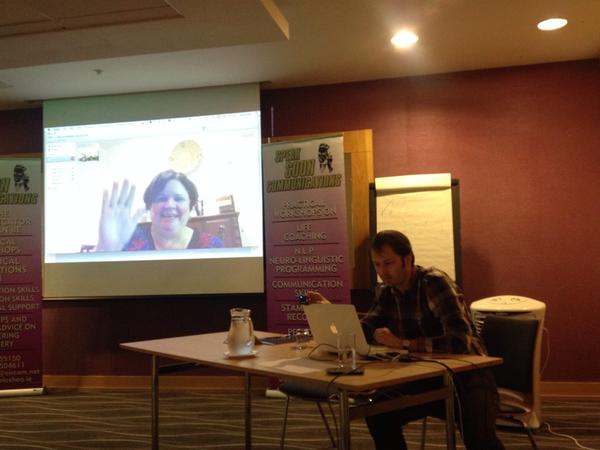
I had the opportunity to speak on Saturday via Skype at the Irish Stammering Association’s annual National Stammering Awareness Day event in Dublin, Ireland. I was asked to be a keynote speaker during their full day conference style event and speak on the theme of this year’s ISAD, “Spread The Word – Educate, Cooperate, Communicate.”
I wondered what I could speak about that would best convey how I have spread the word about stuttering awareness. Purpose came to mind.
I remember when I attended my first FRIENDS conference in 2008 and I realized that stuttering can actually have purpose. FRIENDS is the association for young people who stutter. It is a parent driven group that is all about support for young people who stutter and their parents.
I learned about purpose after hearing parents tell me how happy they were that I had come to the conference and shared myself and stories with them. For the first time in many years, I realized that my stuttering could be bigger than just me. That I could use it to spread the word and educate others about stuttering, if I dared.
After that FRIENDS conference, I became a real advocate for stuttering awareness. I had articles written in the local newspapers, organized several stuttering events in the community and began visiting middle schools to educate kids who don’t stutter on what stuttering is and tied it into teasing and bullying prevention. Doing these types of awareness activities became bigger for me than my stuttering.
So, that’s what I spoke about at the Irish Stammering Awareness event on Saturday – purpose. How a sense of purpose can be bigger than you and how my desire to help others has kind of transcended my own stuttering.
I shared with the group about the advocacy activities that I do and challenged them to consider doing similar. It was a great experience, even with some technology disruptions. I felt honored to have been asked to share my story and to talk about purpose. Here’s a picture of me as we were just getting started.
 Make Room For The Stuttering
What people are saying!